


Destinations
❮Main Menu
Top German UNESCO World Heritage Sites

Museum Island (Museuminsel), Berlin
Berlin’s iconic Museum Island houses an intense concentration of five world-renowned museums, awarded the UNESCO World Heritage status in 1999. The Pergamon Museum, Bode Museum, Neues Museum, Alte National Gallery, and Altes Museum, are historical and architectural wonders, offering visitors a chance to discover Ancient Egyptian relics, Byzantium artefacts and century-spanning art.
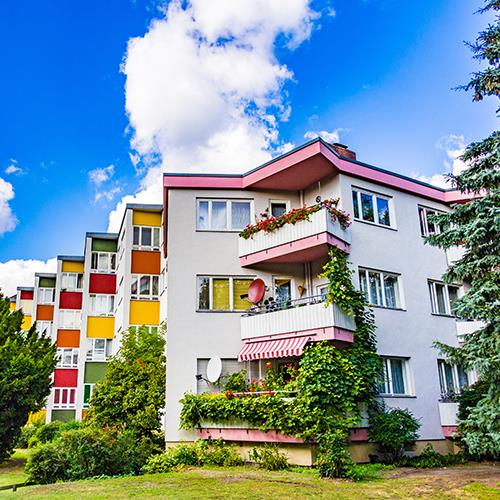
Berlin Modernism Housing Estates, Berlin
Berlin Modernism Housing Estates consists of six housing estates that testify to innovative housing policies from 1910 to 1933, when the city endured significant changes particularly progressive socially, politically and culturally. The property is a fascinating example of the building reform movement that contributed to improving living conditions for low income families through novel approaches to town planning, architecture and garden design. The estates also provide great examples of new urban and architectural typologies, with fresh design solutions, as well as technical and aesthetic innovations. The leading architects, Bruno Taut, Martin Wagner, and Walter Gropius, were leaders of these projects which considerably influenced the development of housing around the world.

Cologne Cathedral, Cologne
One of Germany's most captivating and expansive, cathedrals; Cologne’s gothic cathedral is the third tallest cathedral in the world with the highest church spires ever built. The building took more than 600 years to build and is one of the only buildings in Cologne that survived WWII. Ascend the south tower to see the world from 328 ft. high and up 533 steps. Also take note of the beautiful stained glass windows and the intricate carvings adorning the exterior and interior. There are guided tours that take place several times per week.

Upper Middle Rhine Valley (Rhineland) - Natural Feature
The Upper Middle Rhine Valley, or Rhine Gorge, is a 40-mile-stretch between Koblenz and Bingen. Sprinkled with castles, historic towns and vineyards, the stunning views and century-spanning architecture is a fabulous example of evolving traditions. The region was awarded a UNESCO status in 2002 for its special blend of geological, historical, and cultural characteristics. This area has been a huge draw for visitors that come to explore the rolling hills, castles, and manifold vineyards that the region is intimately associated with.

Wartburg Castle, Eisenach
Wartburg Castle, overlooking the town of Eisenach, is a UNESCO World Heritage Site (awarded status in 1999) that was originally built in the Middle Ages. The beautiful hilltop castle still retains much of its original structure, while its interior has undergone renovations and is considered far more modern. The castle takes visitors on a journey through its historic, medieval drawbridge into the grounds, where they are rewarded with views of half-timbered structures, covered walkways, and a fabulous display of priceless artworks.
The small town of Eisenach is known for being the birthplace of the Baroque composer Johann Sebastian Bach and the city where Martin Luther spent several of his early years. The town is surrounded by lush, forested hills and farms and offers a pleasant collection of squares and narrow streets to explore. The main draw to the town of Eisenach is the Wartburg Castle.

Roman Relics, Trier
Located in southwestern Germany, Trier is the oldest city in Germany and also home to impressive ancient Roman relics. The town was a former 1st century AD Roman colony, and once known as the ‘second Rome’. Today, the city contains a number of well-preserved surviving monuments of this era, standing as a true testimony to Roman civilization. Highlights of these Roman relics include Cathedral of ST Peter, the Church of Our Lady, an amphitheater, Imperial and St Barbara Roman Baths, the Basilica of Constantine, and the famous Porta Nigra gate. The Archaeological Museum houses a plethora of Roman artifacts. Trier is a window into Roman civilization, filled with rich, ancient culture.

Deutsches Eck, Koblenz
The famous Deutsches Eck, or German Corner, located at the intersection of the Moselle and the Rhine, lies one of Germany’s oldest and most beautiful cities, Koblenz. The establishment of the Teutonic Order gave this historic site its name, Deutsches Eck (German Corner). Koblenz also owes its name to the meeting point of the Rhine and the Moselle - the “Castellum apud Confluentes”, Latin for “fort at the confluence”, which over time became the current name of Koblenz.
Koblenz is one of the oldest towns in Germany with a intricate medieval history entangled with the Order of the Teutonic Knights. Its strategic location on the river has made it a valuable spot for collecting tolls, as well as a fiercely disputed property between Germany and France. It is now an integral point of the UNESCO World Heritage site of the Upper Middle Rhine Valley.
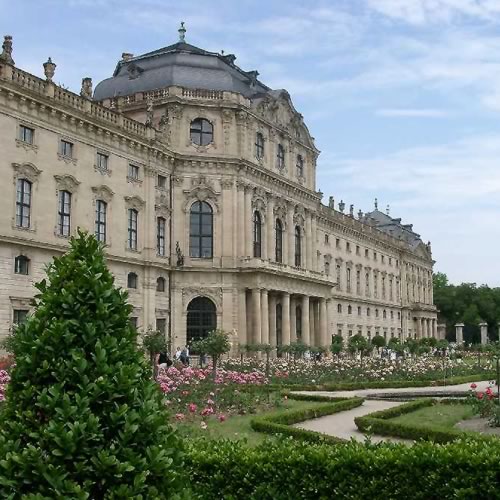
Baroque Palace, Würzburg
Würzburg was founded over 1,000 years ago by the Celts and has profited from being at a crucial intersection. Located in the heart of the Franken wine growing region, the city boasts a number of fascinating old buildings and museums. The architectural highlight of Würzburg is the Residence Palace, which is on the UNESCO World Heritage list. The city is also a university town, which brings a lively vibe and exciting nightlife.
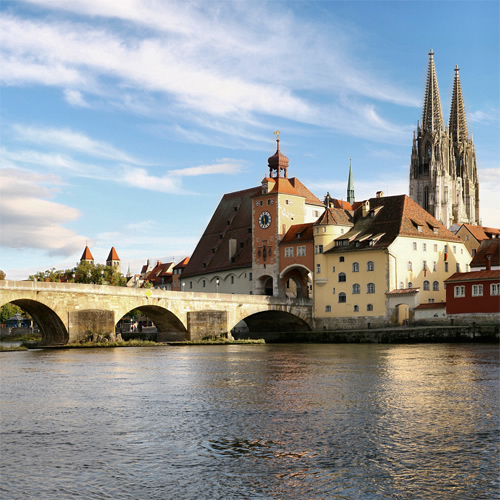
Old Town Of Regensburg
Located on the Danube River, the medieval town of Regensburg boasts several buildings of exceptional architecture that testify to its history as a trading center and to its influence on the region from the 9th century. The town’s notable number of historic structures include ancient Roman, Romanesque and Gothic buildings. Regensburg’s 11th- to 13th-century architecture (including the market, city hall and cathedra) still defines the character of the town characterized by tall buildings, dark and narrow lanes, and strong fortifications. The buildings include medieval patrician houses and towers, several churches and monastic ensembles, as well as the 12th-century Old Bridge.
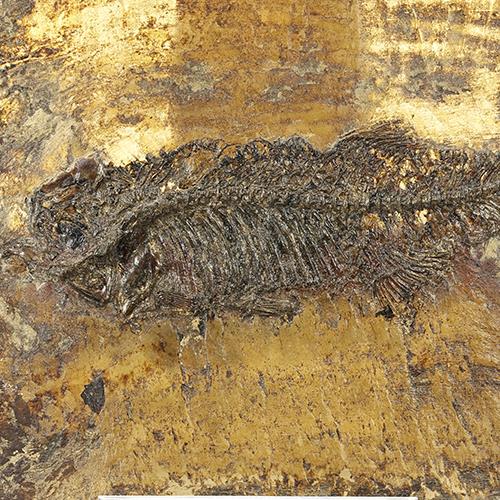
Messel Pit Fossil Site, Frankfurt
The Messel Pit is a disused quarry near the village of Messel, about 22 miles southeast of Frankfurt. It is the richest site in the world for understanding the living environment of the Eocene, between 57 million and 36 million years ago. The site provides unique information about the early stages of the evolution of mammals and includes fascinating well-preserved mammal fossils, ranging from fully articulated skeletons to the contents of stomachs of animals of this period. The Messel Pit was declared a UNESCO Site in December of 1995. Significant scientific discoveries are still being made and the site has increasingly become a tourist site as well.
To see the best finds, visit the fossils at Hessian State Museum in Darmstadt and at the Senckenberg Natural History Museum in Frankfurt.
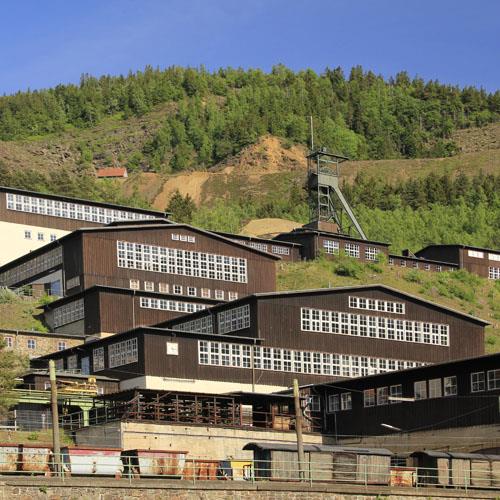
Rammelsberg Mine, Goslar
The Upper Harz mining water management system, which lies south of the Rammelsberg mines and the town of Goslar, has been developed over a period of some 800 years to assist in the process of extracting ore for the production of non-ferrous metals. Its construction was first undertaken in the Middle Ages by Cistercian monks, and it was then developed on a vast scale from the end of the 16th century until the 19th century. It is made up of an extremely complex but perfectly coherent system of artificial ponds, small channels, tunnels and underground drains. It enabled the development of water power for use in mining and metallurgical processes. It is a major site for mining innovation in the western world.

Bamberg
The old town of Bamsberg is entirely protected, from its numerous breweries to its many charming half-timbered houses over the river. Nicknamed the "Franconian Rome", this Bavarian city has one of Europe’s largest intact old town centers. Its early medieval plan and winding narrow streets make for a fabulously charming town.
But the city is more than just a gorgeous still life. Universität Bamberg brings in over 10,000 students and the nearby US Army Base has around 4,000 members meaning there are thousands of foreign nationals that reside here. It is a lively, international city with so much to discover from medieval castles to biergartens (beer garden) built into each of its seven hills.
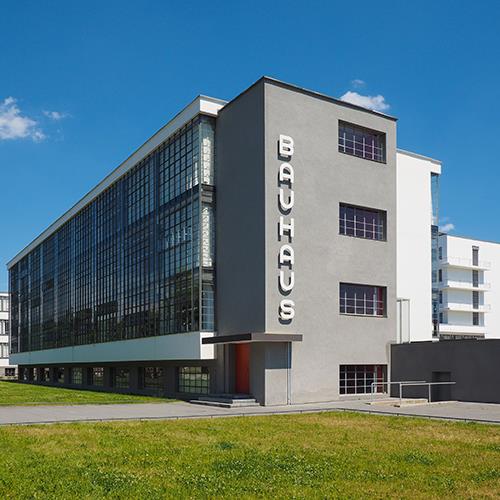
Bauhaus And Its Sites In Weimar And Dessau
The Bauhaus buildings in Weimar, Dessau and Bernau are representatives of Classical Modernism, directed towards a radical movement (between 1919 and 1933) of architecture and design. This property, which was awarded UNESCO status in 1996, originally comprised buildings located in Weimar (Former Art School, the Applied Art School and the Haus Am Horn) and Dessau (Bauhaus Building, the group of seven Masters' Houses). The 2017 extension includes the Houses with Balcony Access in Dessau and the ADGB Trade Union School in Bernau as key contributions to the Bauhaus ideas of austere design, functionalism and social reform.
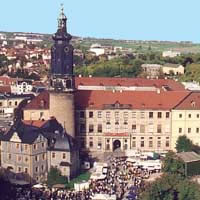
Classical Weimar
In the late 18th and early 19th centuries the tiny Thuringian town of Weimar underwent an extraordinary cultural growth, alluring many writers and scholars, notably Goethe and Schiller. This development is reflected in the high caliber of many of the buildings and of the parks in the surrounding area.

Hanseatic City of Lübeck
Situated at the Trave River with the largest German port at the Baltic Sea, Lübeck is a charming medieval town. The old part of the town is an island enclosed by the Trave river and is included on the UNESCO world`s cultural heritage list. The old town center has been the “City of Seven Spires” for hundreds of years, and even after a devastating bombing raid in 1942 those towers decorate the skyline of the Old Town on its island in the River Trave.

Baroque Opera House, Bayreuth
Bayreuth is an energetic and beautiful town in Germany. Having a great history, well-known for its renowned Wagner Museum, the town has much more to bring to its visitors and discovering the place is like traveling back in time, passing by the Renaissance until the middle ages. The Opera House is the only entirely preserved example of Baroque architecture where an audience of 500 can experience court opera culture and acoustics authentically, as its auditorium retains its original materials. Commissioned by Margravine Wilhelmine, wife of Frederick, Margrave of Bradenburg-Bayreuth, it was designed by the renowned theatre architect Giuseppe Galli Bibiena. As a court opera house in a public space, it foreshadowed the large public theatres of the 19th century. The elaborate decorated theatre represents the ephemeral ceremonial architectural tradition that was employed in pageants and celebrations for princely self-representation.
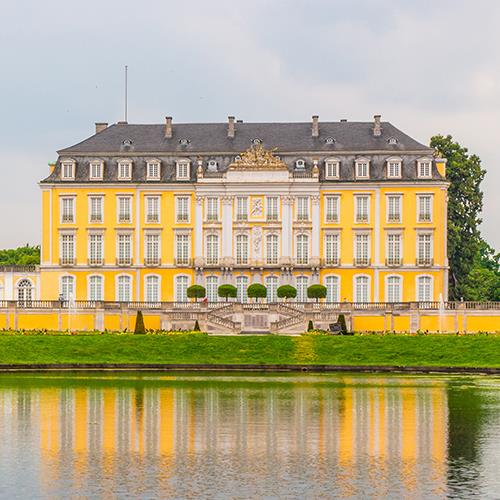
Castles of Augustusburg and Falkenlust at Brühl UNESCO
Set in an elaborate garden landscape, Augustusburg Castle (the beautiful residence of the prince-archbishops of Cologne) and the Falkenlust hunting lodge (a small rural folly) are among the earliest examples of Rococo architecture in 18th-century Germany. The buildings have been listed as a UNESCO cultural World Heritage Site since 1984. Augustusbug Palace and its parks also serve as a venue for the Bruhl Palace Concerts.