


Destinations
❮Main Menu
UNESCO WORLD HERITAGE SITES IN PERU

Cuzco City
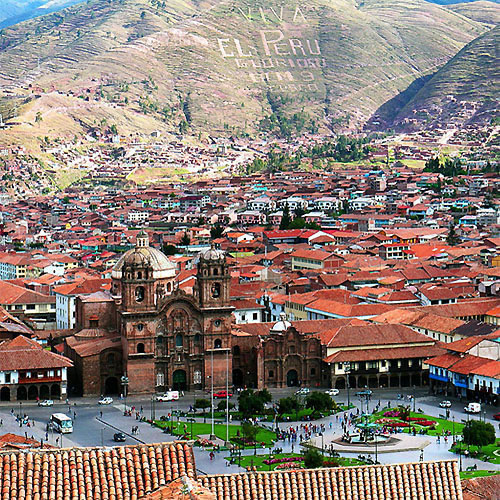
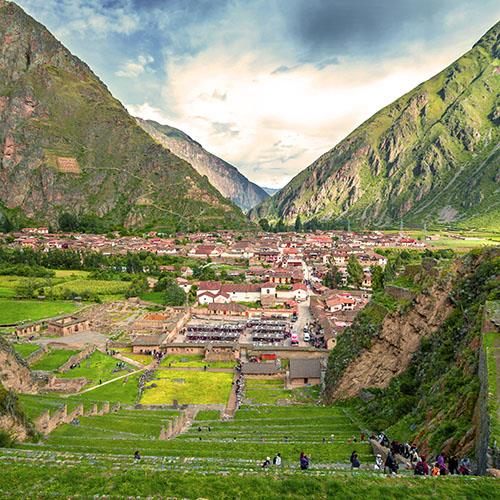
Cuzco city is an ancient city of cultural and historical importance in Peru, recognized as a UNESCO World Heritage Site in 1983 along with Machu Picchu. The city is known far and wide as a center of Inca culture and the once-powerful Inca Empire, home to a variety of well-preserved Inca and Spanish structures. Cuzco is considered the Imperial City of the Incas, sitting at a breathtaking 11,154 feet above sea level within the heart of the Sacred Valley, once considered the center of existence or axis Mundi (where heaven and earth connect). It is the gateway to Machu Picchu and boasts a unique blend of colonial architecture including Baroque churches that stand on the foundations of Inca ruins. The Ancient Andean city has a history that unfolded in the 13th century, built by the Incas it was the Empire’s capital for two centuries. Today Cuzco remains one of the most important cities in South America and a favorite among tourists who come to see the important temples, majestic buildings, and vibrant culture of the city. The city was developed by the Inca king Pachacutec, who ruled the Kingdom of Cuzco as it expanded during the 15th century and transformed into a complex urban center featuring distinct religious, administrative, agricultural, artisan, and industrial sectors. Cuzco is one of the highest cities in the world and some scholars believe it was laid out to take the shape of a puma, the symbol for Inca, with the magnificent Plaza de Armas lying at the puma’s heart.
The Qorikancha was the most important shrine of the Incas, dedicated to the worship of the sun, whom they called Inti. The Spanish conquered the city in 1532 and converted the temple into a Christian church and monastery, today the original masonry from the Inca era can still be seen underneath the baroque architecture. There are several other buildings surrounding the Plaza de Armas that still bear the signature of the Incas, the 12 angled stone on Hatun Rumiyoq Street demonstrates the technique of shaping stones that slot perfectly together.
Lima
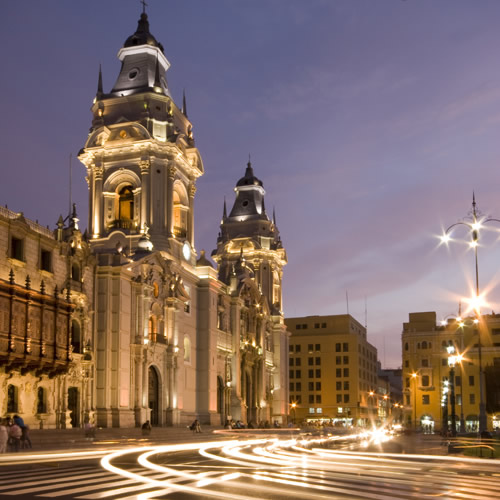
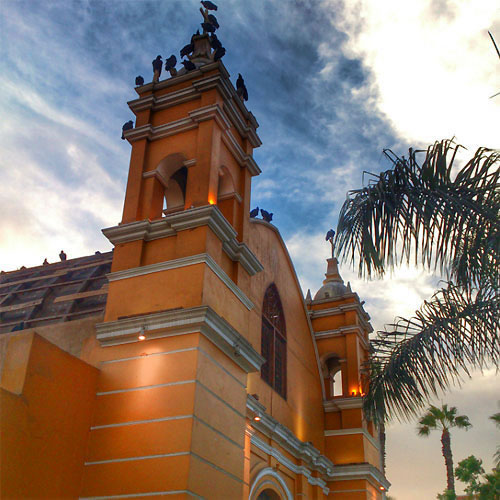
The historic center of Lima was listed as a UNESCO World Heritage Site in 1988, the ruins in the city are another great example of the city’s resilience having been through earthquakes and more. Lima was originally founded in 1535 by Francisco Pizarro as La Ciudad de Los Reyes (City of the Kings), and until the 18th century, it was the capital and most important city in Spanish South America. The city has long been recognized for its elegant detailed colonial architecture with buildings that highlight both the Spanish and local designs. The historic center of Lima is the best-preserved part of the capital city offering plenty of things to see and do like the Balconies of Lima, a series of 1,600 balconies built during the viceroyalty era and provide a sense of originality and harmony to the city. The Archbishop Palace, the Museum of Italian Art, the House of Aliaga, the House of Pilatos, the House of Oidor, and the Goyeneche House are other principal monuments in Lima’s historic center.
The Plaza de Armas (Plaza Mayor) is where the Cathedral of Lima, the Government Palace, Sagrario Chapel, and the Archbishop’s Palace are located, Plaza de la Vera Cruz with Santo Domingo, the City Hall, and the church and convent of San Franciso can be found in the historic center. The bridge of stone over the Rimac River, the Paseo de Aguas, the Alameda de Los Descalzos, and the Plaza de Toros de Acho are among other historic monuments worth checking out. The Viceroy Conde de Salvatierra is a magnificent bronze fountain that bears Lima and Spain’s coat of arms sits in the center of the plaza where Francisco Pizarro founded Lima in 1535, and where Jose de San Martin declared Peru’s independence in 1821.

Arequipa's "White City"
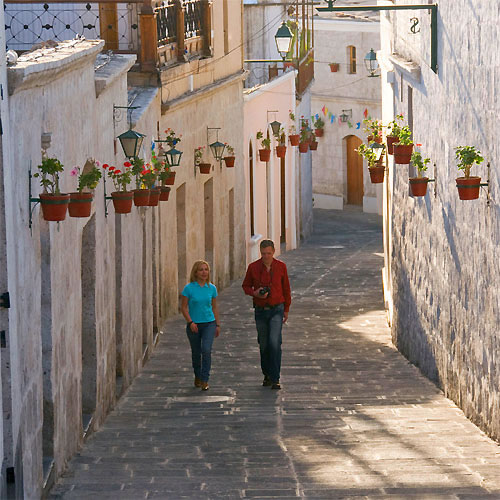
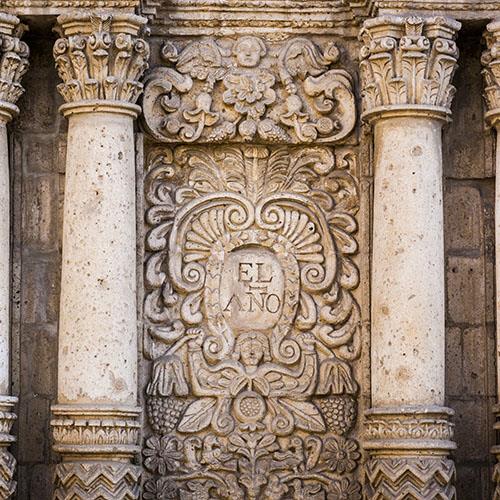
Arequipa is known as “The White City” and covers a well-groomed 49 blocks in the city, listed as a UNESCO World Heritage Cultural Site for its unique architecture. The historical center of Arequipa reminds you of an old Spanish City, one of the best-preserved architectural treasures in the country since the colonial period. The buildings in the “White City” beautifully blend Spanish Baroque style made by colonial masters and indigenous masons, constructed with the unique volcanic stone called sillar, which gives the buildings their stunning all-over white facades. There are many great preserved buildings in the city ranging from temples to convents, chapels, and churches, several elegant houses with a variety of influences seen in the city’s walls, grand archways, vaults, beautiful courtyards, and styled open spaces.
The historical city center of Arequipa is a spectacular sight to see, surrounded by the stunning snow-capped volcanic peaks and the distinct European architecture seen in the elaborate facades.
It was founded in 1540 by a Spaniard and soon became one of the Spanish Crown’s most loyal and prosperous cities in the New World. Arequipa’s UNESCO designation protects the city’s purely Spanish architecture from Baroque-inspired during the origin days in the 16th century to the more recent contemporary additions in the 19th century. The layout of the city center is typical of most Spanish colonial cities with an easy-to-navigate grid structure, the famous Plaza de Armas is the city’s well-manicured central palm-fringed plaza, one of the most beautiful and largest in Peru. The plaza is flanked by some of the most important religious and administrative buildings like the Church of La Compania, the Cathedral, the Church of La Merced, and the three arched portals which once served as the town hall for the Viceroyalty. The Santa Catalina Convent is one of the most famous attractions in the city, the awe-inspiring complex covers a sprawling 20,000 square meters and once served as a cloister for Dominican nuns from the 16th to the 18th centuries.
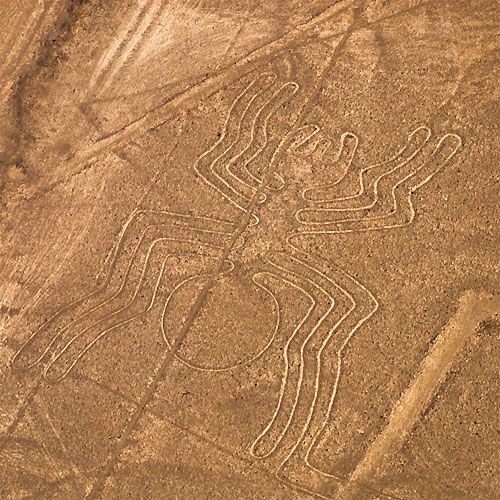
Nazca Lines
The lines and geoglyphs of Nazca and Palpa were added as UNESCO World Heritage Cultural Site in 1994 in Peru. These fascinating giant designs are etched into the desert sands of Nazca in Peru’s arid coastal plains, these artworks depict a wide range of figures and symbols, including animals. The prehistoric, archeological site is considered to be one of the most important geoglyphs in the world due to its long period of development spanning three chronological phases starting in 500 BC until 500 AD, as well as its diversity and size.
These lines and geoglyphs are truly a spectacular sight to see, considered to be one of the best artistic achievements of pre-Hispanic South America. There are several theories as to how they were created, several theories tie them to ritual astronomical functions. Created with such precision and care and have existed for over 2,000 years. These fascinating 900 lines and geoglyphs take on several different forms including plants, flowers, trees, geometrical patterns as well as animals like an eagle. They stretch anywhere from 500 to 1,200 feet in length.

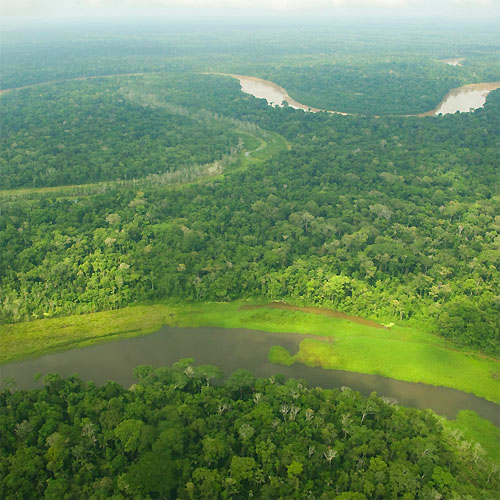
Manu National Park
Manu National Park is a national park and biosphere reserve located at the meeting point of the tropical Andes and Amazon Basin in Southwest Peru. Added to the list of UNESCO World Heritage Sites in 1987 the park covers a sprawling area of 1.5 million hectares, it is the only UNESCO World Heritage Site in the Peruvian Amazon. The park protects diverse ecosystems including cloud forests, Andean grasslands, and lowland rainforests, along with unique and rare species that call the park home. There are barely any roads in the park which is also mostly free of any signs of human impact, the park boasts some spectacular topography with altitudes ranging from 1,148 - 13,123 feet above sea level. Manu is one of the best wildlife destinations in the entire Amazon boasting natural wonders with various natural habitats within close proximity to each other. There are over 850 bird species identified here, along with rare and endemic species that range from giant armadillos to jaguars.
The park is inhabited by natives and Quechua-speaking farming communities, many of who have had no contact with the outside modern world for years. Eighty percent of the park is off-limits to travelers only allowing a few researchers access to study the wildlife, visitors to the park are only authorized to enter a lodge in the reserved zone (Manu River Sector) or the cultural zone which is located next to the park. Some of the best wildlife viewings can be seen just outside of the park near the Manu Wildlife Center at Boca Manu, there are over 1,000 vertebrate species, including at least 200 species of mammals, and over 800 species of birds including monkeys, jaguars, pumas, giant otters, giant armadillos and over 1,300 species of butterflies. There are new species discovered by researchers within the park including both animal and plant species, there are as many as 4,385 identified species of plants in the park. The vast altitudes of the park’s lowland rainforest and high altitude Andean grassland mean a variety of plant species are able to exist in the relatively small swath of the world.

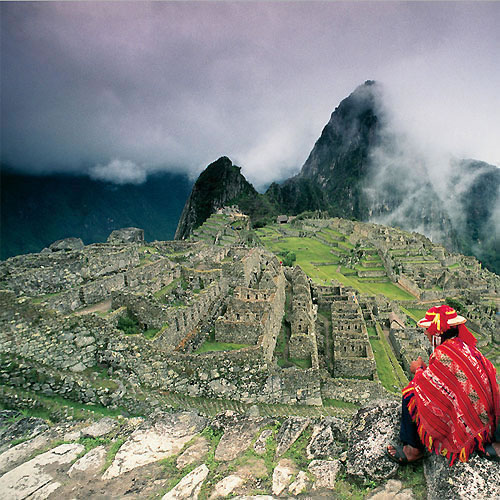
Machu Picchu
Machu Picchu is one of the most renowned archeological sites in the entire world, recognized for both its cultural and natural significance. It was designated as a mixed UNESCO World Cultural and Natural site in 1983, it is one of the most popular tourist destinations in the world with around 1 million visitors per year, or about 5,000 visitors per day during peak season. The ancient Inca citadel was established during the 15th century built in remarkable harmony with its natural setting perfectly carved into the Machu Picchu and Huayna Picchu mountains nestled at 7,545 feet above sea level in the upper Amazon basin.
Machu Picchu is a treasured natural and cultural site and holds outstanding cultural value to the Inca civilization, it is also considered for its natural importance. In 1911 Hiram Bingham brought Machu Picchu to the world’s attention, the sanctuary is a masterpiece of jungle-coated soaring mountains. The site is made up of 200 structures that include plazas, temples, homes, and over 700 agricultural terraces. There are many guesses as to what purpose Machu Picchu served for the Inca Empire, ranging from a ceremonial center or military fortress to an isolated retreat for ruling elites. There was a vast road system known as the Qhapaq Nan which had many roads and trails leading up to the citadel. The site’s position on the mountaintop perfectly suited it to align with very specific astrological events, including the solstice sunset, the place continues to be a mystery for archaeologists, architects, and scholars alike.
Construction began around the year 1450 when neither the iron nor steel were invented, the citadel and its 200 plus structures are made up of massive stones that are perfectly carved and mortar-less. Machu Picchu is a perfectly laid Incan example of stonework and engineering, a true testament to the mastery of art, urbanism, and architecture of the Inca civilization. The site’s location at the transition zone between the High Andes and the Amazon Basin makes it home to a variety of microclimates, habitats, and species of flora and fauna, there are several varieties of orchids, the famed Cock-of-the-Rock, and Andean lizards.
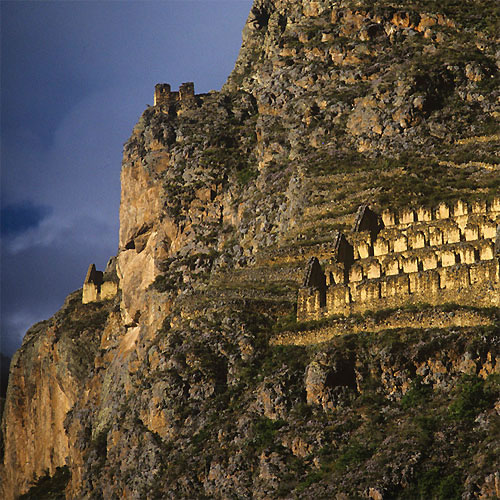
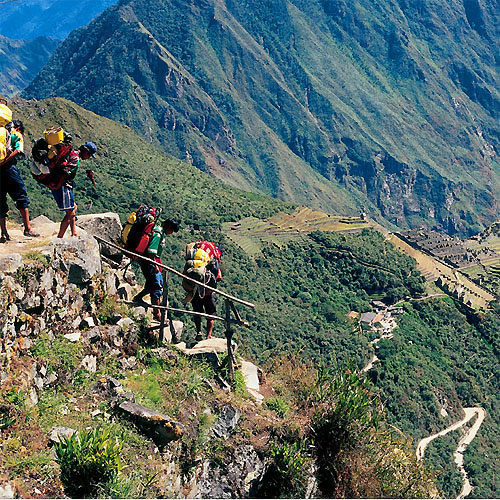
Qhapac Ñan, Andean Road System
The Qhapac Nan links the Andes to the coast, traversing through the desert, snow-capped mountains, and steamy jungle terrain. During the Incan times, it was used for transportation and as a means of communication, the expansive network of roads spans a whopping 18,642 miles with the most famous stretch being the road leading from Ollantaytambo to Machu Picchu better known as the Inca Trail. TThis massive transport network spans through various parts of South America including Argentina, Bolivia, Chile, Colombia, Ecuador, and Peru, and connects various production, administrative, and ceremonial centers. The Royal Road is the main axis of the route which runs along the peaks of the Andes between Quito and Mendoza, traveling over the highest peaks with roads that run north-south along the Pacific Coast.
Listed as a UNESCO World Heritage Site in 2014, originally built to facilitate trade and communication activities during the time of the civilization’s heyday. The same innovation was crucial in the development of the South American civilization during the 15th and 16th centuries. Many of the sections of the extensive road network had to be adapted to the different topography, climate, and some of the most extreme geographical terrains in the world, including the snow-capped Andes. The cultural landscapes of Qhapaq Nan make an exceptional backdrop with verdant rainforests, soaring mountains, and absolute deserts. The road system includes 273 component sites spread throughout its total length, they were selected to highlight the social, political, architectural, and engineering achievements of the network.
The network of the road system spans across the length and breadth of the Andes, it is based on four main routes, which originate from the central square of Cusco, the capital of the Tawantinsuyu. The main routes are connected to several other road networks of lower hierarchy that created linkages and cross-country connections. Boasting 137 component areas and 308 associated archeological sites, and sites of religious significance. The road network was the outcome of a political project implemented by the Incas linking towns and centers of production and worship together under an economic, social, and cultural program in the service of the State.
ADDITIONAL UNESCO WORLD HERITAGE SITES IN PERU
Chan Chan Archeological Zone
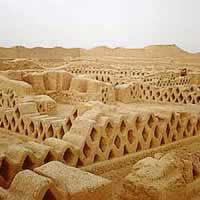
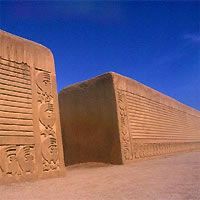
The Chan Chan Archeological Zone is located in the city of Chan Chan which was the capital city of the Chimu Kingdom that ruled from 1100 to 1470 AD. This is the largest pre-Columbian Americas city and was listed as a cultural site under the list of UNESCO World Heritage Site in Peru in 1986. The site encompasses the ruins of the great abandoned city of Chan Chan which covers 14 square miles boasting many brick structures made from Adobe brick and finished with mud, there are pyramidal temples, citadels, reservoirs, cemeteries, and gardens. Chan Chan was built during the 13th century by the pre-Inca Chimu culture and is one of the last remaining construction and connections this highly advanced ancient culture. There is enough left intact to be able to understand the culture and customs of the Chimu people, which include strict hierarchical social and political systems and a highly organized city planning and engineering plan.
The large adobe city of Chan Chan is located 3 miles west of the northern coastal city of Trujillo, at the mouth of the arid Moche Valley. The city once housed approximately 60,000 people during its heyday over 600 years ago, it was the seat of the empire and contained a vast amount of gold, silver, and ceramics which are now housed in the nearby Museo de Sitio Chan Chan. The Chan Chan population relied on a sophisticated network of irrigation canals and wells to get water, these irrigation systems were far ahead of their times, which made them one of the first true engineering societies in the New World.
The City was divided into ten walled citadels and royal compounds that each contained plazas, storerooms, and royal burial chambers. The Tschudi Complex is the only restored and accessible section left today where visitors can explore the restored ceremonial courtyards featuring geometric walls, and designs with elaborate friezes that stretch for hundreds of feet. The Mausoleum of a Chimu king can also be accessed.
Chavin de Huantar
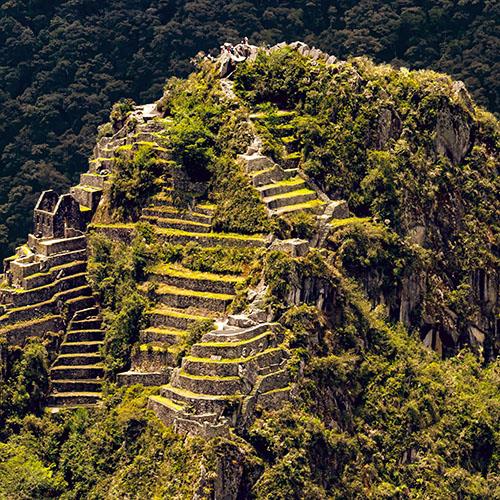
Chavin de Huantar is a pre-Colombian archaeological site located in the highlands of Peru, specifically in the Cordillera Blanca. It was established in 1,500 to 500 BC, it was named after Chavin de Huantar, the center for the region’s economic, social, and political activity, it was listed as a UNESCO World Heritage Site in 1985. Chavin gives visitors a glimpse into the world of Peru’s oldest complex societies featuring large temple-like structures, labyrinthine underground passages, and distinct Chavin stone monuments and sculptures. The site served as a cult center and pilgrimage site until around 200 BC and attracted worshippers from across the Andean territories. There are a 15 ft tall granite statue carved to look like a standing figure, half-human, half-animal with fangs and snakes protruding from its head nestled at the heart of the temple. In order to reach Chavin de Huantar, visitors must take the scenic mountain roads to reach the 10,423-foot temple perched three hours from Huaraz, which is the capital of the Ancash region.
Sacred City of Caral-Supe
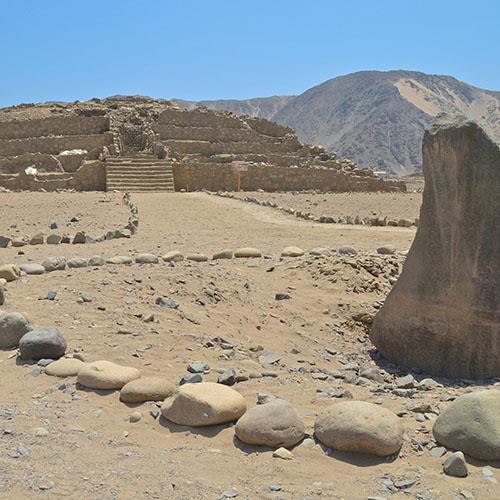
The Sacred City of Caral-Supe is considered to be the cradle of civilization in the Americas, a 5,000-year-old complex filled with a complex of pyramids, and sunken circular courts that were only just discovered in 1948. This is an important cultural site found in the Supa Valley, covers 35 square miles, and was home to around 20,000 people. It is the capital of the Norte Chico Civilization, which are the earliest known civilizations on the continent. Archeologists state that this civilization has existed since the late Archaic period, and visiting will give people insight into how the ancient civilization lived in small villages and thrived on agriculture and fishing. There are a total of 19 settlements found within the Sacred City of Caral-Supe including public buildings, plazas, and dwellings.
Huascaran National Park
The Huascaran National Park is a natural site that was designated by UNESCO as a world heritage site in 1985 covering a sprawling 340 hectares of protected mountainous landscape in the heart of Peru’s Cordillera Blanca (White Mountains). The most notable feature of the park includes Nevado Huascaran (Mount Huascaran) which is the highest peak in the country soaring to 22,000 feet. The endangered Queen of the Andes, the largest species of bromeliad known for its giant flower-spike, along with over 800 documented plant species are grown in the park. There are also remnants from pre-Colombian cultures such as the archeological ruins of Chavin de Huantar, which is also a UNESCO World Heritage Site are found within the park. The Park was established in 1975 and the mountain range here is the highest tropical mountain range in the entire world, managed by the Peruvian Network of Protected Natural Areas.
The park is filled with spectacular landscapes, biodiversity, and impressive geomorphology. There are 27 snow-capped peaks, over 600 glaciers, and 41 tributaries that lead to three important rivers; the Santa, Pativilca, and Maranon. The park attracts extreme mountaineers and day-trippers who come to see the turquoise lagoons, tropical glaciers, rich flora, and fauna. Vicuna, Spectacled Bears, Puma’s, Andean Condors, and Giant Hummingbirds call the park home. The mountain city of Huaraz is the nearest city to the park where visitors can get acclimated to the elevations of the region. There are 25 trekking circuits, 102 climbing routes, and 33 archeological sites that include everything from cave paintings to eroded agricultural terraces, fortresses, and tombs. Laguna 69 is a beautiful turquoise lagoon in the park which is a popular spot for travelers to visit.
Rio Abiseo National Park
The Rio Abiseo National Park is a cultural and natural UNESCO World Heritage Site located in San Martin, Peru, it was inscribed in 1990. The park covers 274,520 hectares on the Eastern slopes of the tropical Andes in North-Central Peru, home to a wide range of flora and fauna species and 30 archaeological sites dating back to the pre-Columbian era. The park’s claim to fame came with the rediscovery of the thought-to-be-extinct Yellow-Tailed Wooly Monkey, the fauna and flora of the region are mostly endemic with at least 7 climate zones and a world of biodiversity. The rainforests in the park are believed to date back to the Pleistocene Era, which means that most of the flora and fauna within the park survived and evolved during repeated glaciation phases.
The archeological sites within Rio Abiseo National Park span eight millennia of human history, the first evidence of civilization in the park dates back to 6,000 BC. Many of the ruins within the park include rock shelters, roads, domestic and ceremonial structures, storage buildings, fences, platforms, agricultural terraces, and burial sites. The following are among some of the well-known archaeological sites worth visiting; La Playa, Las Papayas, Los Pinchudos, Gran Pajaten, Cerro Central, and Manachaqui Cave. Other rare and endemic species that live in the park include the Spectacled Bear, Giant Armadillo’s, North Andean Deer, Jaguar’s, primates, and hundreds of bird species.