


Destinations
❮Main Menu
UNESCO WORLD HERITAGE SITES IN SPAIN

Old Town of Segovia and its Aqueduct, Segovia
The Roman Aqueduct, probably built around A.D. 50, is remarkably well preserved. This is the town’s most notable and impressive feature, with its two tiers of arches, which resembles a giant colonnade stretching over a part of the town with over hundred arches that forms part of the setting of the history of Segovia. In the past, the aqueduct channeled water from the Rio Frio, some 8 miles uphill. The Old Town is home to a 16th-century Gothic cathedral that is said to have inspired Walt Disney’s own castle icon. Another important monument includes the Alcazar, begun around the 11th century.

Monuments of Oviedo and the Kingdom of the Asturias, Oviedo
In the 9th century the flame of Christianity was kept alive in the Iberian peninsula in the tiny Kingdom of the Asturias. The Monuments of Oviedo and the Kingdom of the Asturias is an innovative pre-Romanesque architectural style that was created to play an important rold in the development of the religious architecture of the peninsula. Its highest accomplishments can be seen in the churches of Santa Maria del Naronco, San Miguel de Lillo, Santa Cristina de Lena, the Cámara Santa and San Julian de los Prados, in and around the ancient capital city of Oviedo.


Historic Center of Córdoba
Córdoba in Andalusia in the south of Spain is an example where the entire old town of a city has been declared a World Heritage Site. Córdoba’s oldest part is quite small, so it’s easy to explore with a pleasant walk down interconnecting narrow alleys through the Old Town.
one fascinating building after another on foot.
The most noteworthy landmark is the Grand Mosque or mezquita in Spanish. This landmark is considered the pinnacle of Moorish architecture, uniquely referred to as a mosque-cathedral, featuring Roman columns and an intricately gilded mihrab inside. In 784 A.D., when Spain was under Islamic rule, the mosque was constructed. After the conquest by the Catholic Kings, a Roman Catholic cathedral was built in and around the mosque in the 13th century. A walk over the striking Roman Bridge will bring you to the Alcazar of the Christian monarchs, a medieval fortress built in 1328 with lush gardens and décor of the typical Mudejar architecture of the south of Spain.
Other historical and cultural highlights are the Museum of the Inquisition and the exquisite Museum of Art on Leather, which documents the ancient Arabic art of embossing leather. Córdoba is also the city of beautiful flower patios with an annual festival and competition for the most colorful and lavish arrangements.

Alhambra, Generalife and Albayzín, Granada
The beautiful Moorish-Christian palace of Alhambra and its rose-colored fortress walls are set on a hilltop overlooking the cityscape of Granada. Just a short walk north outside the palace walls is the fascinating ornamental water gardens of Generalife. For the most amazing views of Alhambra, you can go north, to the adjacent hilltop district of Albaicin. The town itself offers narrow medieval streets and alleys lined with traditional houses.

Burgos Cathedral, Burgos
The Burgos Cathedral is a masterwork of 13th century Gothic Architecture. Its layout resembles that of contemporary cathedrals in the north of France. Towards the middle of the 15th century, a set of further embellishments was made. An international team of architects and artists worked on the front spires, chapel and the choir in the late Gothic style. Later, the Renaissance accents were made. The entire history offers a unique collection of works of art, including paintings, choir stalls, reredos, tombs and stained-glass windows.

Works of Antoni Gaudí, Barcelona
Catalan architect Antoni Gaudi is considered the foremost representative of the early 20th-century movement of Catalan Modernism. HIs designs of flowing lines, decorative wrought ironwork, and colorful ceramic chips are all recognizable of his works. There are seven of his works that were completed in his lifetime that have been declared World Heritage Sites, all in Barcelona.
The seven works include: Parque Guell, a vast park on carmel Hill; Palacio Guell, the beautiful city palace in the heart of Barcelona; Casa Mila, also known as La Pedrera, is one of Gaudi's best known urban buildings; Casa Vicens is another townhouse and was Gaudi's first commission; Casa Batlló's remarkable feature is the curved roof covered in multi-colored ceramic mosaic and the "glued-on" balconies; The still unfinished Sagrada Familia cathedral is Gaudi's masterpiece; and Crypt at Colonia Guell, another religious building originally commissioned as a church with four naves.


Santiago de Compostela Old Town
A major Catholic pilgrimage site since the 9th century, the Santiago de Compostela goes back to Spain’s tumultuous past, during the Moorish invasion of Spain. It was conquered by Muslim rulers at the end of the 10th century, but rebuilt in a style that blends Romanesque, Gothic and Baroque architectural styles.
You’ll find most of the grand monuments around the richly decorated Cathedral of St. James, with its heavily-sculpted Romanesque main gate known as the “portico of glory”. The interior is baroque style with gold leaf as far as the eye can reach. Look out for the botafumeiro, a huge silver bowl hanging from a heavy chaing and used to burn incense during mass. The main entrance faces the Praza do Obraidoiro, the largest square of Santiago de Compostela. Cross over to the medieval Hostal de Los Reyes Catolicos, which was built in 1492 as a hospice to sick pilgrims and is today a luxury hotel.
Many more churches and buildings like the Town Hall, make up this World Heritage Site, including the Old Town’s many narrow alleys and connecting passageways, often populated by local musicians in traditional costume, playing the bagpipe.

Old Town of Ávila with its Extra-Muros Churches, Avila
The Old Town of Avila is surrounded by well-preserved medieval city walls. These were built to defend the city from invaders and feature semi-circular stone fortress towers with 9 gates into the city. Just outside the Old town is a sting of Romanesque churches that have been declared a UNESCO World Heritage Site. The most emblematic monument, the walls, stand out because they are preserved in excellent condition.
You will see Romanesque churches such as San Pedro, San Nicolás, San Segundo, San Esteban, San Andrés, San Martín and Santo Tomé. There are also many convents and monasteries: Las Gordillas, Santo Tomás, San José, La Encarnación and Santa María de Gracia are some examples. The three last ones are also very much connected with the figure of Santa Teresa de Jesús. The many noble houses and palaces are also attractions in the city. The mansions of los Velada, los Verdugo, Polentinos and Valderrábanos, amongst others, are worth a visit.
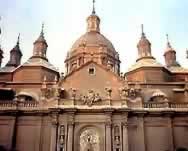
Mudéjar Architecture of Aragon, Provinces of Teruel and Zaragoza
The development in the 12th century of Mudéjar art in Aragon resulted from the particular political, social and cultural conditions that was carried out in Spain after the Reconquista. This art, influenced by Islamic tradition, also reflects various contemporary European styles, particularly the Gothic. Present until the early 17th century, it is distinguished by an exceptionally refined and inventive use of brick and glazed tiles in architecture, especially in the belfries.

Historic City of Toledo
Before Madrid, there was Toledo. As Spain’s old capital, this former Roman municipality is rich in history and has been declared a UNESCO World Heritage Site. The city is also known as the city of Three Cultures because, like in Cordoba, Jews, Aras, and Christians lived together in harmony for centuries, creating between them an urban museum with over 100 historical monuments and buildings, reflecting every possible style from Mudejar to Gothic to Renaissance.
Impressive landmarks in the city include the gothic Chapel of San Bartolomé and the military museum of Alcázar that’s housed in an actual grand fortress, as well as ancient medieval stone bridges like the Puerta de Alfonso. Much of the city’s historical treasures blend different religious architectural styles: Judaism, Christianity, and Islam.
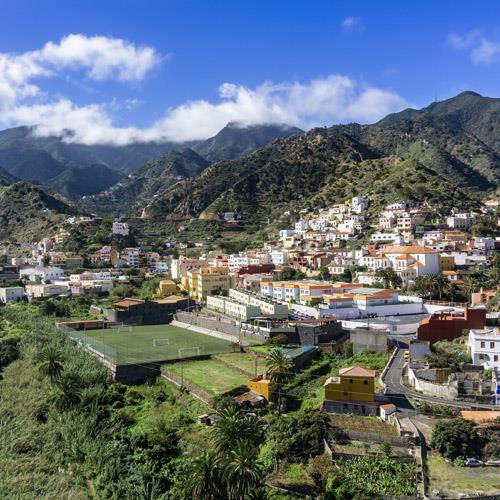
Garajonay National Park, La Gomera, Canary Islands
La Gomera lies to the west of Tenerife and is one of seven islands that make up the Canary Islands archipelago off the northwest coast of Africa in the Atlantic. The island is accessible by ferry from Tenerife. The park can be reached by road from the island’s major towns and villages.
Laurel forest covers some 70% of this park, situated in the middle of the island of La Gomera in the Canary Islands archipelago. The presence of springs and numerous streams makes for a lush vegetation resembling that of the Tertiary, which, due to climatic changes, has largely disappeared from southern Europe.
The park encompasses San Sebastián, Hermigua, Agulo, Vallehermoso, Valle Gran Rey and Alajero mountains. It consists of an eroded plateau and gently sloping central terrain whose steep escarpments comprise uneven steps that extend as far as the park boundaries.

Old Town of Salamanca
Situated just north of Madrid and spread over several hills by the River Tormes, the historical town of Salamanca is an ancient university town. The Carthaginians first conquered the city in the 3rd century B.C. It then became a Roman settlement before being ruled by the Moors until the 11th century. The university, one of the oldest in Europe, reached its height during the Salamanca's Golden Age. The Salamanca Cathedral serves as its focal point, surrounded by historical buildings in Romanesque, Gothic, Moorish, Renaissance and Baroque architecture. The galleries and arcades of Plaza Mayor are particularly impressive, and head south towards the cathedral to discover the towering old buildings along the way.

Cathedral, Alcázar and Archivo de Indias in Seville
The Cathedral, Alcazar and Archivo, located in the heart of Seville, are three buildings that form a monumental complex and have been designated a UNESCO World heritage site. The Cathedral and Alcazar, both dating back to the 16th century, are a remarkable testimony to the civilization of the Almohads as well as that of Christian Andalusia. The ancient Lonja, which became the Archivo de Indias, houses valuable documents from the archives of the colonies in the Americas.
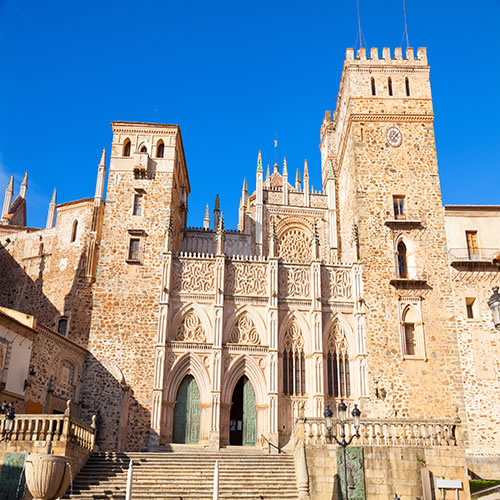
Old Town of Cáceres
The Old Town of Caceres is filled with historic buildings with architecture that combines Roman, Islamic, Gothic and Italian Renaissance styles. The town is a fantastic depiction of the influences between the Moors and Christians, which successively ruled the region throughout different points in history.
As you stroll the cobblestoned medieval streets of the Old Town you will discover several fortified structures and towers (about 30). A highlight is the stone tower of Torre del Bujaco in Plaza Mayor, which is one of the most famous among its many other towers.

Biodiversity and Culture, Ibiza
Ibiza is an outstanding example of the interaction between the marine and coastal ecosystems. The shallow waters between the islands of Ibiza and Formentera nurture dense prairies of Posidonia sea-grass, a species endemic to the Mediterranean basin, which has helped create their coastal and marine ecosystems and, with the flanking saltpan lagoons, supports a large diversity of marine and bird life. Ibiza preserves considerable evidence of its long history. The archaeological sites at Sa Caleta (settlement) and Puig des Molins (necropolis) attest to the important role played by the island in the Mediterranean economy in protohistory. The fortified Upper Town is an perfect example of Renaissance military architecture very influential on the fortification of ports in the Spanish Americas.

Archaeological Ensemble of Mérida
Mérida, the capital of Extremadura, was founded in 25 B.C. by Emperor Augustus with the name of Augusta Emerita. It has become a World Heritage Site because it holds the remains of many public buildings that were the trademarks of a major Roman provincial capital. The city has the most significant number of Roman ruins in all of Spain, they include: Guadiana Bridge, Amphitheatre, Theatre, Temple of Diana, Arch of Trajan, Circus, Water supply system, Baths, Residences, and Tombs.

Historic Walled Town of Cuenca
Located around 90 miles southeast of Madrid, Cuenca is a prime example of a well-preserved medieval fortress town. The city is surrounded by the Serrania de Cuenca mountain range and overlooks the Huecar River. It became a royal city after the Catholic Kings re-conquered it in the 12th-century. The most stunning views in Cuenca are the famous hanging houses, some painted in bright colors, and clinging to the cliffs over the river Huecar. One of these houses the Museum of Spanish Abstract Art, the most important of its kind. You can walk the town’s cobblestoned streets to a series of Moorish castle ruins and remarkable landmarks, which include the towering Catedral de Santa Maria y San Julián de Cuenca, which is also considered Spain’s first Gothic cathedral.

La Lonja (The Silk Exchange) in València
The Lonja is an emblematic building of the city and one of the most famous civil gothic monuments in Europe. Built between 1482 and 1533, this group of buildings was originally used for trading in silk and has always been the center of commerce. It was declared a National Historic and Artistic Monument in July1931 and was made a World Heritage Site by UNESCO in December 1996.
The Lonja is located in the center of the city - in front of the Central Market and the Temple of Santos Juanes - and occupies a rectangular area. At the end of the 13th century, as a result of the prosperity in València at the time, the old Lonja became insufficient and it was decided to build a new Exchange.

Archaeological Ensemble of Tárraco, Tarragona
Tarraco (modern-day Tarragona) was a monumental architectural achievement. Established in the 3rd-century BC, it was a major administrative and mercantile city in Roman Spain and the center of the Imperial cult for all the Iberian provinces. The town is home to many fine buildings, and parts of these have been revealed in a series of exceptional excavations. Although most of the remains are fragmentary, many preserved beneath more recent buildings, they are a testament of the grandeur of this Roman provincial capital. A trip here will change your understanding of the ancient world.

Palmeral of Elche
The Palmeral of Elche, a landscape of groves of date palms, was formally laid out, with elaborate irrigation systems, at the time the Muslim city of Elche was erected, towards the end of the tenth century A.C., when much of the Iberian peninsula was Arab. The palm forest was originally created by the Arabs when they settled in Elche to remind them of home. It is an oasis and was designated as a UNESCO site in 2000 because it is a unique agricultural landscape that defined the city's identity. Aside from the sheer size of the orchard, this is the only palm grove of its kind in Europe and also the largest outside of the Arab countries.
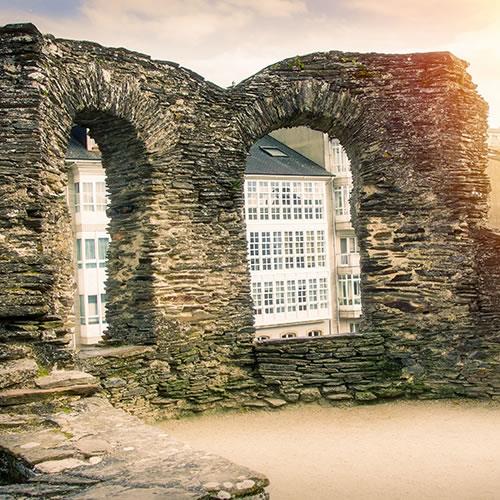
Roman Walls of Lugo
The walls that surround the city of Lugo are remarkably intact Roman stone fortifications that have encircled this Spanish city for centuries. The entire circuit survives intact, so much so, it looks as if it could have been built only dozens of years ago instead of thousands. The ancient walls stand almost 40 feet tall at their highest point, with curved lookout towers bulging out of the wall at irregular intervals. The top of the wall stays a consistent 14 ft in width which can still be walked in a complete circuit. Ten gates were built into the wall, and of them, five are still the Roman originals.
Las Médulas, León
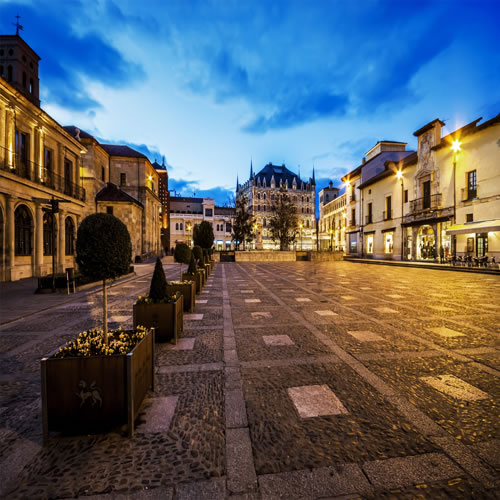
In the 1st century A.D. the Roman Imperial authorities began to exploit the gold deposits of this region in north-west Spain, using a technique based on hydraulic power. After two centuries of working the deposits, the Romans withdrew, leaving a devastated landscape. Since there was no subsequent industrial activity, the dramatic traces of this remarkable ancient technology are visible everywhere as sheer faces in the mountainsides and the vast areas of tailings, now used for agriculture.
Birthplace of Cervantes - Author of Don Quixote, Madrid
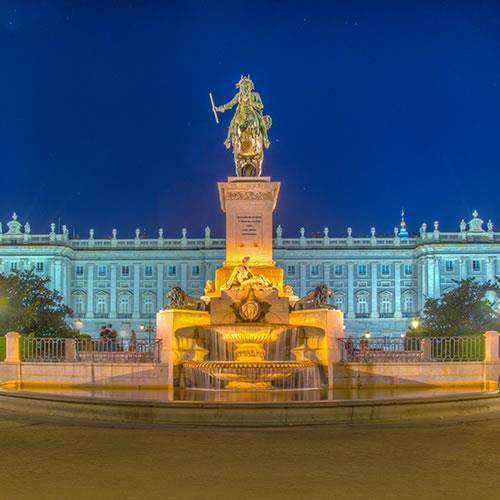
The University of Alcalá de Henares in Madrid is the highlighted landmark of this historical precinct of the same name. The university is housed in a 16th-century building. It’s considered the world's first planned university city.
As you explore the university and the historical old town, you’ll discover intricately impressive Mudéjar (elaborate Moorish style patterns) ceilings. You can also visit the Cervantes Birthplace Museum, home of the author of the famous classical Spanish novel, Don Quixote.

Monastery and Site of the Escorial, Madrid
The Escurial Monastery stands proudly at the beautiful site in Castile. Built at the end of the 16th-century on a plan in the form of a grill, its austere architecture had a considerable influence on Spanish architecture for more than half a century. The Monastery was a retreat of a mystic king and became, in the last few years of Philip II’s reign, the center of the greatest political power of all time.