


HIDDEN GEMS OF EGYPT
The Karnak Temple Complex
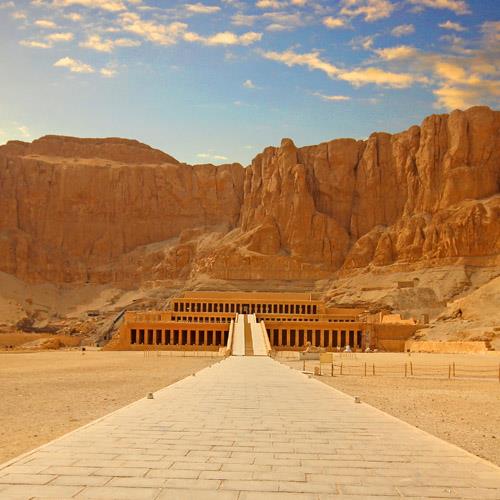
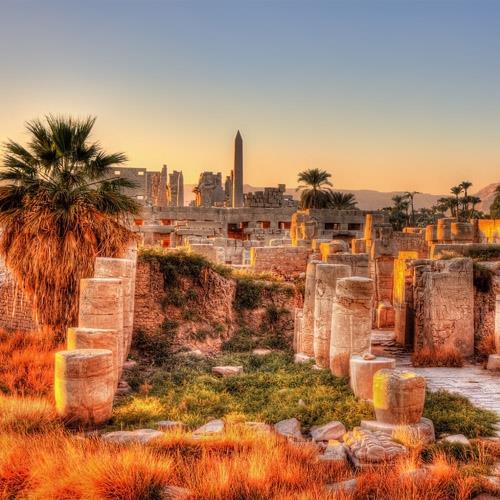
The Karnak Temple Complex is located near Luxor and features a vast mixture of decaying temples, chapels, pylons, and other buildings. The vast construction of this mighty complex began during the reign of Senusret I in the Middle Kingdom around 2000-1700 BCD and continued through the Ptolemaic Kingdom (305-30 BCE). The vast open site includes the Karnak Open Air Museum, believed to be the second most visited historical site in the country, there are four main parts to the complex and only the largest is currently open to the public. Karnak is part of the monumental city of Thebes and was inscribed on the UNESCO World Heritage Site List in 1979. The Karnak complex gives its name to the nearby, and partly surrounded, modern village of El-Karnak which is 1.6 miles north of Luxor.
The Great Hypostyle Hall in the Precinct of Amun-Re is one of the famous parts of Karnak, a hall measuring 50,000 sq ft with 134 massive columns that are arranged in 16 rows. One hundred and twenty-two of the columns measure 33 feet tall and the other 12 are 69 feet tall, with architraves on top of the columns that weigh an estimated 70 tons. Approximately 30 pharaohs contributed to the building, enabling it to reach its massive size, complexity, and diversity. The size and number of features of Karnak are simply overwhelming.
The Ras Mohammad National Park
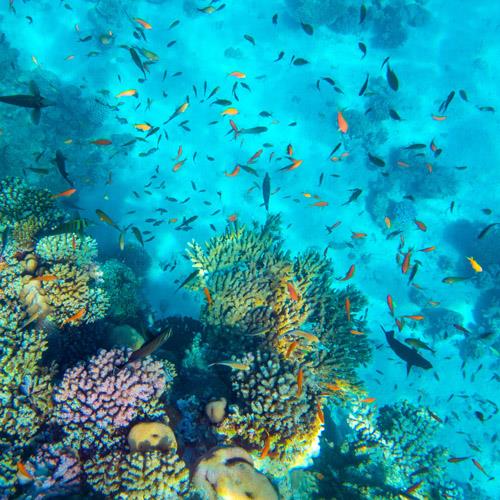
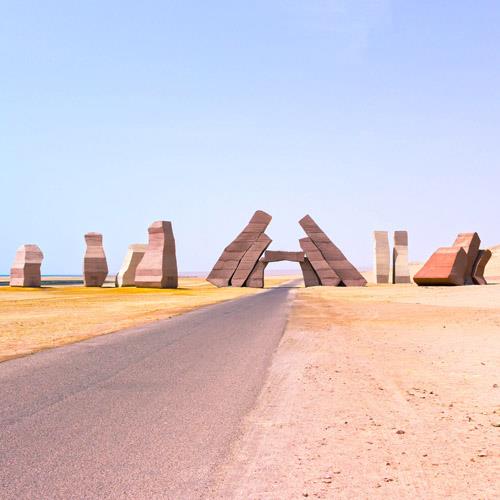
The Ras Mohammad National Park is located at the southern extreme of the Sinai Peninsula overlooking the Gulf of Suez on the west and the Gulf of Aqaba to the east. The national park covers 185 square miles, it was the first national park in the country and was declared for protection from fishing and other human activities, it also protects the Red Sea Reef. The protected landscapes within the park include mountains, sand dunes, wadis, and coastal mud plains as well as small mangrove forests. The name of the park literally means “Mohammad’s Head”, where “head” in this instance means “headland”. The name is said to have arisen from a side view and the contour of the cliff looks like the profile of a bearded man’s face.
There are over 220 species of corals reefs in the Red Sea Reef accompanied by 1,000 species of fish, 40 species of starfish, 150 species of crustaceans, and 25 species of sea urchins. The green turtle and the hawksbill turtle are just two of the sea turtles that can be found swimming in the water. The Red Sea stretches for 1,400 miles with a surface area of 169,000 square miles. It is located along the coastal waters of the Red Sea and Egypt, and unique as it serves as the furthest north tropical body of water. The reef system is comprised of lagoons, cylinders, and platforms, it is the largest coral reef in Africa. The park is mostly known for its coastal landscapes, crystal clear blue waters, and for exploring the underwater world.
The Dendera Temple Complex
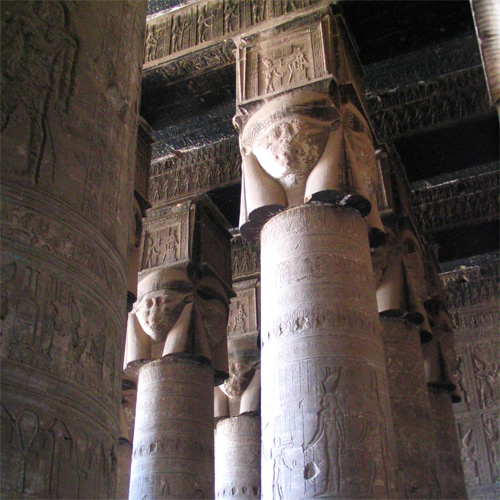
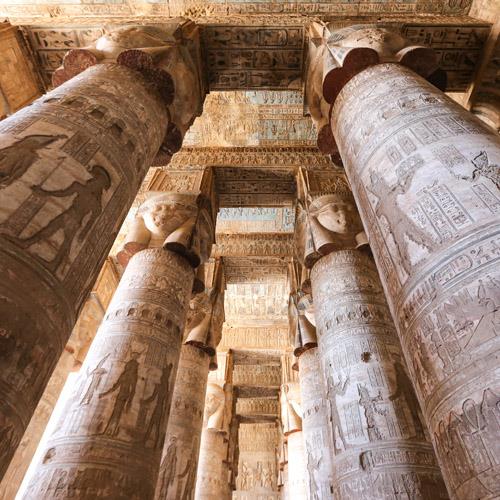
The Dendera Temple complex is located in the small town of Dendera, a former bishopric in Egypt located on the west bank of the Nile around 3 miles south of Qena and approximately 37 miles north of Luxor. The Temple complex is one of the best-preserved sites from ancient Upper Egypt and contains the Temple of Hathor. The complex covers some 40,000 square meters and is surrounded by hefty mud-brick walls, it boasts a basilica, two birth houses, a sacred lake, and numerous other temples and shrines within the walls. The area surrounding the temple has been extensively landscaped and features a modern visitors center, a bazaar, and a small cafeteria.
The present Temple of Hathor dates back to 54 BC at the time of Ptolemy XII of the Ptolemaic dynasty, it was completed by Tiberius the Roman Emperor and rests on the foundations of earlier buildings dating back at least as far as Khufu. It was once home to the celebrated Dendera zodiac, which is now displayed in the Louvre Museum in Paris. The first building on site is estimated to have been constructed around 2250 BCE, and the Mentuhotep II monument which is the oldest existing building dates to 1995 BCE, this has since been moved to Cairo. The Temple of Hathor is an excellent example of traditional Pharaonic architecture and includes a monumental gateway, it was the center of the cult of Hathor.
The famous Zodiac of Dendera, a bas-relief with human and animal figures that represent the night skyscape was found on the ceiling of a chapel in the Temple of Hathor, where the mysteries of the resurrection of the god Osiris were celebrated. Egyptologists determined it should be interpreted as a map of the sky rather than a giant horoscope or a perpetual astrological tool. The particular configuration of the planets among the constellations shown in the Zodiac of Dendera occurs about once every thousand years.

Temple of Khnum
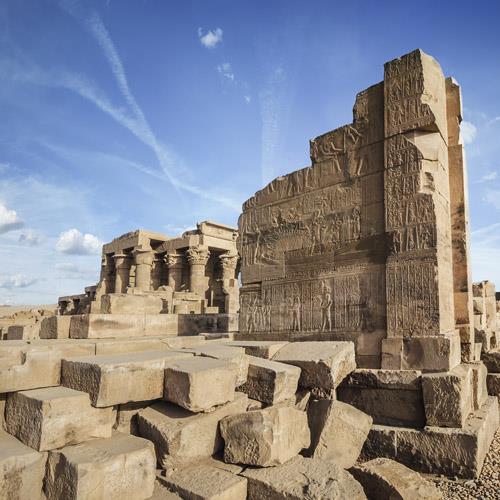
The ancient town of Esna is located 34 miles south of Luxor on the west bank of the Nile, it is home to the most famous ancient Egyptian temples and was one of the most prestigious cities in the Ancient Egyptian civilization. Esna is known as “the city of the fish” where perch fish were worshipped as divine. It is home to some incredible temples like the Temple of Esna or the Temple of Khnum which was dedicated to the ram-headed god Khnum (the god of creation). The construction of the Temple of Esna began during King Tuthmosis III’s reign during the 18th Dynasty, construction was completed during the Ptolemaic period and the Roman period between 40 to 250 AD.
There are remains of the Temple including a hall of columns with 24 pillars that are decorated beautifully with lotus floral capitals and palm capitals. The walls are covered with 4 rows of reliefs that show Ptolemaic and Roman Emperors dressed in Pharaoh costumes offering sacrifices to the god Khnum. There are chambers on both sides of the temple entrance that were used by priests and keepers of the temple as storerooms. Some of the most interesting inscriptions in this temple are the ones on the roof decorated with astronomical representations, the left side of the gateway of the Temple shows the sky Goddess Nut, the Dog Star, Orion’s belt, and Alpha Draconis or the Dragon Star.
The modern town of Esna is famous for its barrage bridges that were built over the Nile River by the British in 1906 and the “Electricity Bridge” built in the 1990s. Esna is a popular stopover on Nile cruises and a popular place to visit the bustling outdoor market which runs along a few streets inland from the Nile Corniche.
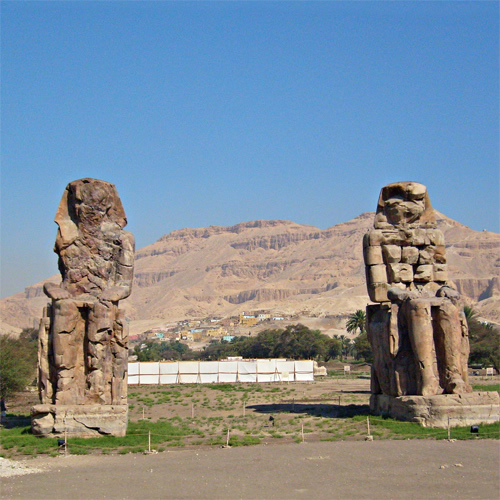
The Colossi of Memnon
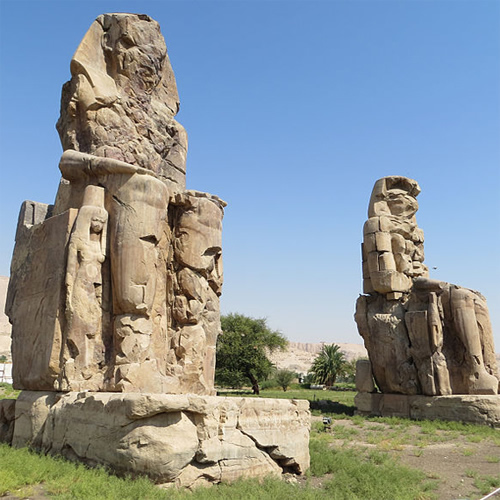
The Colossi of Memnon are two monumental statues that represent the Pharaoh Amenhotep III (1386-1353 BCE) of the 18th Dynasty of Egypt. These massive stone statues are located west of the modern city of Luxor in the Theban Necropolis west of the River Nile facing east towards the river. The statues depict the seated king on a throne ornamented with imagery of his mother, his wife, the god Hapy, and other symbolic engravings. They rise up to 60 feet tall and weigh in at 720 tons each, both are carved from single blocks of quartzite sandstone.
The statues were constructed as guardians for Amenhotep III’s mortuary complex that once stood behind them. Their names come from the Greek hero Memnon who fell at Troy. Memnon was an Ethiopian king that joined the battle on the Trojan’s side against the Greeks, he was killed by the Green champion Achilles. Greek writers referred to the entire complex as the Memnonium and the site became legendary for divination after one of the statues began to make noises interpreted as oracles. These massive statues were either quarried from the area around Memphis (near modern-day Cairo) or from the region near Aswan, either way, the blocks would have been transported overland up to 400 miles, as they were too heavy to be transported by ship on the Nile.
The Colossi’s original function was to stand guard at Amenhotep’s entrance to the memorial temple, who was worshipped as a god on earth both before and after his departure from this world. In its heyday, the temple complex was the largest and most opulent in Ancient Egypt that covered 86 acres. Very little remains of the temple today, it stood on the edge of the Nile floodplain and successive annual inundations gnawed away at its foundations.
Edfu
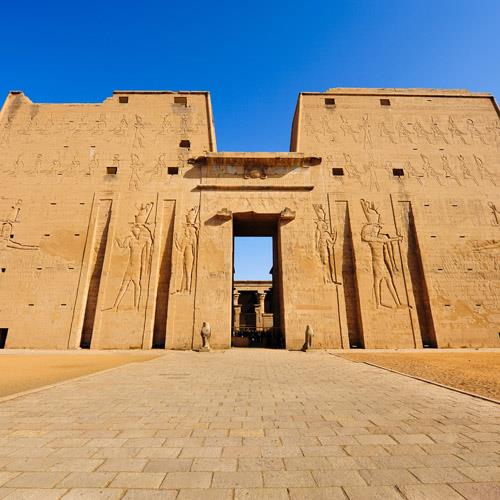
The ancient settlement of Edfu is located around 164 feet to the west of the Ptolemaic temple, also spelled Idfu, an Egyptian city on the west bank of the Nile River between Esna and Aswan. Edfu is the site of the Ptolemaic Temple of Horus and an ancient settlement, Tell Edfu. Edfu’s Temple of Horus was constructed around the 2nd century BC when Egypt was ruled by the pharaohs of the Ptolemy Dynasty. This temple is one of the newer ones in the country and is one of the best-preserved, making it one of Upper Egypt’s major Nile-side tourist attractions. The impressive temple is one of the most amazing feats of construction completed during the Ptolemaic era and one of the best places to absorb and experience the audacious ambition of Egypt’s temple builders.
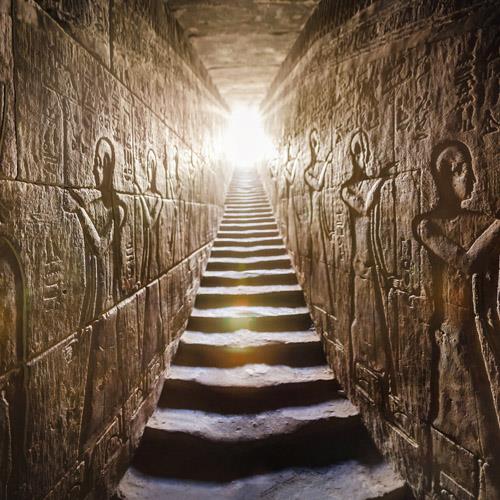
The looming sandstone walls are covered in giant hieroglyphics and dazzling friezes that ape the patriotic decorations of earlier pharaohs. There are vast chambers within the temple as well as colossal gateways and towering hallways, along with extensive wall carvings that provide historians with valuable information about the Hellenistic period of Egyptian history. The temple’s exquisite reliefs provide great insight into the religion, mythology, and way of life during this era. The temple was buried under almost 40 feet of desert sand and silt from the Nile for 200 years, this helped to conserve the structure to near perfection. Excavation began in the mid 19th century by Auguste Mariette, and today the temple is entered through a long row of shops where a new visitors center stands, a cafeteria, and a room showing a 15-minute film on the history of the temple.
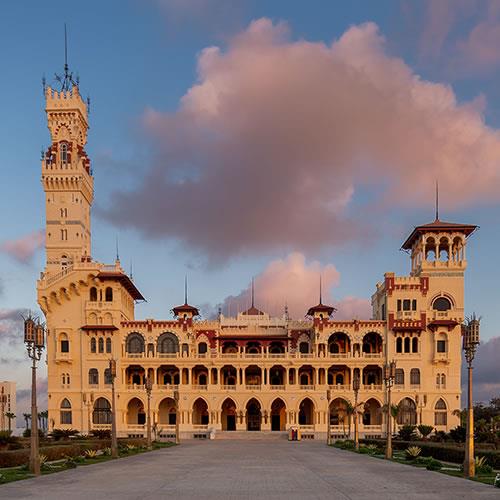
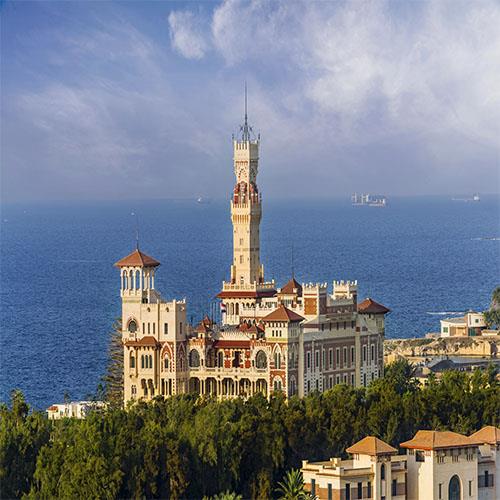
Montaza Palace
Montaza Palace is a palace, museum, and extensive gardens in the Montaza district of Alexandria, Egypt. The palace was built on a low plateau east of central Alexandria overlooking a beach on the Mediterranean Sea. The palace was built at the beginning of the 20th century by Khedive Abbas II, a relative of King Farouk, and features a mixture of Turkish and Florentine architecture with a central tower that was inspired by the Palazzo Vecchio in Florence. After the revolution of 1952, the gardens and palace became the property of the Egyptian government, and both were opened to the public.
Montaza is the name of a neighborhood in the city of Alexandria, a very distinguished area home to many vibrant gardens, and exquisite palaces that once belonged to the royals. The colorful landscapes of this area are simply beautiful with key points including The Clock Tower, the Helnan Palestine hotel, the Salamlek Palace hotel, and the Montaza Palace. The Salamlek Palace has been transformed into a museum and the immaculate gardens here cover a large area of land with many different trees, plants, and tropical palms. Walking through the beautiful gardens and extensive grounds that surround the Palace is a must, with a verdant green setting bordered by soft white sand beaches and stretches of coastline. There are several greenhouses with impressive plant varieties, a lush park, a semi-private beach, and picnic areas on the lawn.
The much larger Al-Haramlik Palace and royal gardens were added to the Montaza Place grounds in 1932 to the Montaza Palace grounds. This palace boasts a unique Florentine and Turkish style architecture with two towers, one of which rises distinctively high above with elaborated Italian Renaissance design. The Al Salamlik Palace was first built in 1892 as a hunting lodge for the Khedive and his friends. It was renovated in the 1970s to serve as an official presidential residence during the summer months.


El Quseir Fort
The El Quseir Fort is located in the harbor city of Quseir on the Red Sea coast, on the narrowest point between the Nile River and the Red Sea. The fort was built during the 16th century by the Ottoman rulers of Egypt to defend the harbor from Portuguese traders that were attempting to force entry to the lucrative trade with China and India in timber, pepper, and silk. Quseir’s strategic position led it to operate as a commercial and military harbor since Egypt’s Roman period. The surviving structure of the fort is elaborate with a watchtower in the middle for great views of the surrounding town, an old narrow-gauge railway, pearl fishing boats, and old cannons are just a few of the fort’s features.
The small fortress was built in 1571 to provide the Ottoman troops to control the port, it was modified several times by the French and then the British, who permanently altered the fortress by firing some 6,000 cannonballs upon it during a heated battle. It was used until 1975 by the Egyptian coast guard. The original exterior walls remain intact and the interior has been well renovated, some of the rooms feature interesting information boards documenting the history of al Quseir. The North Bastion features a small exhibition on the local Ababda tribe and there are displays on the old trading routes across the desert to the Nile and down to the Red Sea.