


Destinations
❮Main Menu
UNESCO WORLD HERITAGE SITES IN PORTUGAL

Jerónimos Monastery (Monastery of the Hieronymites) and the Tower of Belem, Lisbon
The Jerónimos Monastery (Monastery of the Hieronymites) and the Tower of Belém are two historical gems placed in the very city of Lisbon. Dating back to the 16th century, the Monastery took over a century to be completed, and today, it is one of the most recognizable symbols of the Portuguese capital. The monastery is linked to the Age of Discoveries, as it was also built to perpetuate the memory of Prince Henry the Navigator. Explore the beautifully and ornamented structure, typical of Manueline art, and it’s home to a two-story cloister, considered one of the best parts of the monastery.
Within walking distance from the monastery and overlooking the Tagus River sits the Tower of Belem, built to commemorate Vasco da Gama’s expedition and those mariners as well, right on the spot where they departed for their voyages of discovery. Built between 1514 and 1520, this Manueline-style tower was designed by architect and sculptor Fransisco de Arruda, and was strategically positioned to defend the city against attackers.
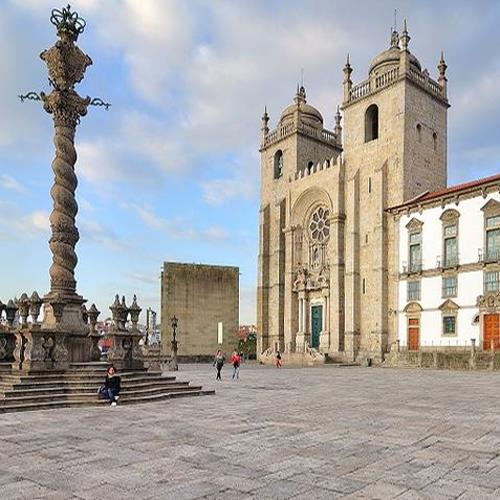
Historic Center of Porto, Porto
Overlooking the Douro River, Porto is the second largest city in Portugal with history dating back to the Roman era. Porto’s Historic Center is a UNESCO World Heritage Site, along with the remarkable Luiz I Bridge and the Monastery of Serra do Pilar. Porto’s Old Town has many medieval streets and is one of the oldest in Europe, with a 2,000-year history. Today, the city still has a strong relationship with its river and its urban side, all contributed by different periods and cultures living in one modern, yet still traditional city.
To experience the best Porto, cross the Luiz I Bridge to Vila Nova de Gaia. Filled with world-class wine cellars, the city is also home to the Monastery of Serra do Pilar, the architectural landmark of Gaia. The former monastery was built between 1538 and 1670 and offers breathtaking viewpoints of the Douro and the center of Porto.
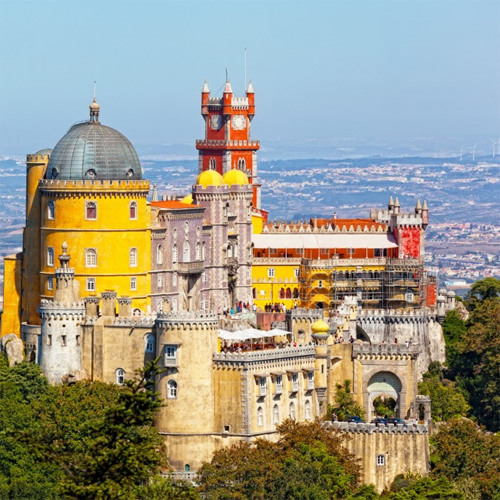
Cultural Landscape of Sintra, Lisbon
Sintra is a quaint and picturesque village covered in both Mediterranean and northern European flora. It encompasses the Sintra-Cascais Nature Park and the 6-mile long Sintra Mountains, which has been linked to prehistoric astral cults. In the 19th century its old monastery was converted by the king into a hybrid castle with Gothic, Moorish and Renaissance styles.
Sintra is a popular day-trip destination from Lisbon with its lush vegetation perfectly framing Sintra’s cultural sites, including the National Palace of Pena, the city’s most prominent feature. Placed at the top of a hill, in the Sintra Mountains, this unique palace is believed to have been built on the site of the Moorish alcazar of Sintra, and it displays the largest collection of Hispanic-Moorish tiles in Europe.

Historic Centre of Évora, Évora
The historic center of Evora offers a rich history dating back to Roman domination when it was an important town celebrated for its abundance of wheat and silver. Over the centuries, Evora was also ruled by the Moors, the Visigoths, and played a significant role in the Portuguese reign during the Middle Ages, serving as the home of King João III.
The city is small and easy to explore on foot. Start at the city’s main square, and head to the Roman Temple of Diana. Explore the Evora Museum, and the Se de Evora, which is the biggest cathedral in Portugal. And discover the Chapel of Bones, just next to the Church of St. Francis. The chapel, a prominent monument in Evora, was built by Franciscan monks in the late 16th century, and it’s entirely conveyed by bones and skulls.
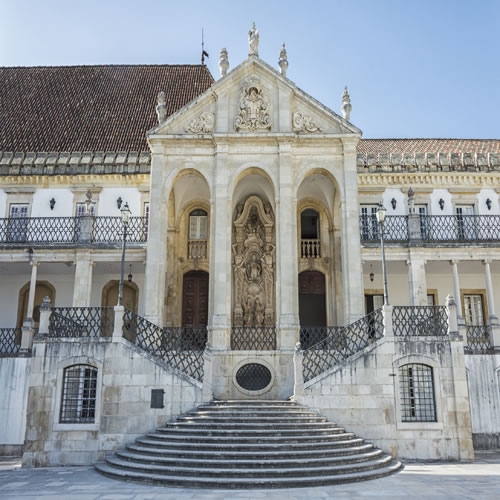
University of Coimbra - Alta and Sofia, Coimbra
Built on the banks of the Mondego River, Coimbra is the former capital of Portugal, and it’s most recognized for being home to the Historic University of Coimbra, the oldest in the country, listed as a UNESCO Heritage Site in 2013.
Founded in Lisbon by Dom Dinis, in 1290, the University of Coimbra was permanently transferred to Coimbra in 1537. The university was established in the Royal Palace of Alcáçova, on the hill above the town (Alta), overlooking the Mondego River. Over the centuries, it developed into a series of colleges, but it managed to preserve its stunning features, including the Baroque-style Joanina Library, which houses more than 53 thousand books from the 16th to the 18th centuries.

The Landscape of the Pico Island Vineyard Culture, Azores Island
The premium viniculture region in the Azores, The Pico Island Vineyard Culture, is a famous wine-growing area in Portugal. Pico Island is the second-largest island of the Azores, and home to Mount Pico, a stratovolcano that is the highest mountain of Portugal, at 7,713 ft above sea level. The island is filled with boundless lava fields and the vineyards are planted in black lava grounds. Spanning within 2,439 acres of Pico Island, delightful Vineyard Culture is divided into small plots, which are encompassed by stone walls, and separated from the other farms by larger walls.
Currently, in Pico Island, three noble indigenous varieties are grown: Arinto dos Açores, Verdelho, and Terrantez do Pico. These are white grape varieties known for resulting in full-bodied and well-structured wines, with a complex aroma of spices.
One of the best places to go for a wine tasting on the Island is at the Cooperativa Vitivinícola da Ilha do Pico (CVIP), which offers a tour where you’ll have the opportunity not only to learn the history of the vineyards but also taste 6 nectars produced on the island Mountain.
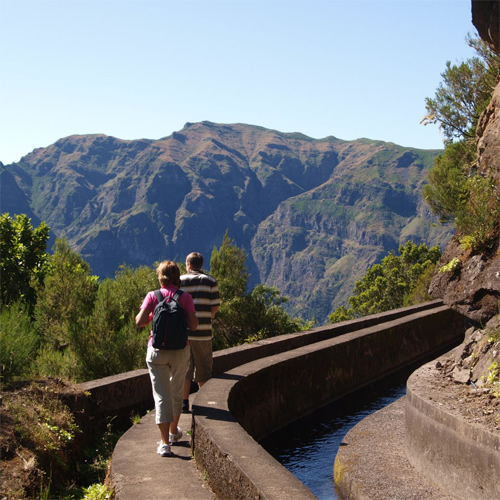
Laurissilva of Madeira, Madeira
The Laurisilva of Madeira is a green sanctuary located within the Madeira Natural Park. The forest covers 20% of Madeira Island and is the largest surviving laurel forest in the world. Native plants and animals, including endemic species, which means that they are only found on the island.
The subtropical forest, which covered much of Southern Europe 15-40 million years ago, offers high humidity and relatively stable, mild temperatures. Due to the different glaciations in Europe, the “laurissilva” disappeared in a great part of Europe and, now, this lush forest is confined to the Azores, Canary Islands, and Madeira Island.
The Laurisilva of Madeira can be explored throughout a few trekking accessible areas and is a place of importance in Portugal thanks to its biological diversity. Aside from maintaining the hydrological balance on the island, and producing abundant sources of water used by the local people, the forest is home to about 760 plants. Of those, 149, including the Madeira Orchid, are endemic.
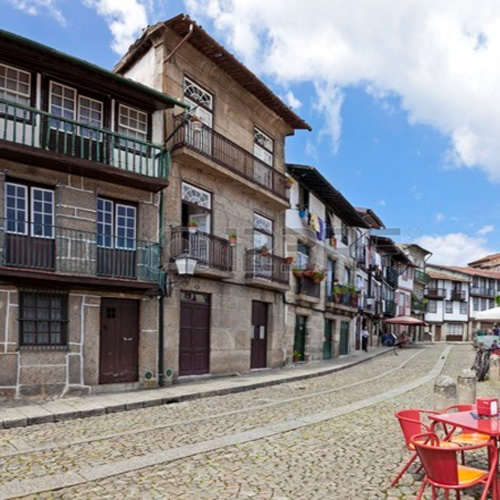
Historic Centre of Guimaraes, Guimarães
Located in the district of Braga, the beautiful preserved Historic Centre of Guimarães plays an important role in the creation of the national identity and the language of Portugal. Founded in the 4th-century, Guimarães is often referred to as the “birthplace of Portugal” or “the cradle city”, as it was the feudal territory of the Portuguese Dukes who declared the independence of Portugal in the 12th century. Its compact historic center can be explored in one day, where you can discover monuments including the hilltop Guimarães Castle, which is believed to be the birthplace of Afonso Henriques, Portugal’s first kind, and the Baroque-style Our Lady of Consolation Church. The center has maintained its medieval urban layout with architecture displayed from many different periods.
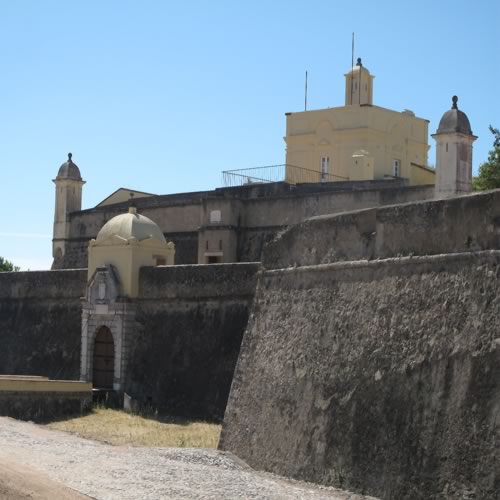
Garrison Border Town of Elvas and its Fortifications, Alentejo
Built from the 17th to the 19th century, the Garrison Border Town of Elvas and its Fortifications is the largest bulwarked dry-ditch system in the world. Located in the region of Alentejo, near the Portuguese-Spanish border, this World Heritage Site (2012) has seven components: the Historic Centre of Elvas, the Amoreira Aqueduct, the Fort of Santa Luzia, the Fort of Graça, and the Fortlets of São Mamede, São Pedro, and São Domingos. One of the most remarkable is the Fort of Graça, which sits on the top of a rugged hill surrounded by a star-shaped defense system. While Elvas contains remains dating back to the 10th century, its fortification began during the Portuguese Restoration War. The fortification played a major role in the Battle of the Lines of Elvas in 1659.

Sanctuary of Bom Jesus do Monte, Braga
A sculptured stairway with 573 steps leads to the top of a hill, where the Bom Jesus do Monte Church sits. Developed over more than 600 years, the staircase and the church form the Sanctuary of Bom Jesus do Monte, in Braga, which is surrounded by a densely wooded verdant area.
The stairway is decorated with symbolic fountains, statues, and Borque-style ornamental elements, which represent the Stations of the Cross, the Five Senses, the Virtues, Moses receiving the Commandments and, at the top, the biblical figures that contributed to the Condemnation of Jesus.
Whether you choose to take the stairs or reach the top by funicular, make sure you take in the view from the bottom of the Stairway, where you’ll have a breathtaking view of the granite fountains placed on the various landings. Once you get to the top, you’ll be rewarded with another stunning view: the scenic landscape of the city of Braga, in the north of Portugal.
ADDITIONAL UNESCO WORLD HERITAGE SITES IN PORTUGAL

Monastery of Alcobaça, Alcobaca
Just north of Lisbon, the Monastery of Alcobaça is dated from the 12th century by King Afonso I as a gift to a Cistercian monk, Bernard of Clairvaux (Saint Bernard), after Portugal’s conquest of Santarém from the Moors, in 1152. Situated in a fertile and rich land, the monastery was designed to evoke the abbey of Claraval, the Cisternian’s Order’s mother church in France. Its size, and the stunning architectural style make this a masterpiece of Cisterian Gothic Art.

Prehistoric Rock Art Sites in the Côa Valley
Located in northeastern Portugal, near the border of Spain, the Prehistoric Rock-Art of the Côa Valley is an open-air Paleolithic archaeological (PAVC) site that comprises, along with the Siega Verde Archaeological Park, hundreds of prehistoric panels. In the early 1990’s rock engravings were discovered in Vila Nova de Foz Côa during the construction of a dam in the Côa River valley. They include thousands of engraved rock drawings of horses, bovines, and other animals, human and abstract figures, dated from 22,000 to 10,000 years B.C.
Covering a total area of 77 square miles, the Côa Valley Park is an open air art gallery adorned with engravings from the Neolithic, the Chalcolithic, and the Iron Age, as well as from the 17th, 18th, 19th, and 20th centuries. There are three centers that can be visited in the Côa Park: Canada do Inferno, close to Vila Nova de Foz Côa, which are the first group of engravings to be discovered; Ribeira de Piscos, at Muxagata, and Penascosa, close to the village of Castelo Melhor.

Monastery of Batalha, Batalha
Built between 1388 and 1433, the Monastery of Batalha is one of the finest samples of Gothic architecture in Europe. Monastery of Santa Maria da Vitória, or Monastery of Batalha, was built in fulfillment of a vow by King João to celebrate the victory of the Portuguese over the Castilians at the battle of Aljubarrota, in 1385.
The monastery was designed by the English architect Master Huguet and boasts a profusion of sculptures, which represent 12 apostles, numerous Saints, prophets, angels, and biblical figures. The interior, which is 262 ft long and 107 ft high, is dotted with rose stained-glass windows, and it’s home to the Royal Cloister. This, by the way, happens to be one of the most important features of the monument, as it harbors the medieval tomb of Dom João I and his wife, Queen Philippa of Lancaster.

Convent of Christ in Tomar, Tomar
Located in the city of Tomar, about 95 miles from Lisbon, the Convent of Christ is part of the largest Portuguese monument complexes, standing at the top of a hill and spread within roughly 45 acres. The Convent is surrounded by the walls of the Castle of Tomar. It belonged to the Order of the Templars and was founded in the 12th century. Built over the span of five centuries, the Convent of Christ displays a range of architectural styles, from Byzantine-Romanic and Italian Renaissance, to Gothic and Manueline. One of the special features of the convent is Manueline style dating from the 15th and early 16th centuries. It is a very specific interpretation of the Gothic in terms of architectural structure and decoration.
While the Convent of Christ is the main feature of Tomar, also take some time to wander around this quaint little city. Placed on the banks of Nabão River, Tomar is home to a medieval urban area with cobblestoned streets, aside from well-preserved constructions that immortalize Portugal’s history.
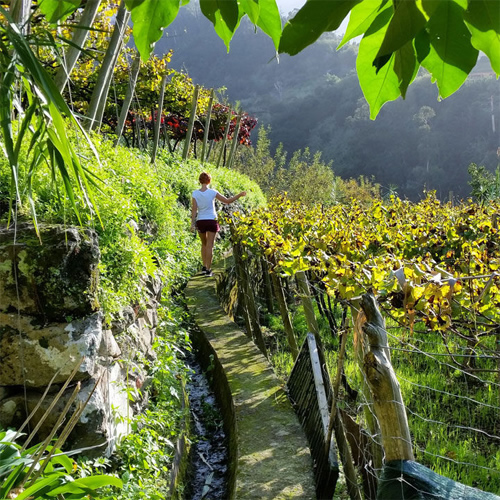
Alto Douro Wine Region
Wine has been produced by traditional landholders in the Alto Douro Region for some 2,000 years. Designated a World Heritage site in 2001, the Alto Douro Wine region has an ancient tradition of viticulture with its main product being the world-famous Port Wine, a fortified, rich, and smooth-on-the-palate wine that retains the natural sweetness of the grape. Steeply sloping terraced vineyards cover some 24,600 hectares. They are still profitably farmed in traditional ways by traditional landowners. Characteristically white-walled villages and homes are located in the middle part of the valley slopes. The landscape is dotted with small chapels placed high on the hills or next to manor houses. One of the best ways of exploring the great scenic beauty of the Alto Douro Wine Region is by taking the Port Wine Route.
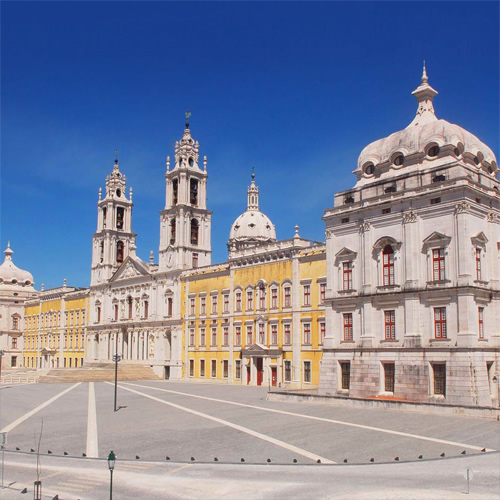
Royal Building of Mafra - Palace, Basilica, Convent, Cerco Garden and Hunting Park
Located about 40 minutes outside the capital city, Lisbon lies the Royal Building of Mafra. The Royal Building of Mafra encompasses a Palace, a Basilica, a Convent, a Garden, and a Hunting Park. It was designed by the German architect Johann Friedrich Ludwig, the Royal Building of Mafra was ordered by King John V in 1711, and it became not only a Baroque showpiece but also a symbol of the king’s power.
One of the most highlighted features of the complex is the National Palace of Mafra, which was the summer residence of the royal family, and built thanks to the Brazilian gild that poured into the country. Covering an area of almost four hectares, the palace is the most important Baroque building in Portugal, and it’s home to 1,200 rooms, more than 4,700 doors and windows, 156 stairways, and 29 inner yards and courtyards. The largest and most distinguished room in the building is the National Library of Mafra, with wooden Rococo bookshelves that hold some 36,000 books dating from the 14th to the 19th centuries.