


Destinations
❮Main Menu
UNESCO WORLD HERITAGE SITES IN TURKEY
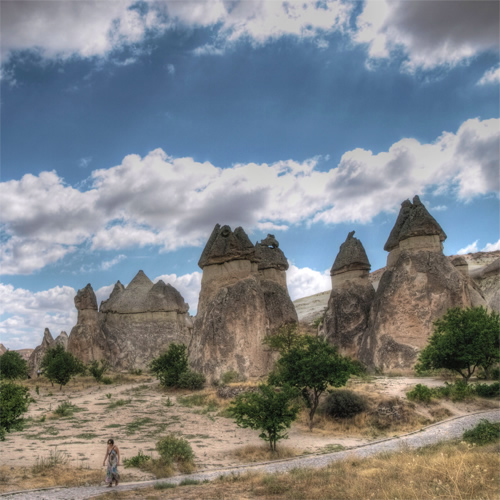
Goreme National Park - Cappadocia (Central Anatolia)
The spectacular landscape of Goreme National Park is located in the central part of Turkey, which is a volcanic area that includes Mount Erciyes and Mount Hansan. This mass collection of historical monasteries and cave churches provide unique evidence of Byzantine art in the post-Iconoclastic period and is the most popular attraction in Cappadocia. Dwellings, troglodyte villages and underground towns, the remains of a traditional human habitat dating back to the 4the century, can also be seen at the park. The national park boundaries encompass an area of 39 sq miles.
The remarkable Pergamon was an ancient city located in the Anatolia region that dates from 197 to 159 BC. The collection of monuments and buildings include the Hellenistic Theatre, the Trajan Sanctuary, and Athenium (the Library). Sitting on the Izmir peninsula, the city had a great strategic value, since it overlooked the Caicus River Valley (today named Bakircay) which provided access from Pergamon to the Aegean coast.
Istanbul Old District, Istanbul
Due to its strategic location on the Bosphorus peninsula between the Balkans and Anatolia, The Black Sea and the Mediterranean, Istanbul has been linked with major political, religious and artistic events for more than 2,000 years. The historical attractions within the Old District of Istanbul include the Blue Mosque, Hagia Sophia, and Topkapi Palace, from where the Ottoman sultans ruled over their vast empire. Situated in the Sultanahmet district of Istanbul, these landmarks are the most popular attractions hosting millions of visitors every year, all now under threat from population pressure, industrial pollution and uncontrolled urbanization.
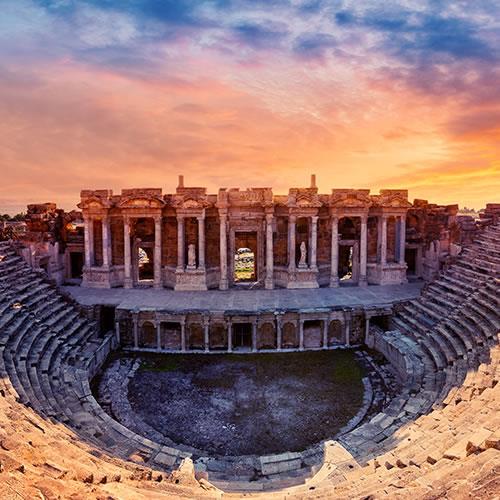
Pamukkale and Hierapolis, Pamukkale
The name Pamukkale, or “Cotton Castle” reflects the white, cottony appearance of the calcium-rich province. The stunning landscape is made up of mineral forests, petrified waterfalls and a series of terraced basins. Nearby, in history, Hierapolis ancient city ruins were a spa center frequented by Roman soldiers and these days, the must-see landmark is a beatiful theater.
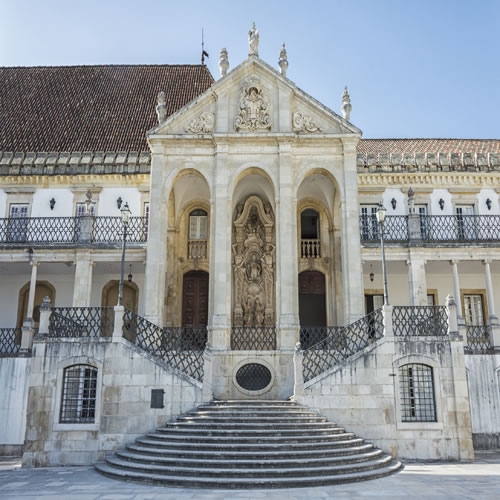
Bursa and Cumalikizik, Bursa
Bursa, as the first capital of Ottoman Empire located on the north western slopes of Uludag Mountain, and Cumalikizik founded as a village during the same period, were inscribed on the UNESCO World Heritage List in 2014. These days, Bursa is famous for Mount Uludag ski resort but also the ancient Ottoman and Selcuk architecture as seen in many of the buildings. The reign of the Ottmans started here in 1326, with the surrender of Bursa to Osman bey by the Byzantines. His son Orhan Ghazi is seen as the founder of the Ottoman dynasty. The tombs of both father and son are located in Bursa. Upon inclusion into UNESCO, old Ottoman houses in Cumalikizik village became a top tourist attraction for day-trippers from Istanbul.
ADDITIONAL UNESCO WORLD HERITAGE SITES IN TURKEY
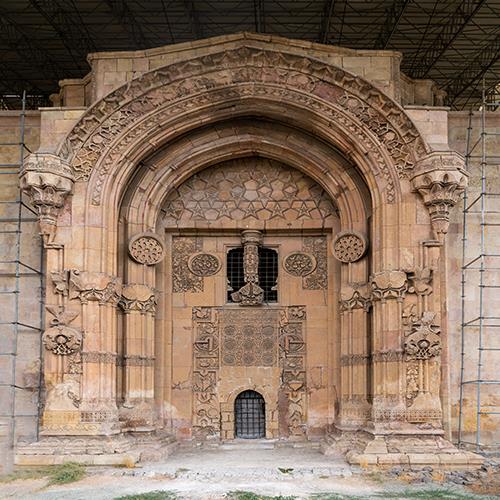
Divrigi Mosque and Hospital
In the Sivas province of South-east Turkey, the Divrigi mosque and complex date from 1228. This region was conquered by the Turks at the beginning of the 11th century. In 1228-29 Emir Ahmet Shah founded a mosque, with its adjoining hospital, at Divrigi. The mosque was a single prayer room and is crowned by two cupolas. The unique ancient Islamic features of the mosque are highly sophisticated, particularly the technique of vault construction.
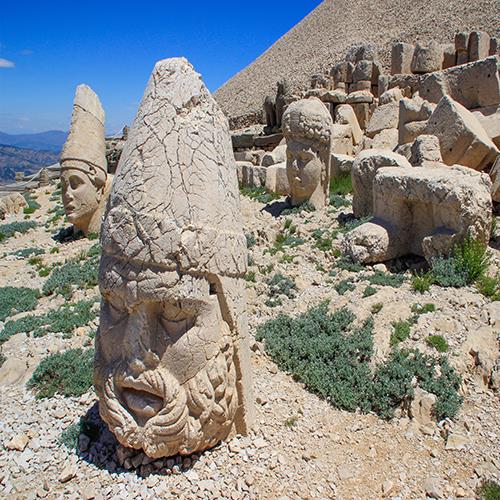
Mount Nemrut
Holding the mausoleum of Antiochus (69 - 34 BC), the statue heads of Mount Nemrut, who reigned over Commagene, a kingdom founded north of Syria and the Euphrates after the breakup of Alexander's empire. It is one of the most ambitious constructions of the Hellenistic period. The syncretism of its pantheon, and the lineage of its kings, which can be traced back through two sets of legends, Greek and Persian, is evidence of the dual origin of this kingdom’s culture. Most visitors visit this site during sunset or sunrise for an extra special stunning view.
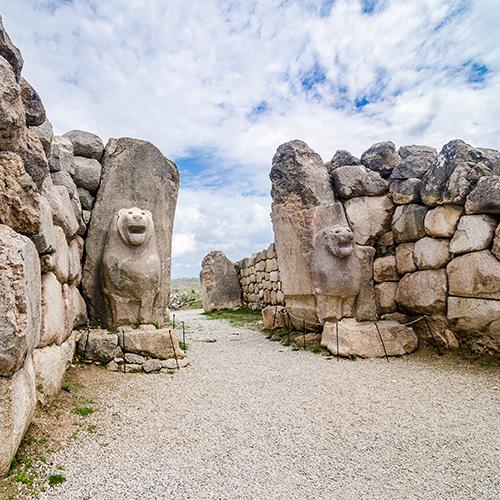
Hattusha
The archaeological site of Hattusha, former capital ruling center for the Hittite empire, is another site laying off the beaten track, yet anyone who visits gets a marvellous insight into their culture, beliefs and way of life. It is notable for its urban organization, the types of construction that have been preserved (temples, royal residences, fortifications), the embellishment of the Lions’ Gate and the Royal Gate, and the ensemble of rock art at Yazilikaya. The nearby rock sanctuary of Yazilikaya is also a must-see landmark.
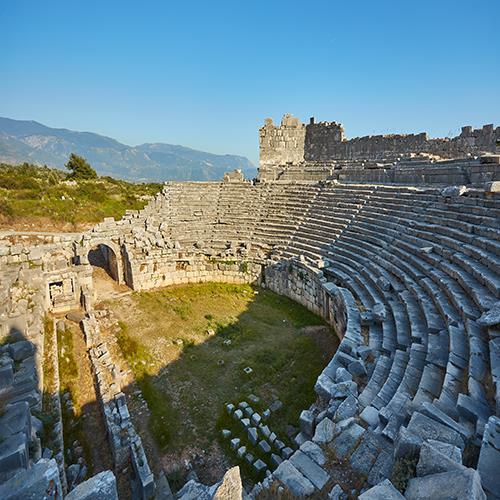
Letoon and Xanthos
Composed of two settlements sitting side by side in Mediterranean Turkey, Xanthos-Letoon was the capital center of the Hellenistic Lycian kingdom. Inscribed in 1988, the site is a world heritage treasure that represents distinctive architectural examples from the ancient Lycian civilization. The funerary art, which includes tombs, pillars and sarcophagi, stands as evidence of this forgotten world, as do the epigraphic inscriptions found carved on the rocks and pillars.
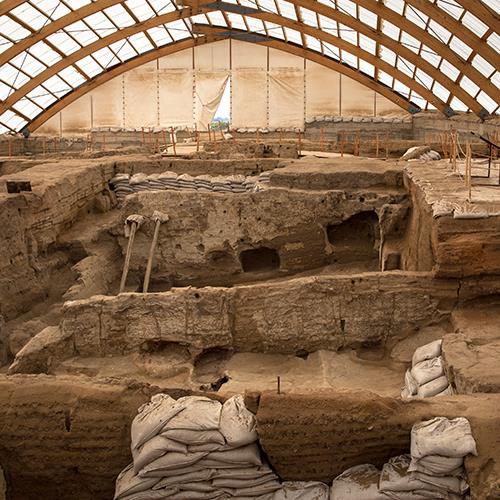
Catalhoyuk
The massive archeological site of Catalhoyuk, dating back to 7500 BC, is located on the Konya plain of the Southern Anatolian Plateau and was first discovered by a team of British archaeologists in 1958. The settlement is a prized gem that reflects social practices from when human beings transitioned from a village lifestyle to urban living. Explore the remains of houses, wall paintings, reliefs, and other examples of the social and cultural practices of this Neolithic community.
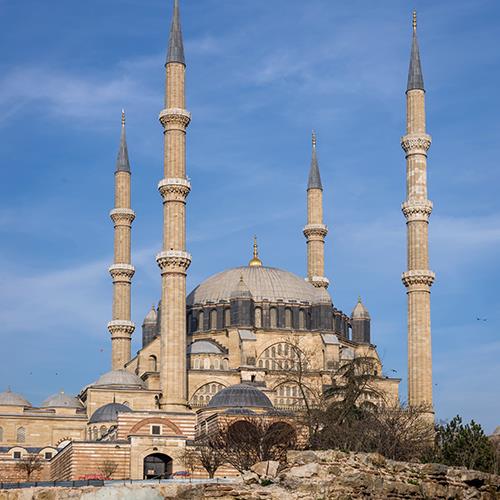
Selimiye Mosque
Inscribed to the UNESCO list of World Heritage Sites in 2011, Selimiye Mosque and its social complex were constructed in 1569 by the Ottoman empire's most celebrated architect Mimar Sinan. With its imposing dome, slender minarets, covered market, clock house and other features, the Selimiye Mosque portrays the social community that existed in the former Ottoman capital of Edirne.
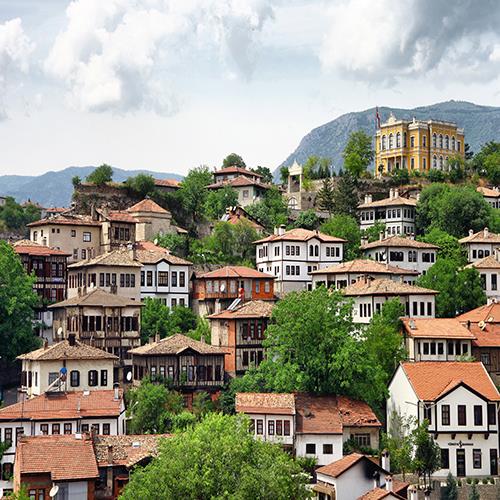
Safranbolu Old Town
At one time a major destination on the East-West caravan trade route, Safranbolu is a unique example of an Ottoman city and its culture in the 13th century. The ancient city is divided into separate historic districts, including the marketplace, Muslim and non-Muslim quarters and single dwellings situated within large gardens.
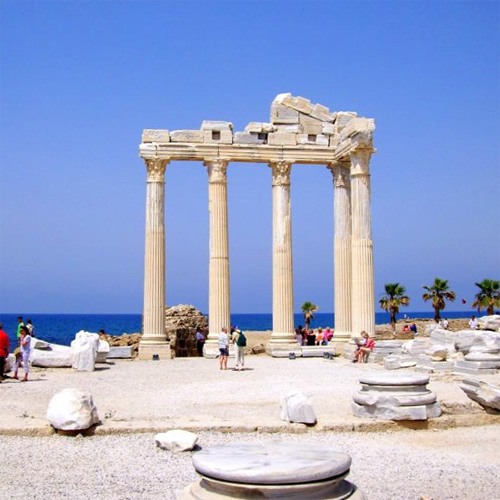
Aphrodisias
In ancient history, Aphrodite was the Greek goddess of love and fertility and Aphrodisias, one of the oldest and most sacred sites in southwestern Turkey, was named for her. The spectacular marble temple dates from the 3rd century BC while the surrounding city was created a century later and includes a theater, two bath complexes, a stadium and other historic civic structures. Even though it sits a short drive from the Pamukkale, a few visitors came to visit Aphrodisias, but UNESCO designation in 2017 has changed that.

Ancient City of Ephesus
Designated as the capital of Asia in 133 B.C.E. when Asia Minor was incorporated into the Roman Empire, Ephesus is one of the most famous examples of Hellenistic and Roman cultural history. It features excavated monuments, terrace houses and buildings, such as the Library of Celsus and the ruins of the Temple of Artemis, one of the "Seven Wonders of the World." This was one of the top visited attractions in one of the world's most famous historical sites, so for decades, people were surprised Ephesus was not listed. It was finally inscribed into UNESCO in 2015, gaining the recognition it deserved.

Troy
Immortalized by Homer in The Iliad, Troy is famous as the city whose downfall in the 13th or 12th century was attributed to the Trojan Horse, the secret weapon of Spartan and Achaean warriors from Greece. More importantly, Troy is one of the most important archaeological sites in the world with more than 4,000 years of history that includes stunning evidence of the many different settlements unearthed there: prehistoric cemeteries, Hellenistic burial mounds and Greek and Roman ruins.