


Destinations
❮Main Menu
UNESCO WORLD HERITAGE SITES IN CZECH REPUBLIC

Historic Center of Prague (1992)
The Historic Center of Prague, which is also the capital city, contains a wealth of monuments and landmarks from many periods of history. The city’s first building appeared around 800, and it has seen continuous development since then. As you explore the city you’ll discover many outstanding examples of Gothic, High Baroque and Modernist architecture. In the years following 1900, the city strongly influenced the development of Central European architecture. The city experienced the most growth in the century under the reign of King Charles IV, who bestowed his own name on the Charles Bridge, part of the Old Town and now the only stone bridge running across the river. The city’s whole center is part of its UNESCO listing, so as you explore, you will notice much of its remains are remarkably unchanged from its Medieval roots with regards to its layout.

Wieliczka The Historic Center of Cesky (1992)
Located about 110 miles from Prague, Cesky Krumlov is the epitome of Renaissance charm. With much of its original medieval archeticture, you’ll feel like you stepped into the Middle Ages. Many of the buildings here are outstanding examples of their period with some exceptional decorative facades, with many still original in layouts and interiors. The town is popular amongst visitors for its beautiful center, which includes an exquisite Renaissance castle and gardens, as well as impressive theaters. There are several festivals here that take place throughout the year.
Lednice-Valtice Cultural Landscape (1996)
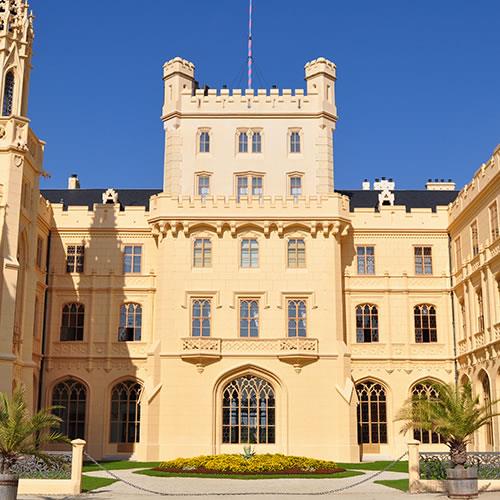
The Lednice-Valtice Cultural Landscape, located in south Moravia, is one of the largest UNESCO sites in Czech. At over 115 sq. miles, these two castles are located amongst multiple towns that fall within the area. Both castles were owned for centuries by the Liechtenstein family, and Valtice was their principal residence for hundreds of years. Of the two, Lednice is the most beautiful, with its outstanding Gothic Revival style exterior, while the Baroque and Renaissance architecture of Valtice is also quite breathtaking. The entire area of these two castles has developed into an area of exceptional architecture and landscaping. Explore the history and enjoy the best Moravian wine from the neighboring town of Valtice.
Holasovice Historic Village (1998)
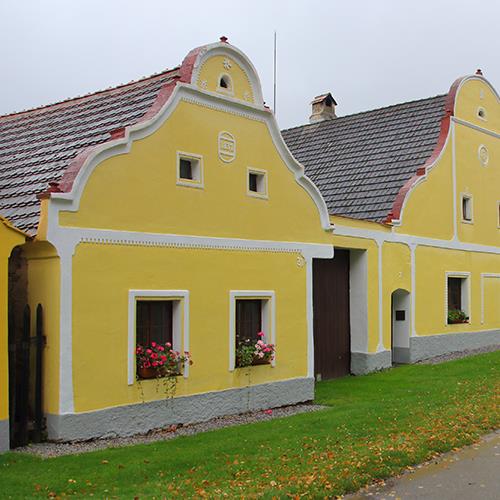
The tiny historic village of Halsovice, located 10 miles west of Ceske Budejovice, contains 23 distinctive farmsteads, which are situated around the edge of the village. It is an outstanding example of “Folk Baroque architecture,” filled with farmhouses built in a layout that dates from the Middle Ages. Holesovice is incredibly well-preserved, so it offers an amazing insight into life in a traditional rural settlement in Central Europe, mostly dating from the 18th and 19th centuries.
A highlight of this area is the stucco façade of each building, painted bright white, with decorative elements in lemon yellow. Each house has its gable end oriented to the village square, while the roof lines are all slightly different as well: some triangular, some elegantly curved. It’s a beautiful lace to explore, that provides a great setting of what small central European villages were like in centuries past.

Litomysl Castle (1999) - Moravia Region
Located in eastern Bohemia, Litomysl Castle brings a slice of Italy to the Czech Republic. The Castle is both a beautiful and interesting building. It was designed in 1580 and has maintained much of its original Renaissance charm. One of the castle’s highlights is its neoclassical theatre, which dates back to 1797. The area around the castle also includes a French formal garden and an English-style landscaped park.
You can learn more about Czech's most impressive Castles by clicking here.

Tugendhat Villa in Brno (2001)
Situated in the lush hillside in the northern part of Brno, the second largest city in Czech Republic, Tugendhat Villa is a masterpiece of the Modernist movement in architecture, which was developing around the 1920s. It was constructed for the Tugendhats, a wealthy local family, by German architect Ludwig Mies van der Rohe. Tugendhat Villa was revolutionary, with modern features such as reinforced concrete, iron framework, and lots of glass. It was a home designed for modern life and even today, it remains a truly innovative structure. Unfortunately, The Tugenhat family only lived in the villa for a few years. Hitler’s annexation of Czechoslovakia in 1938 forced the Jewish Tugenhats to free, and they never returned to Brno. During WWII, the villa was transformed to offices for the Gestapo and later used by the Soviet military as well.
ADDITIONAL UNESCO WORLD HERITAGE SITES IN CZECH REPUBLIC

The Historic Center of Kutna Hora (1995)
The charming town of Kutna Hora is a perfect example of a medieval minin town, with very minimal changes over the years. It is hard to believe that this quaint little town was once an important political playing in Europe. This is because it was the center of silver mining in the area from the 13th to 16th centuries, and because of this, it gained a lot of wealth. A majority of the buildings are in the Gothic style typical of this time when the town was at its peak.
It was named a UNESCO World Heritage site in 1995, which includes the historic town center, the church of Saint Barbara, and the Cathedral of Our Lady and St. John the Baptist at Sedlec. Also well worth visiting is teh Sedlec Ossuary a church decked out floor to ceiling in human bones pulled from the neighboring cemetery. As you explore, take note of the hints of lavish luxury that can still be seen today.
The Historic Center of Telc (1992)
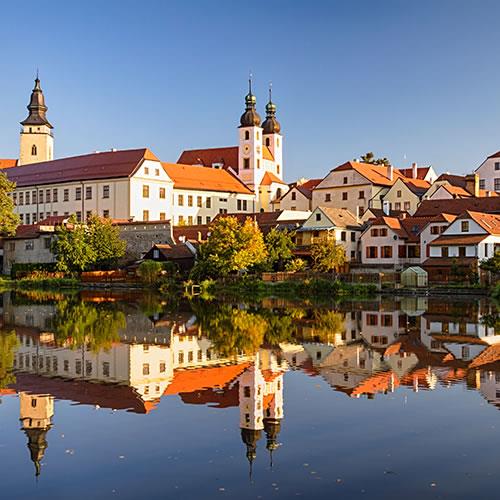
The Historic Centre of Telc is located in the Vysocina region, on the border of Bohemia and Moravia in southern Czech Republic. The town boasts a lovely hilltop setting. It was founded around the 11th century as an important trading crossroad, before a devastating fire destroyed the town. It was rebuilt in stone by its wealthy inhabitants using the latest Renaissance styles and designs, which is what you will see today.
The center of Telc is protected, along with its castle. The highlight of the town is the large triangular main square, fronted by many beautiful Renaissance and Baroque styled houses all painted in a variety of pastel colors and a wide array of different styles. The town still retains some very interesting and unique defensive features, as well as the original city walls. The Renaissance Chateau of Telc dominates the town center. And the entire old town is surrounded by a series of defensive fishponds.
The Holy Trinity Column in Olomouc (2000)
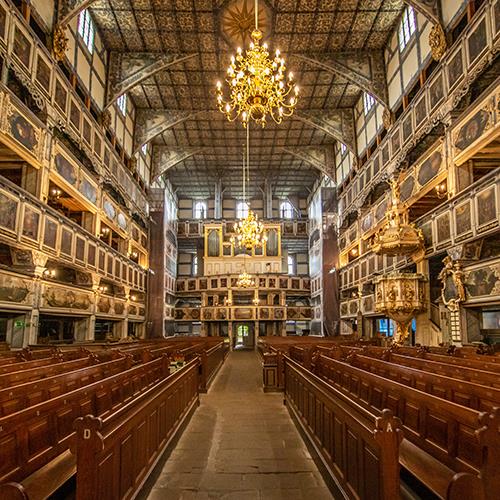
The Holy Trinity Column, located in the charming university town of Olomouc, is a fascinating example of a “plague column”, a religious monument common to central Europe in the 17th and 18th centuries. Built between 1716 and 1754, celebrating the end of a devastating plague, it is also a unique example of Baroque artistic expressionism. Topped with a gilded copper sculpture of the Holy Trinity, the column also features statues of the Twelve Apostles, various saints and local holy figures.

The Gardens and Castle at Kromeriz (1998)
The Gardens and Castles at Kromeriz are an excellent example of the 17th to 18th century prince and rank among the most beautiful UNESCO sites in Czech Republic. It is a meticulously preserved example of what is known as a “Baroque Aristocratic Ensemble.” The garden itself is a gem and contains many examples of rare and exotic plant life. It was designed by Italian architects in a Baroque style and is immaculately laid out with flower beds, statues, formal gardens, and informal English gardens as well.
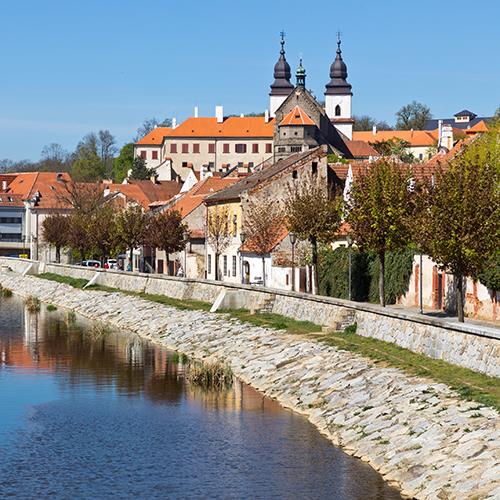
Jewish Quarter and St. Procopius Basilica in Trebic (2003)
The two UNESCO sites located in the Moravian town of Trebic include the Jewish Quarter (former ghetto), the Jewish cemetery and the Basilica. A trip to the Jewish quarter provides insight into the restrictions that were placed on the Jewish community and how they were forced to live. The layout of this part of town has remained untouched and many buildings have maintained their original state. The St. Procopius Basilica, built in 1240-1280, exemplifies both Romanesque and Gothic architecture. Together, these sites are a testament to how diverse the Czech lands tended to be, both religiously and culturally from as far back as the middle ages up until WWII.

The Pilgrimage Church of Saint John Nepomuk at Zelena Hora (1994)
St. John of Nepomuck is a fascinating church in Moravia, and is said to be one of the most unusual churches in Europe. It doesn’t really fit into a prescribed architectural style, but experts have called it something between neo-Gothic and Baroque. The church was built in 1727 in honor of Jan Nepomuck, whose statue stands on Charles Bridge in Prague. Legend has it that St. John of Nepomuck was a Czech priest who refused to divulge the secrets of the Queen of Bohemia to her husband, King Wenceslas IV. He was thrown off the Charles Bridge in Prague and martyred for his trouble, and is today one of the most important Czech saints.This pilgrimage church was constructed in his honor.