


Destinations
❮Main Menu
UNESCO WORLD HERITAGE SITES IN CROATIA

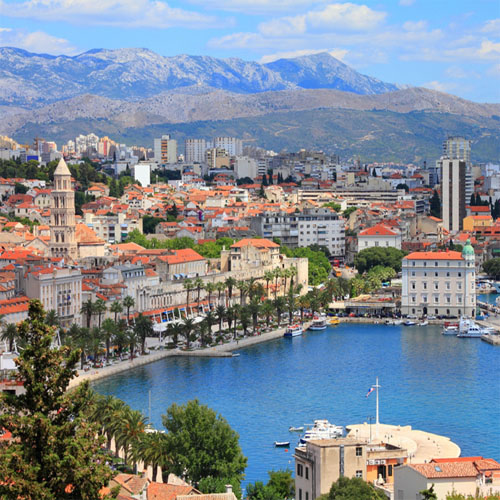
The Historical Site of Split
The historical complex of Split is the second-largest city in Croatia with a deep history stretching back over 1,700 years. The city was established as a UNESCO World Heritage Site in 1979, including the Palace of Diocletian which is one of the best-preserved monuments of Roman architecture in the world. It was the lavish retirement palace for the Roman Emperor Diocletian, built in the late 3rd century, it is the largest example of a Roman Palace the remains in the entire world, a gem in the heart of the Old Town. The main part of the palace is Peristyle Square (the main city square), and the Substructures called the “basements”, and the Cathedral of St Domnius which was built between 295-305 AD making it the oldest cathedral in the world, and the mausoleum of Emperor Diocletian. The palace is the most iconic landmark in Split and existed before the city was even established, the city welcomes millions of visitors per year and boasts several shops, restaurants, and bars along with historic monuments and buildings dating back to the Roman era. The Palace is now an open-air museum, a vast complex that takes visitors back in time. Wandes the halls, and take in a Game of Thrones tour, the Palace was used in the HBO TV show. There are 220 buildings in the Palace.

Old Town of Dubrovnik
The wonderful preserved Old Town of Dubrovnik is the southernmost city in Croatia, located on the Dalmatian coast, nicknamed “the pearl of the Adriatic” by famous English poet, Lord Byron. It was listed as a UNESCO World Heritage Site in 1979, the historical city core is a fortification encircled by 1.24 miles of mammoth limestone City Walls. The city features charming cobblestone streets, beautiful buildings with terracotta roofs, and other famous landmarks. Stradun is the main street in the Old Town, a popular gathering place for locals and visitors, where the Gothic-Renaissance Sponza Palace, and Rector’s Palace can be found at the end of Stradun, both were portrayed in the world-famous TV series Game of Thrones. The beautiful city flourished when it became a prosperous center for maritime trade during the 15th and 16th centuries. Dubrovnik is one of the best-preserved medieval cities in the world, showcasing the beauty of Croatian culture with a blend of Gothic, Baroque, and Renaissance architecture seen in the churches, palaces, and monasteries. The magnificent backdrop to the city of Dubrovnik is the spectacular sights of the Adriatic Sea.

Porec
The most popular seaside resort town in Croatia is Porec, nestled on a tiny peninsula in Western Istria, where the marina and the island of Sveti Nikola are located. The city has a history dating back over 2,000 years and boasts some beautiful remnants of the Roman castrum of Parentium, including two fully preserved Roman Streets; Decumanus Street and Cardo Maximus Street. The Euphrasian Basilica Episcopal Complex in the city was built in 313, it is the most complete complex of its kind in the world and one of the best examples of Byzantine architecture in the Mediterranean region and the world. The complex includes a church, memorial chapel, atrium, baptistery, the episcopal palace, and the bell tower of the nearby archbishop's palace. The palace is the most outstanding feature with its beautifully tiled mosaics that date back to the 6th century and glow like gold in the candlelight, as well as the striking views from the Bell Tower. There are plenty of Venetian influences dotted around the Old Town, as a result of the Republic of Venice’s five-century rule of the city, which was then called Parenzo. The Euphrasian Basilica Episcopal Complex was inscribed on the UNESCO World Heritage Site as a cultural site in 1997, it is considered one of the founding centers of Christianity.
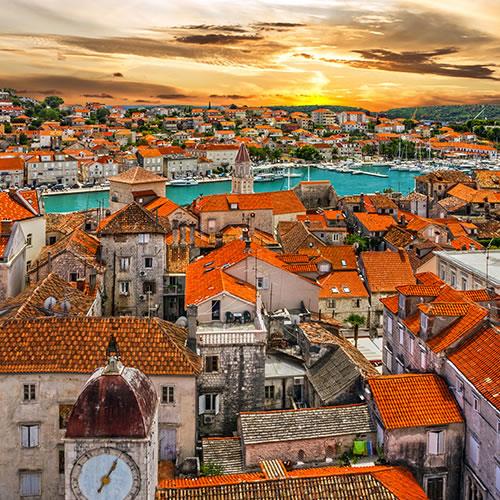
The Historic City of Trogir
The tiny historic medieval city of Trogir is located on the Dalmatian coast with the best-preserved Romanesque-Gothic complex in the Adriatic, but also in Central Europe. The walled medieval core is part of the UNESCO World Heritage Site inscribed in 1997, there are numerous Baroque and Renaissance-style buildings along with majestic Romanesque Churches such as the Church of St. Lawrence, which is among the most important architectural buildings in the country, whose main west portal is a masterpiece by Radovan. Other attractions in Trogir include the monumental Cathedral of St. Lovro, Kamerlengo Fortress from the 15th century (a governor’s palace during the Venetian rule), and the Cipiko Palace. The city was established as a trading settlement by the Greens during the 3rd century and thrived under Roman rule. The heart of the city is surrounded by walls and comprises a preserved castle, and a tower with a series of dwellings and palaces from the Romanesque, Gothic, Renaissance, and Baroque periods. Trogir boasts some of the best medieval architecture structures and has unparalleled beauty and cultural value. The town is set within medieval walls, close to Split on the Adriatic Coast in Croatia.
The city of Sibenik and The Saint James Cathedral
The city of Sibenik is the gateway to the Kornati Islands, best known as the oldest Croat settlement on the Adriatic coast, founded in 1066 CE by King Petar Kresimir IV. It was the capital of the Croat Kingdom for a short period of time, and during the first 100 years, it was conquered by Venice, Byzantium, and then Hungary. The Saint James Cathedral in the city was enlisted on the UNESCO World Heritage Site list in 2000, it is the city’s main cathedral and dates from the early Venetian period, built between 1431 - 1535. The cathedral represents an architectural exchange between Northern Italy, Dalmatia, and Tuscany, it boasts Gothic and Renaissance-style architecture and is renowned as the largest church in the entire world, built completely out of stone without any wood or brick support. The Cathedral was constructed by three architects in succession; Francesco di Giacomo, Georgius Mathei Dalmaticus, and Niccolo di Giovanni Fiorentino, who used unique construction techniques when building this stone masterpiece. The cathedral is a triple-nave basilica with three apses, and a dome that soars to 105 feet, there is a frieze of 71 heads with various facial expressions of men, women, and children on the rear exterior walls.

The Stari Gran Plain - Hvar Island
The Stari Gran Plain is an architectural landscape found on Hvar Island that was created by the ancient Greek colonists in the 4th century BC. Hvar is one of the top ten island vacation destinations in the world (Conde Nast), a gem in the azure waters of the Adriatic, a beautiful island decorated with Croatian lavender fields and rolling verdant hills. These landscapes make up the UNESCO World Heritage Site of Stari Grad and Jelsa, both filled with history and charm nestled on teh southwest coast. The plain is one of the best examples of an ancient geometrical system of land division that created parcels called ‘choras’ which are bounded by dry stone walls. The effectiveness of such a system is proved by the fact that the same initial crops, mainly grapes, and olives are still produced here today, almost 2,400 years later. It became a UNESCO World Heritage Site in 2008, being one of the best examples of ancient Greek agricultural systems in Croatia, perhaps in the whole of Central Europe. Stari Grad, meaning Old Town is the oldest town in Croatia when the Ionian Greeks settled here and named it Pharos in the 4th Century BC. The grape vineyards and olive groves line the plain as far as the eye can see, the area is also dotted with archaeological sites.

Plitvice Lakes National Park
Plitvice Lakes is a series of 16 blue-green lakes separated by natural dams set in the breathtaking scenic Plitvice Lakes National Park in Croatia. The Plitvice Lakes National Park was inscribed on the UNESCO World Heritage Site in 1979, an idyllic setting with nature at its finest the park is one of the most visited tourist destinations in the country, recognized for its outstanding natural beauty. These serene lakes interconnect through a series of cascading waterfalls set in a lush verdant setting home to bears, deers, wolves, and several rare bird species. The Plitvice Lakes are the largest, oldest, and most visited in Croatia filled with rich flora and fauna, with unique beauty. The water formations were formed over thousands of years, the water has flowed over the natural limestone and chalk, creating natural dams that in turn have created a series of connecting lakes along with cascading waterfalls and caves. Plitvice easily qualifies as a “source of life and inspiration”.
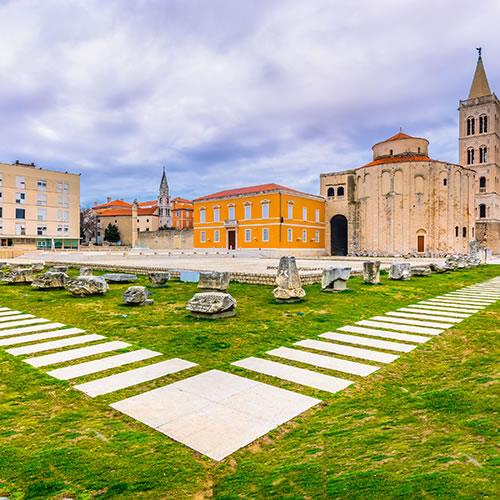
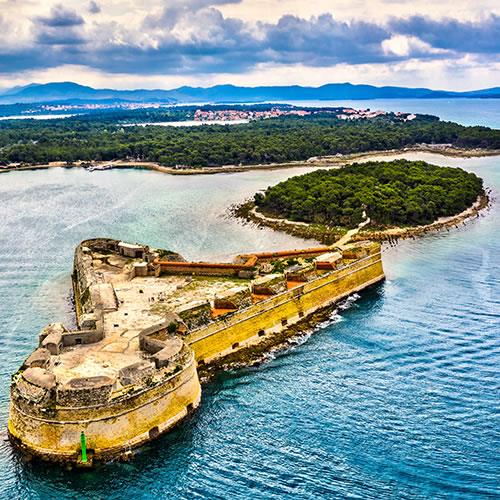
The Venetian Works of defense between 15th and 17th centuries
The Venetian Works of Defense consists of six different defense works stretching throughout three countries; Croatia, Italy, and Montenegro. The site was inscribed on the UNESCO World Heritage Site list in 2017 and spans over 621 miles between the Lombard region in Italy and the eastern Adriatic Coast. Together the sites made up the so-called ‘Serenissima’ in teh 16th and 17th centuries, the most important era in Venetian Republic history. The Croatian sites include the defensive system of Zadar and St. Nicholas Fortress in Sibenik, the fortress is one of four parts of Sibenik’s fortification system, and the only one located at the entrance to the Sibenik port on the sea. This long series of fortifications, both inland and coastal, show how the Venetian Republic defended itself against a large number of enemies and invaders in the 1500s and 1600s. Some of these UNESCO World Heritage Fortresses are among the most imposing buildings in Croatia. The other sites in other countries include the fortified cities of Peschiera del Garda and Bergamo and the City Fortress of Palmanova in Italy, Sibenik-Knin County in Croatia, and the Fortified City of Kotor in Montenegro.
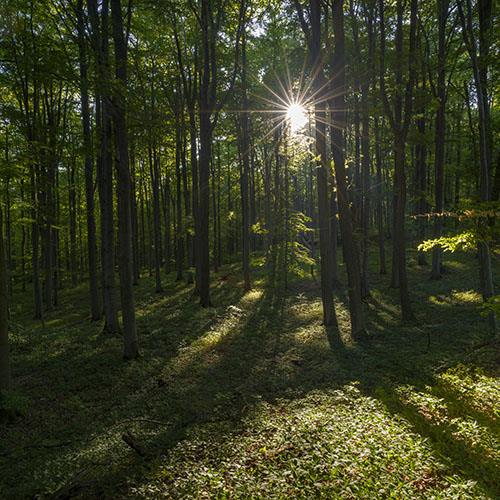
The Primeval Beech Forests of the Carpathians
The Primeval Beech Forests of the Carpathians is a serial and transboundary site with locations no fewer than twelve countries (Albania, Austria, Belgium, Bulgaria, Germany, Italy, Poland, Romania, Slovakia, Slovenia, Spain, and Ukraine) encompasses the isolated refuges from which the European beech has spread across the continent since the end of the last Ice Age. The UNESCO World Heritage Site stretches through much of Europe, and in Croatia, the surviving areas of the once-mighty primeval beech forests of Europe are located in three places; Hajducki I Rozanski kukovi in the Velebit National Park, and two regions in the Paklenica National Park. The iconic and undoubtedly beautiful, tranquil, and amazing European beech forests are typical of the continent, the trees are extremely flexible and tolerate different climates, as well as geographical and physical conditions. These forests across Europe have been carefully managed for decades, the forests are the largest UNESCO World Heritage Sites in Europe.

Stecci - Medieval Tombstones Graveyards
Stecci, the Medieval Tombstones Graveyards in Croatia, as well as Bosnia and Herzegovina, Montenegro, and Serbia, make up 30 sites in the four countries. Stecci are cemeteries and regionally distinctive medieval tombstones dating back to the 12th century and carved from limestone, they feature a broad range of decorative motifs and inscriptions representing iconographic continuities within medieval Europe. The Stecci is a tremendously important part of the local Balkan culture, the oldest ones date back to the 1100s, these monolithic tombstones are utterly unique in the world, and only found in this relatively small corner of Europe. The two sies inscribed in Croatia can be found at the Church of St. Barbara in Dubravka, Konavle in southern Croatia, and Velika, and Mala Crljivica in Cista Velika, written in Bosnian Cyrillic alphabet. The Orthodox, Catholic Churches, and Church of Bosnia are three medieval Christian faiths that used this type of tombstone. There are over 70,000 tombstones in teh region, which sets them apart from all other historical burial monuments. The UNESCO World Heritage Sites in Croatia were inscribed in 2016.