


Destinations
❮Main Menu
UNESCO WORLD HERITAGE SITES IN CANADA
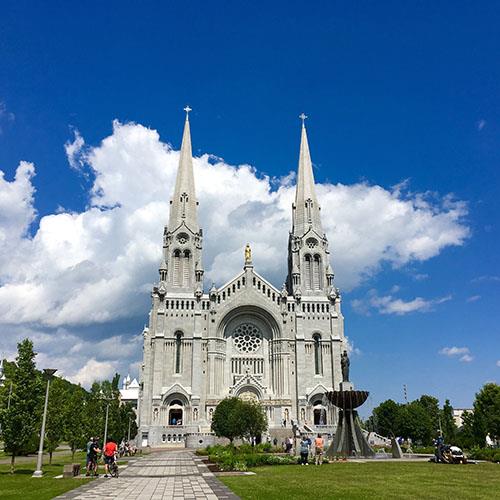
Historic District of Old Québec (1985), Quebec
Quebec was founded by the French explorer Champlain in the early 17th century. This walled city, set along the banks of the St. Lawrence River, is the perfect example of a European-like city. It is the only North American city to have preserved its ramparts, along with the numerous bastions, gates and defensive works which still remain as fixtures in Old Quebec. Some highlights include Saint-Louis Forts and Chateaux National Historic Site, located below the Dufferin Terrace, the Morrin Center - the city’s first prison, and the beautiful Place Royale - where the first French settlement in North America was built. Also located here is the Plains of Abraham, located within the Battlefields Park, Canada’s first National Historic Park.

Rideau Canal (2007), Kingston, Ontario
The Rideau Canal, also known unofficially as the Rideau Waterway, is 125-miles long connecting Canada’s capital city of Ottawa, Ontario, to Lake Ontario and the Saint Lawrence River at Kingston. The name Rideau, French for “curtain”, is derived from the curtain-like appearance of the Rideau River’s twin waterfalls where they join the Ottawa River. The canal was built primarily for strategic military purposes at a time when Great Britain and the United Stated vied for control of the region. The site, one of the first canals to be designed specifically for steam-powered vessels, also features an ensemble of fortifications. It remains in use today primarily for pleasure boating, with most of its original structures intact. The locks on the system open for navigation in mid-May and close in mid-October. It was declared a UNESCO World heritage Site in 2007 and is the oldest continuously operated canal system in North America.

Canadian Rocky Mountain Parks (1984,1990)
Situated on the plains in the north-central region of Canada, the Canadian Rockies are made up of both the Alberta Rockies and the B.C. Rockies, and stretches for over 69,000 sq miles. The park is home to the largest population of wild bison and is also the natural nesting place of the whooping crane. Another highlight of the park’s attractions is also the world’s largest inland delta, located at the mouth of the Peace and Athabasca rivers. The region brings in millions of visitors from around the world every year, due to its breathtaking views at every turn.

Miguasha National Park (1999), Saint-Alexis des Monts, Quebec
Situated in south-eastern Quebec on the southern coast of the Gaspe peninsula, the paleontological site of Miguasha National Park is known to be the most outstanding illustration of the Devonian Period (Age of Fishes) in the world. Created in 1999 by the Government of Quebec, Miguasha was designated a World Heritage Site in 1999 in recognition of its wealth of fossils, which display the evolution of life on Earth. Other names for this site are the Miguasha Fossil Site, the Bay of Escuminac Fossil Site, the Upper Devonian Escuminac Formation, and the Hugh-Miller Cliffs. It is also sometimes referred to on fossil specimens as 'Scaumenac Bay' or 'Scaumenac Bay P.Q.'
ADDITIONAL UNESCO WORLD HERITAGE SITES IN CANADA
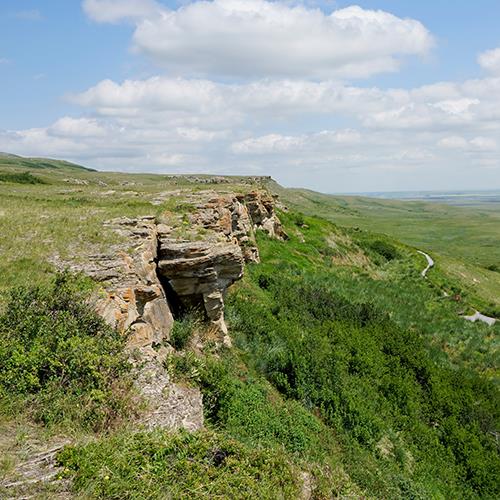
Head-Smashed-In Buffalo Jump (1981), Fort Macleod, Alberta
Located in south-west Alberta, Head-Smashed-In Buffalo Jump Interpretive Center preserves over 6,000 years of Plains Buffalo culture. The remains of marked trails and an aboriginal camp, and a tumulus where vast quantities of buffalo skeletons can still be found are evidence of the customs practiced by aboriginal peoples of the North American plains. Using their insight of the topography and of buffalo behavior, they killed their prey by chasing them over a precipice; the carcasses were later carved up in the camp below.
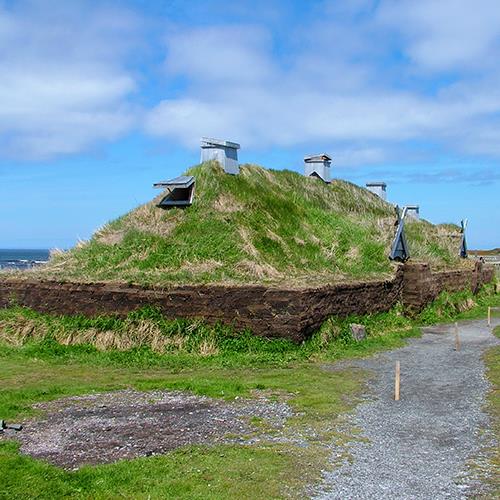
L’Anse aux Meadows National Historic Site (1978), Labrador
L’Anse aux Meadows was declared a National Historic Site in 1977, and, in 1978, it was designated as one of the first UNESCO World Heritage Sites for its “global significance in the history of human migration and discovery.” Located at the tip of the Great Northern Peninsula of the island of Newfoundland, the remains of an 11th-century Viking settlement are evidence of the first European presence in North America. The remains of wood-framed peat-turf buildings are very much like the ones found in Norse Greenland and Iceland.
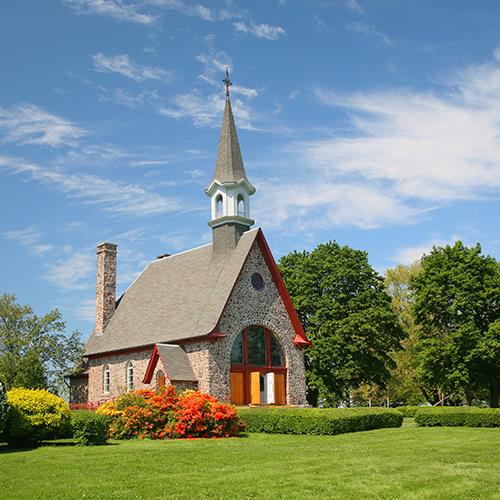
Landscape of Grand Pré (2012), Nova Scotia
Located in the southern Minas Basin of Nova Scotia, the Grande Pre and archeological sites make up a cultural landscape bearing testimony to the development and agricultural farmland using dykes and a aboiteau wooden sluice system. During the multiple colonial wars between England and France in the 17th and 18th centuries, the French area of colonization in Nova Scotia was repeatedly occupied by one side and the other. In 1713, what is now Nova Scotia was finally handed over to England. Marked by one of the most extreme tidal ranges in the world, the site is also inscribed as a memorial to the Acadian way of life and deportation, which started in 1755, known as the Grand Derangement. More than 11,000 men, women, and children were forced aboard ships and deported to the Anglo-American colonies or were sent to England or France. Between 1755 and 1765 almost half the Acadian people deported from Nova Scotia were lost at sea or died of disease or starvation. By 1765, only 1600 survivors remained in Nova Scotia, but their rich land was occupied by settlers from other areas.
The Grande Pre area of Nova Scotia was also extremely valuable to the British because of its fertility, which allowed it to grow such an abundance of farm products that the Grand Pre Acadian had been able to trade with other areas of Canada and the American colonies.
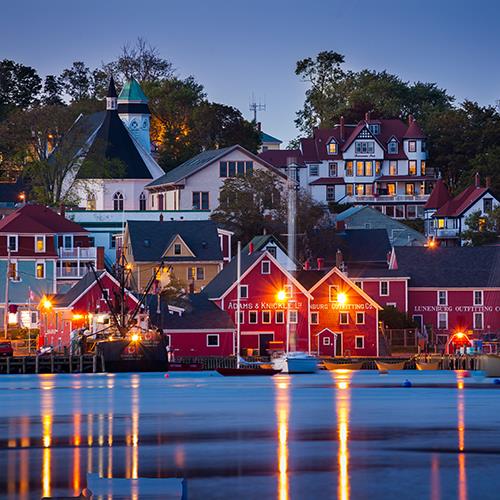
Old Town Lunenburg (1995), Nova Scotia
The old town of Lunenburg is a remarkable example of a planned British colonial settlement in North America and one of the most beautiful UNESCO sites on the east coast of Canada. Established in 1753, it has retained its original layout and overall appearance, based on a rectangular grid pattern drawn up in the home country. The town is filled with colorful wooden homes and lovely architecture, several beautiful churches, charming B and B’s, and quaint shops. Offshore fishing was originally the most popular industry in Lunenburg, but with the decline of the industry, tourism, sales and service jobs are now the leading industry.
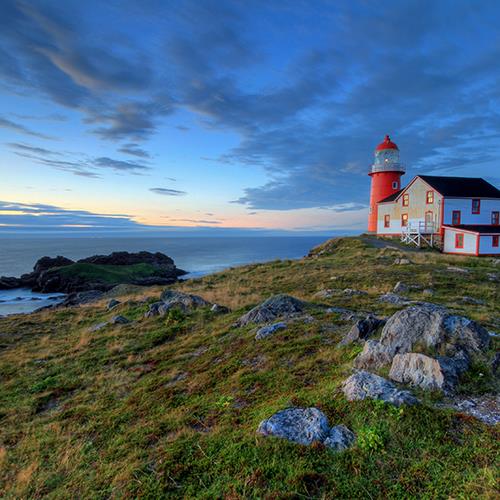
Rio Abiseo National Red Bay Basque Whaling Station (2013), Newfoundland and Labrador
Red Bay was established in the 16th century by Basque mariners at the north-eastern tip of Canada on the shore of the Strait of Belle Isle. Between the 1540s to the early 1600s, as many as two thousand Basque men and boys left their home in southern France and northern Spain and sailed across the North Atlantic Ocean. Their lucrative destination was some 2,500 miles away in eastern Canada. Backed by ship owners and outfitters, the aim of their voyages was to hang for North Atlantic and Greenland Right whales, render the blubber into oil on-site, package it for transport, and bring it back home for market. The site at Red Bay was used as a base in the summer months and includes remains of rending ovens, cooperages, wharves, temporary living quarters and a cemetery, together with underwater remains of vessels and whale bone deposits.
Whale oil was a commodity highly prized in Europe as a brighter burning lamp oil and as a serviceable lubricant for leather products and an additive for paints, varnishes, and soap. The story of this industrial-scale whaling activity is documented as an early example of economic exploitation of rich North American natural resources by European commercial interests.
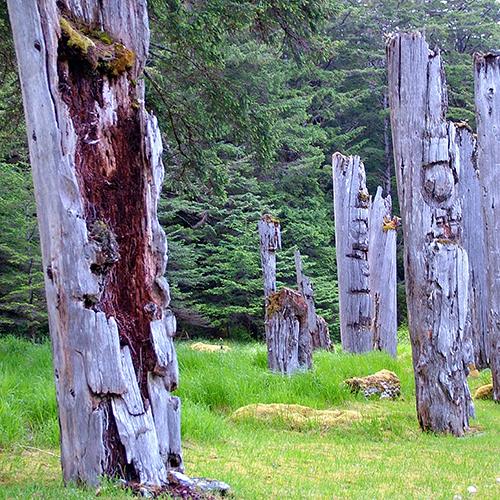
SGang Gwaay (1981) Village in Anthony Island, British Columbia
SGang Gwaay (often called Ninstints in English) is an abandoned Haida village in the south of the Haida Gwaii archipelago (formerly called the Queen Charlotte Islands). Remains of houses, together with carved mortuary and memorial poles, are examples of the Haida people and their way of life. The remains are still standing, but have decayed into the earth they came from over the years.
The island and nearby islands make up the Gwaii Haanas National Park, which is also home to magnificent wildlife, marine life and birdlife. The site, on Anthony Island, is remote and can only be accessed by boat or seaplane. There are several small settlements in the north of the archipelago with ferries to/from Prince Rupert and daily flights to/from Vancouver. From here, a boat, kayak, or seaplane can transport you to the SGang Gwaay.
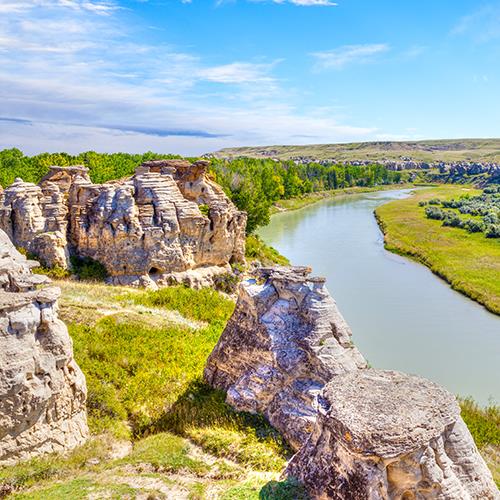
Writing-on-Stone / Áísínai’pi (2019), Milk River, Alberta
Located on the northern edge of the semi-arid Great Plains of North America, on the border between Canada and the United States, the Writing-On-Stone, or Áísínai’pi as it’s known in Blackfoot, is home to the largest collection of First Nation rock art. The Blackfoot Confederacy left engravings and paintings on the sandstone walls of the Milk River Valley, bearing testimony to messages from Sacred Beings. Dated in situ archeological remains cover a period between ca. 4,500 BP to 3,500 years BC and the Contact Period. The park sits in the heart of the Blackfoot’s traditional territory and the area holds great spiritual significance for their people.
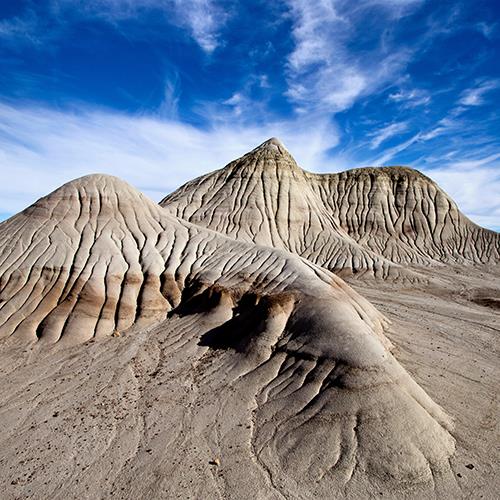
Dinosaur Provincial Park (1979), Alberta
Dinosaur Provincial Park, located in southeastern Alberta, contains some of the most remarkable fossil discoveries ever made from the ‘Age of Reptiles’, in particular about 35 species of dinosaur, dating back some 75 million years. The park sits in the Red Deer River basin, created by a glacial flood nearly 20,000 years ago. The park was declared a UNESCO site in 1979 thanks to its unique environment and quantity of fossils.
Much of the park is a nature reserve and is off-limits to visitors unless they take a guided tour. By doing so, visitors can explore, and typically are guaranteed to find real dinosaur fossils.

Joggins Fossil Cliffs (2008), Joggins, Nova Scotia
Inscribed to the UNESCO World Heritage list in 2008, Joggins Fossil Cliffs have been described as the “coal age Galapagos” due to their wealth of fossils from the Pennsylvanian period (364 - 290 million years ago). The site offers visitors a compelling introduction to what many experts consider the world’s most complete fossil record of life during this time.
Constructed on top of a 250-year-old coal mine on the Bay of Fundy in Nova Scotia, the site is about 9 miles of rocky beach with cliffs reaching up to 100 feet high. Under the constant fluctuation of the huge Fundy tides, the cliffs have eroded to reveal thousands of fossils of which plants are the most commonly found, though a forest of upright petrified tree stumps is what the site is best known for.
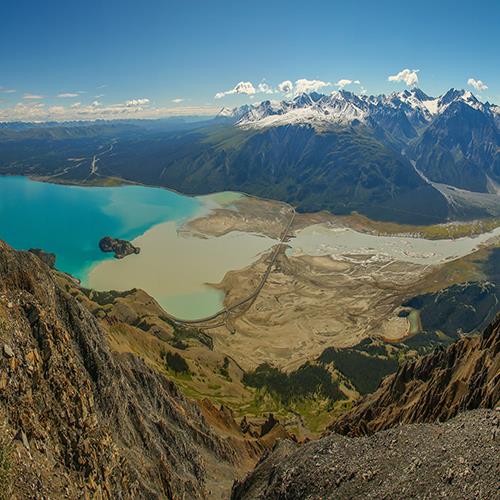
Kluane / Wrangell-St. Elias / Glacier Bay / Tatshenshini-Alsek (1979,1992, 1994), British Columbia
The Kluane / Wrangell-St Elias / Glacier Bay / Tatshenshini-Alsek World Heritage Site protects a diversity of large, contiguous, intact ecosystems (from the highest peaks of the mountains and glaciers to the open Pacific Ocean, river systems of the Alsek River and sheltered inland fjords) that are strongly dominated by natural processes. The remarkable natural landscapes are home to many grizzly bears, caribou and Dall’s sheep. The site contains the largest non-polar icefield in the world, however concern related to the site’s ecological integrity is provoked by recent climate change-related reductions and extinction of glaciers and the potential negative effects of ocean acidification.
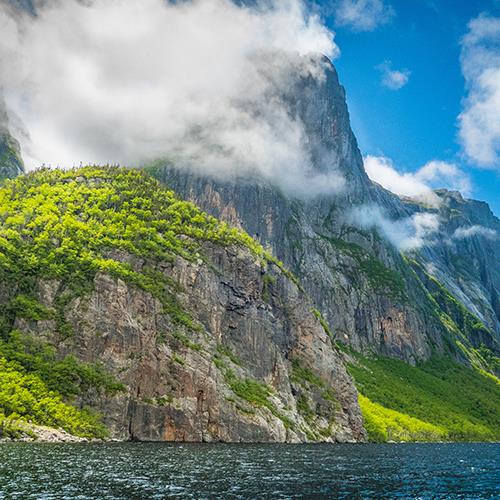
Gros Morne National Park (1987), Newfoundland and Labrador
Located on the west coast of the island of Newfoundland, the Gros Morne National Park is a rare example of the process of continental drift, where ocean crust and the rocks of the earth’s mantle lie exposed. It took 485 million years for Mother Nature to create this. The UNESCO Site covers 700 square miles of never-ending spectacularly raw and enigmatic beauty. You can hike the park along the earth’s mantle, or climb to life-changing summits to witness the breathtaking scenery of coastal lowland, alpine plateau, fjords, glacial valleys, sheer cliffs, waterfalls and pristine lakes. Alongside the natural wonders are highlights of a cultural heritage rich in humor and creativity found throughout the park in towns like Cow Head and Woody Point.
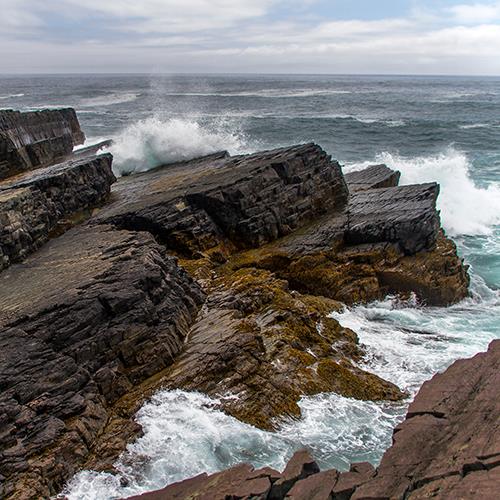
Mistaken Point (2016), Newfoundland
At the southernmost tip of the Avalon Peninsula resides a wave-swept crag known as Mistaken Point. This fossil site consists of a narrow, 10 mile-long stretch of rugged coastal cliffs preserved in excellent detail upon the planes of these tilted and cleaved mudstones. These cliffs date to the Ediacaran Period (580-560 million years ago), representing the oldest known assemblages of large fossils anywhere in the world.
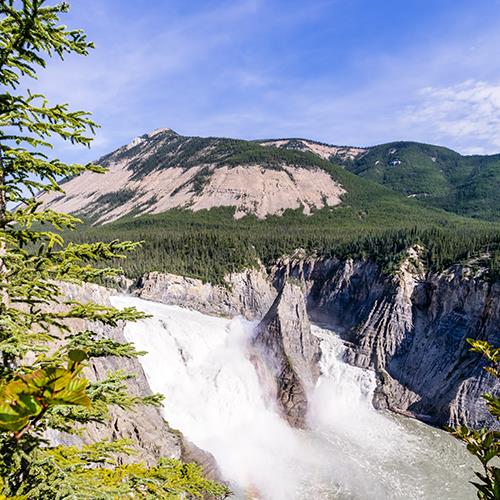
Nahanni National Park (1978)
Situated along the South Nahanni River, one of the most remarkable wild rivers in North America, this park is home to four great canyons and spectacular waterfalls, along with a unique limestone cave system. The park is a breeding ground of four endangered species: peregrine falcons, golden eagles, bald eagles and trumpeter swans. It is also home to animals of the boreal forest, such as wolves, grizzly bears and caribou. Dall’s sheep and mountain goats also live in the park’s alpine environment. The name Nahanni comes from the indigenous Dene language and can be translated as ‘spirit.’
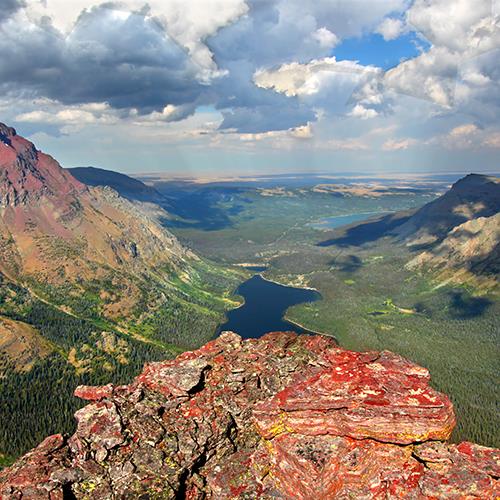
Waterton Glacier International Peace Park (1995), Alberta
Waterton-Glacier International Peace Park and World Heritage Site sits between the United States and Canada. In 1932 the two parks: Waterton Lakes National Park in Alberta and Glacier National Park in Montana, combined to form the world’s first International Peace Park. The park is remarkably rich in plant and mammal species as well as prairie, and alpine. It also encompasses breathtaking snow capped mountains, high-altitude lakes, and rivers cascading from glaciers. Glacial landforms, preserved fossil assemblages, beautiful rock formations and other geological features offer exceptional aesthetic beauty. The park is also home to a number of threatened or endangered species including the grizzly bear, gray wolf, lynx, bald eagle, and peregrine falcon.

Wood Buffalo National Park, Alberta (1983)
Wood Buffalo National Park, situated on the plains in the north-central region of Canada, is the largest national park of Canada, 17,300 sq miles. It is also the second largest national park in the world. The park was established in 1922 to protect the world’s largest herd of free-roaming wild bison. It is also known for its kart sinkholes in the north-eastern section of the park. Alberta’s largest spring, Neon Lake Springs, is located in the Jackfish River drainage. This park was designated a UNESCO Site in 1983 for the biological diversity of the Peace-Athabasca Delta, and for the population of wild bison.