


UNESCO WORLD HERITAGE SITES IN EGYPT

Abu Mena
Abu Mena is located just outside of Alexandria in Egypt, a former Christian holy city built on the tomb of Mena of Alexandre, a Christian martyr. It is believed that Menas died in the late 3rd of early 4th century, the site was declared a UNESCO World Heritage Site in 1979, today there is not much that remains at Abu Mena other than the foundation and some great buildings including the basilica. The site is listed as in danger by UNESCO due to the rise in the water table, which caused the foundations of the remaining structures to become unstable and collapse. Abu Mena is the site of early Christian pilgrimage site and monastery, a major Christian center by the year 600 AD. Today as it is endangered and is usually closed to the public. The first excavations took place between 1905 and 1907 and uncovered large parts of the basilica church, and further excavations uncovered dormitories for the poor pilgrims.
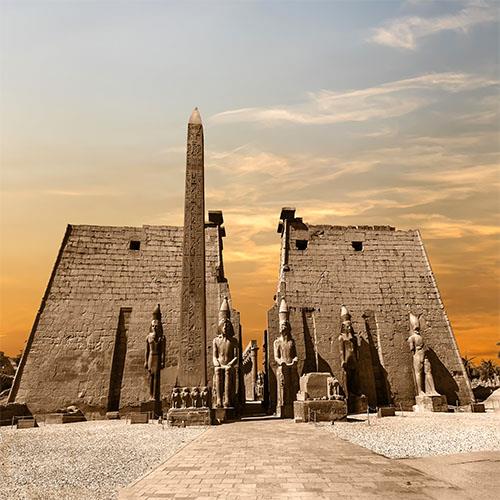
Ancient Thebes with its Necropolis
Ancient Thebes is now modern-day Luxor, located in the Governorate of Qina, south of Cairo, it was the second capital of Ancient Egypt, after Memphis, during the Middle and the New Kingdom. It was home to the wealthiest people in the country and many of the structures left here are still in great condition, it's like visiting the world’s largest open-air museum filled with fascinating famous temples such as Luxor Temple, and Karnak. Thebes was the purest example of how Egyptian civilization was during its height, it was constructed over a period of 1500 years, and was called “the most perfect of places” it served as an important place of worship in Egypt. The Necropolis of the Valley of the Kings and Valley of the Queens sits across the Nile river on the western side of the city. Karnak covers almost 200 acres it is the largest religious building ever made, there are hidden tombs scattered all throughout this area with only 60 that have been discovered so far, including the famous tomb of King Tutankhamun. The major sites here include the Great Temple of Amun, Luxor Temple, Temple of Khonsu, and Precinct of Montu, the Malkata palace complex, mortuary temples, and the Valley of the Kings and Queens.
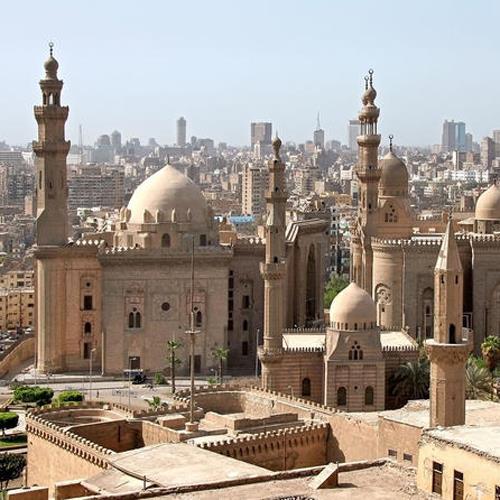
Historic Cairo
The Historic Cairo district found in the modern urban area of Cairo is one of the oldest Islamic cities in the world, originally founded in the 10th century. It reached its golden age during the 14th century and the modern city was built up around Historic or “Old Cairo” as it is commonly known. Moez Street is the most famous street in the city boasting breathtaking mosques, cathedrals, and churches and called by the UN “the greatest concentration of medieval architectural treasures in the Islamic world”. Khan el Khalili sits adjacent to Moez St and is the city’s world-famous bazaar that grew out of an original caravanserai. The Cairo Historic City features about 800 designated monuments that represent 1300 years of history, and is famous for its mosques, madrassas, and fountains, with Mohamed Ali mosque being one of the grandest in the city reaching 170 feet tall and dominating the city skyline. The Mosque of Ibn Tulun, Al-Azhar University which is the world’s oldest university, and Al-Hakim Mosque are among some of the other buildings in historic Cairo. It was listed as a UNESCO World Heritage Site in 1979.
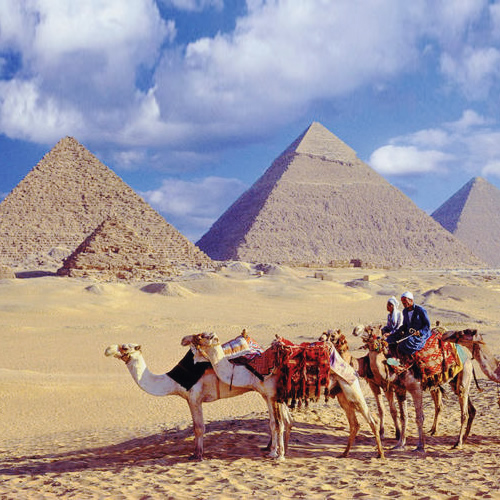
Memphis and its Necropolis
Memphis was the first capital of Ancient Egypt founded in 3000 BC, its necropolis is close to modern-day Cairo. There are 38 pyramids in the Memphis Pyramids Field including the pyramids of Giza, and the pyramids of Abusir, Saqqara, and Dahshur, it was home to the pharaohs and was the country’s center of administration. It was considered to be a sacred site to the Ancient Egyptian gods. There are many temples and monuments left standing in Memphis along with evidence of the development of the royal tombs from their original shapes as “mastabas” until the final pyramid shape. Giza is home to many extraordinary monuments such as temples, rock tombs, and the pyramids and was listed as one of the Seven Wonders of the Ancient World and a UNESCO World Heritage Site. The largest and most famous is the Great Pyramid of Giza one of the last standing wonders of the ancient world, built for Pharaoh Cheops, it took over 100,000 laborers working for 20 years to construct it.

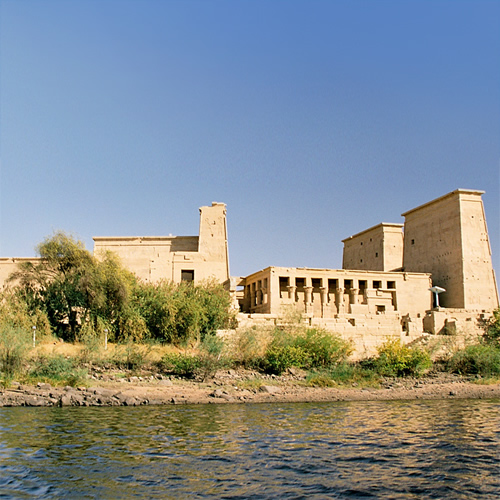
Nubian Monuments from Abu Simbel to Philae
The temples of Ramses the Great at Abu Simbel, and the Sanctuary of Isis at Philae Temple, are part of the archeological site that belongs to the Governorate of Aswan, home to many significant monuments. Located in Nubia, a geographic region in southern Egypt between Aswan and Abu Simel is where several important sites are found, ten are listed as UNESCO World Heritage Sites and include from south to north; The Temples of Ramesses II in Abu Simbel, Amada; Wadi Sebua; Kalabsha; Philae (Island of Agilkia; the ancient granite quarries and unfinished obelisk in Aswan; the Islamic Cemetary; the ruins of the ancient city of Elephantine; the Monastery of St Simeon; and the Old and Middle Kingdom tombs in Aswan. The Great Temple of Abu Simbel is among the most awe-inspiring monuments in the country, cut into the living rock by King Ramesses II (the Great) of the 19th Dynasty, around 1264 BC. It is well known for its four imposing seated colossal statues that dominate the facade, one of which collapse during an ancient earthquake. The Philae monuments include several structures that date back to the Ptolemaic Period (332-30 BC), the most prominent of which is a temple begun by Ptolemy II Philadelphus (285-246 BC) dedicated to Isis, the mother of Horus, the god of kingship. All of these monuments had to be relocated from the original Philae Island to the nearby island of Agilkia to protect them from the flooding caused by the Aswan High Dam in the 1960s.
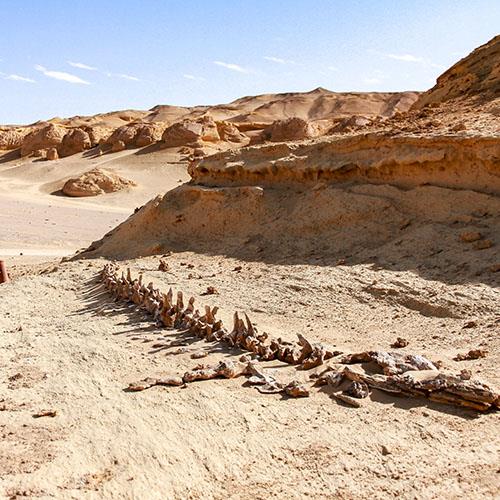
Wadi el Hitan - Valley of the Whales
Wadi el Hitan (Whale Valley) or Valley of the Whales is located in Fayoum in Egypt and is home to some very strange and interesting whale fossils (with hind legs). This is the only UNESCO World Heritage Natural site in Egypt, this area represents the Western Desert of Egypt and these rare and invaluable fossil remains of the now-extinct whales were unearthed. According to UNESCO “These fossils represent one of the major stories of evolution: the emergence of the whale as an ocean-going mammal from a previous life as a land-based animal. This is the most important site in the world for the demonstration of this stage of evolution. The fossils show the presence of hind legs on the whales which helped scientists prove that whales originally evolved from land mammals to ocean species. There are entire whale skeletons nestled in the earth, and part of the reserves was made into a tourist attraction and features a brand new museum.
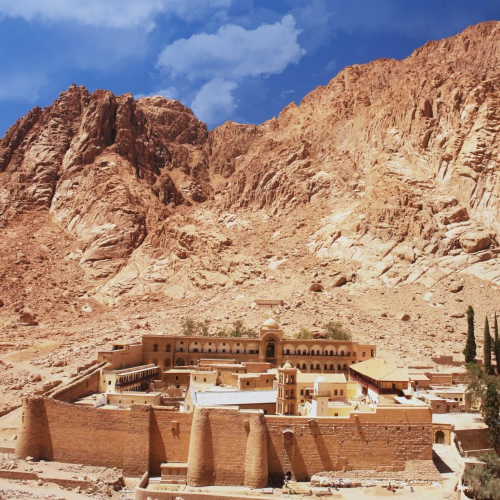
The Orthodox Saint Catherine Monastery
The Orthodox Saint Catherine Monastery is nestled at the foot of the iconic Mount Sinai on the Sinai Peninsula in Egypt, it was founded in the 6th century and is the oldest Christian monastery in the entire world. The mountain is referred to as Moses’ Mountain where three Abrahamic religions (Judaism, Christianity, and Islam), believe that Moses encountered the Burning Bush and received the Tablets of Law (Ten Commandments). A sacred site, the monastery remains functional today and sits in the rugged mountain setting with breathtaking views. There are renowned religious icons here including a 12th-century painting of the Ladder of Divine Ascent. According to UNESCO “Its walls and buildings are of great significance to studies of Byzantine architecture and the Monastery houses outstanding collections of early Christian manuscripts and icons. The rugged mountainous landscape, containing numerous archaeological and religious sites and monuments, forms a perfect backdrop to the Monastery.”