


Destinations
❮Main Menu
UNESCO WORLD HERITAGE SITES IN THE USA


Fortaleza and San Juan de la Cruz (El Canelo) National Historic Site
La Fortaleza and San Juan de la Cruz (El Canelo) National Historic Site along with the fortifications of Castillo San Felipe del Morro, Castillo San Cristobal, and a large portion of the original San Juan City in Puerto Rico, were built between the 16th and 20th centuries to protect the city and the Bay of San Juan. Listed as a UNESCO World Heritage Site in 1983, the site features a series of defensive structures that protected the city and bay against foreign invasions, today La Fortaleza serves as the official residence of the Governor of Puerto Rico. These Spanish-style fortifications are the oldest European construction in the United States and one of the oldest in the New World, they are characteristic examples of the historic methods of construction used in military architecture over this period. La Fortaleza has served as a fortress, an arsenal, a prison, and residence of the Governor-General, and today as the seat and residence of the Governor of Puerto Rico. The series of defensive structures was built at this strategic point in the Caribbean Sea, they represent a fine display of European military architecture adapted to harbor sites on the American continent. The fortifications also reflect Italian Renaissance, Baroque, and French Enlightenment designs, and express successive techniques and technologies in fortification construction. La Fortaleza sits high on a rocky cliff overlooking the famous capital city of San Juan and the sparkling blue Caribbean Sea, known to locals as “El Morro” the site now features a museum.
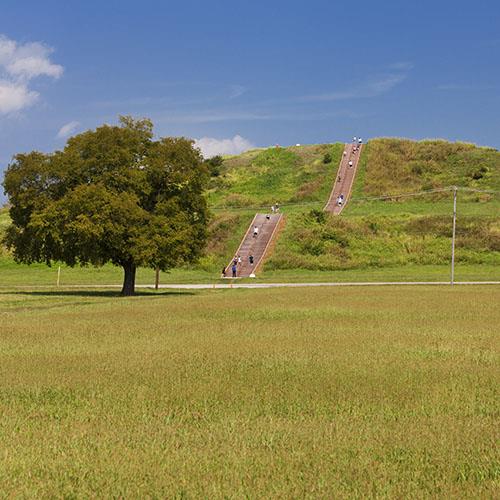
The Cahokia Mounds State Historic Site
The Cahokia Mounds State Historic Site is the site of a pre-Columbian Native American city that existed from c. 1050 - 1350 CE. Located directly across the Mississippi River from the modern St. Louis, Missouri, the city was like no other in its time, and Mississippians who lived there built a variety of structures including practical homes, farms, and monumental public works, which have maintained their grandeur through the centuries. The historic park covers 2,200 acres and contains about 80 mounds, but the ancient city was much large, at its apex around 1100 CE, the city then covered around 4000 acres and included around 120 manmade earthen mounds with a wide range of functions. At the apex of its population, Cahokia may have briefly exceeded contemporaneous London, which at that time was approximately 14,000 - 18,000. The mounds are a National Historic Landmark and designated site for state protection, also enlisted as UNESCO World Heritage Site in 1982. The site offers an interpretive center, outdoor self-guided and guided tours, and amenities. It was recognized by USA Today Travel magazine, as one of the selections for “Illinois 25 Must-See Places”. The many components of the site include 51 platform, ridgetop, and conical mounds, residential, public, and specialized activity areas. The Monks Mound is the largest indigenous earthen structure north of Mexico, it dominates the site and covers six hectares rising in four terraces to a height of 30 meters.

The Carlsbad Caverns National Park
The Carlsbad Caverns National Park is located in Carlsbad, New Mexico, 18 miles southwest of the city with the Guadalupe Mountains National Park lying forty miles further southwest across the Texas border. These immensely beautiful caves (118) are a popular tourist attraction and were formed when sulfuric acid dissolved the surrounding limestone. Carlsbad Cavern is one cave in a fossil reef laid down by an inland sea 250 to 280 million years ago. The Chihuahuan Desert is filled with ancient sea ledges, deep rocky canyons, flowering cactus, and desert wildlife, the spectacular caves system is hidden beneath these surfaces, and includes caverns of all sizes. Hiking down Carlsbad Cavern is available for visitors or there is an option to take an elevator. There is hiking, golfing and water recreation along with numerous other activities to enjoy in the region. The national park participates in the Junior Ranger Program, and has two entries on the National Register of Historic Places; The Caverns Historic District and the Rattlesnake Springs Historic District. Carlsbad Cavern includes a large limestone changer, named simply the Big Room, measuring almost 4,000 feet long, 625 feet wide, and 225 feet high, it is the largest chamber in North America and the thirty-first largest in the entire world. The Lechuguilla Cave is the deepest in the nation and the fourth-longest limestone cave at 1,567 feet.
The Chaco Culture National Historical Park
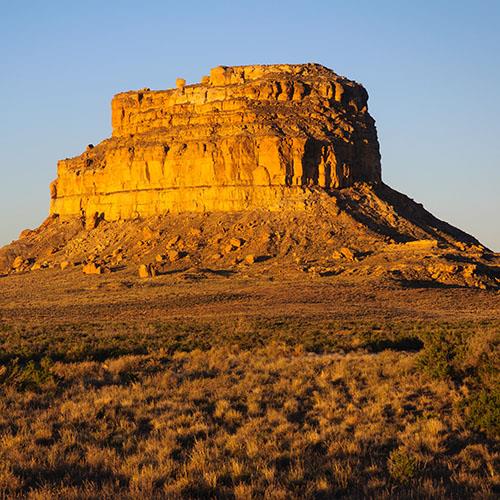
The Chaco Culture National Historical Park is located in northwestern New Mexico and preserved outstanding elements of the vast pre-Columbian cultural complex which dominated most of what is now the southwestern United States from the mid 9th to 13th century. The Pueblo people occupied a vast region of the southwestern United States for over 2,000 years, Chaco Canyon is a major center of ancestral Pueblo culture and was a focus for ceremonials, trade, and political activity for the prehistoric Four Corners area. Listed as a UNESCO World Heritage Site in 1987 as an outstanding example of world cultural patrimony, the designation is an honor meant to recognize the uniqueness of the civilization centered at Chaco Canyon from 850AD to 1250AD.
The site includes Chaco Culture National Historic Park, the associated sites at Aztec Ruins National Monument, and five additional protected archeological areas. There are guided tours, hiking and biking trails, evening campfire talks, and night sky programs offered in Chaco. Many of the Chacoan buildings may have been aligned to capture the solar and lunar cycles, which required generations of astronomical observations and centuries of skillfully coordinated construction. Park preservation efforts can conflict with native religious beliefs, tribal representatives work closely with the National Park Service to share their knowledge and respect the heritage of the Chacoan culture. The 9 miles long Canyon Loop Drive is where six major sites are located including Una Vida, Hungo Pavi, Pueblo Bonito, Chetro Ketl, Pueblo del Arroyo, and Casa Rinconada. There is a visitors center where self-guided tours and ranger-led walks are offered along with a bookstore. There is overnight camping allowed in Gallo Campground.
The Everglades National Park
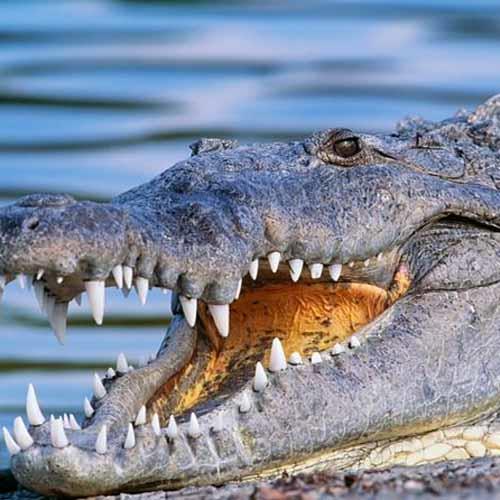
The Everglades National Park is the largest subtropical wilderness in the United States covering 1.5 million acres of land located in South Florida. The expansive park is filled with wetlands, rivers, coastal mangroves, sawgrass marshes, and pine Flatwoods as well as hundreds of species of animals. There are endangered leatherback turtles, manatees, the American crocodile, and the elusive Florida panther. There are three entrances to the park, they are not connected, they are accessed through different areas of South Florida including Miami. The park was designated as a UNESCO World Heritage Site in 1979, and the park is popular for boating, camping, fishing, hiking, bird watching, and ranger-guided programs. The park contains different areas like the Anhinga Trail, Shark Valley’s 65-foot observation tower, airboat rides over Florida Bay, kayaking, sunsets over Flamingo the southernmost point in mainland Florida, Nine Mile Pond, camping along the 99 mile Wilderness Waterway, and tour the historic Nike Hercules missile base.
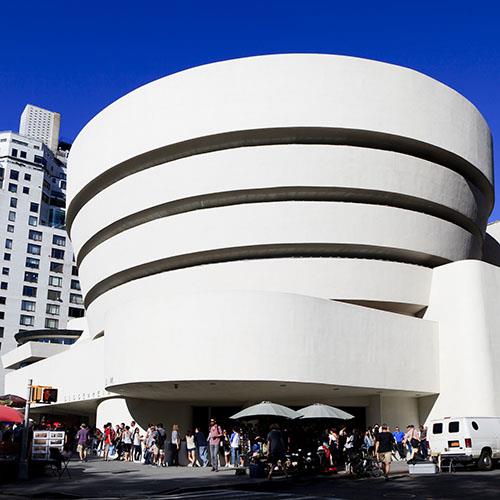
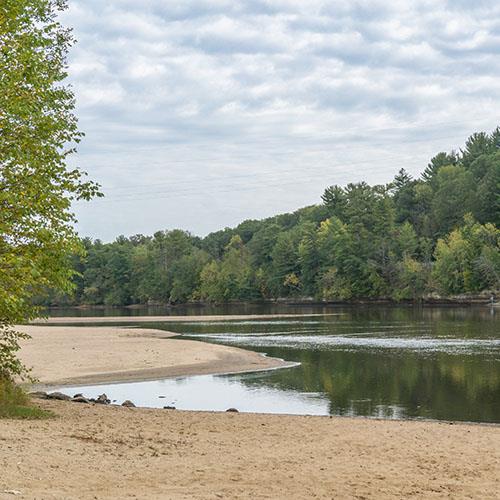
Frank Llyod Wright-designed buildings
There are a series of eight Frank Llyod Wright-designed buildings recognizing the famed architect’s influence on modern design in both the USA and Europe. These eight structures are honored together as one property and consist of Fallingwater in Mill Run, Pennsylvania, the Guggenheim Museum in New York City, Unity Temple in Oak Park, Illinois, the Frederick C. Robie House in Chicago, Illinois, Taliesin in Spring Green, Wisconsin, and Taliesin West in Scottsdale Arizona, Hollyhock House in Los Angeles, California, and the Katherine Jacobs House in Madison, Wisconsin.
The works by Frank Lloyd Wright are the first modern architecture in the United States on the UNESCO World Heritage list, inscribed in 2019, the listing confirms just how important Wright was to the development of modern architecture all over the world. It's a nonprofit organization founded in 1989 and works to preserve and oversee the remaining structures designed by the architect, who spent over 15 years working to get his buildings recognized by UNESCO. These buildings are praised for reflecting “the organic architecture” developed by Wright and include open plan, a blurring of the boundaries between exterior and interior, and the unprecedented use of materials such as steel, and concrete. It took over 15 years of extensive, collaborative efforts to get the eight major works of Frank Llyod Wright’s to be added to the UNESCO World Heritage List. The collection of buildings, formally known in the nomination as The 20th Century Architecture of Frank Lloyd Wright, span 50 years of his influential career, and mark the first modern architecture designation in the US.
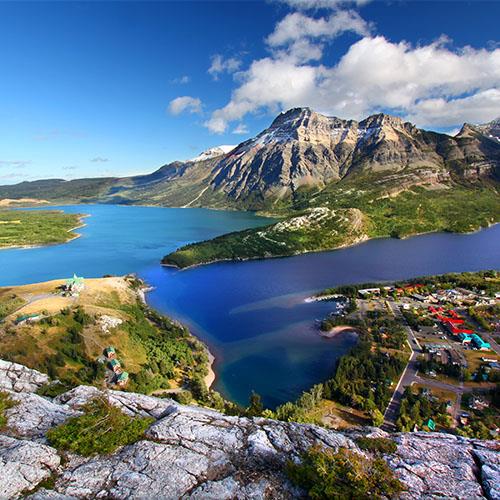
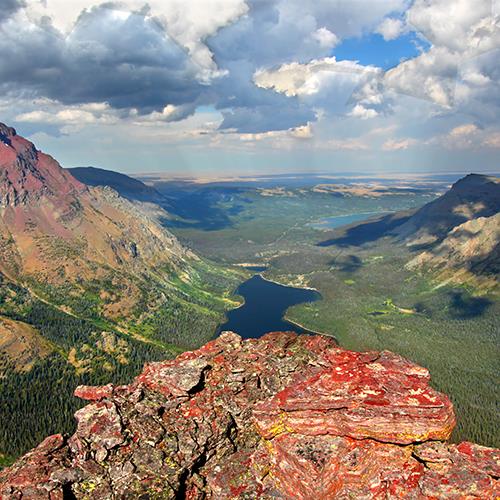
The Waterton Lakes National Park
The Waterton Lakes National Park is located on the easter slopes of the Continental Divide in southwestern Alberta, Canada, combined with Glacier National Park in Montana, they form the world’s first International Peace Park. Both parks are declared a Biosphere Reserve by UNESCO World Heritage Sites and were inscribed in 1995. The region is filled with pristine forests, alpine meadows, rugged mountain peaks, and spectacular scenic lakes, a great base to explore the stunning surroundings of charming Kalispell, and other nearby towns such as Whitefish, Bigfork, and Columbia Falls. There are over 700 miles of trails offered through dramatic and breathtaking alpine landscapes.
Glacier National Park is known as the “Crown of the Continent” or “the backbone of the world” a stunning mountain adorned with glaciers and snowfields, Waterton Lakes Park referred to as “where the mountains meet the prairies” is the sister park that offers outstanding scenery and is exceptionally rich in plant and mammal species and a unique blend of unusual geology. These two magnificent parks were combined in 1932 and the majestic lands have inspired many writers and world travelers. The parks commemorate the bonds of peace and friendship between the two nations. There are two-hour scenic cruises from Waterton across the border to Goat Haunt offered from July through mid-September. The Prince of Wales Hotel is one of the most beautiful hotels in the Rocky Mountain West. Glacier National Park encompasses 1 million acres and receives almost 3 million visitors annually.
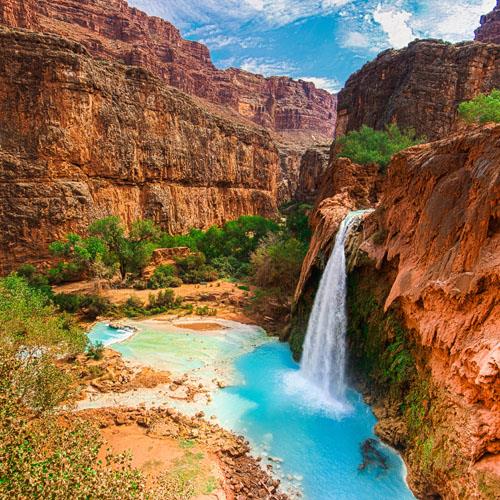
Grand Canyon National Park
The Grand Canyon National Park is one of the seven natural wonders of the world covering over 1 million acres of unincorporated area in Coconino and Mohave counties. The Colorado River has fed the canyon for almost 17 million years, the canyon features an unusual and unique combination of geological features and erosion forms. The canyon measures 277 miles in length, 18 miles wide, and 1 mile deep, it receives 5 million visitors per year. The Grand Canyon was designated a World Heritage Site by UNESCO in 1979 but it already became well known to Americans in the 1880s after railroads were built and pioneers developed infrastructure and early tourism. The Grand Canyon features geology, astronomy, archeology, photography, unique experiences, backpacking, helicopter rides, river rafting, camping, and hiking along with millions of years of history.
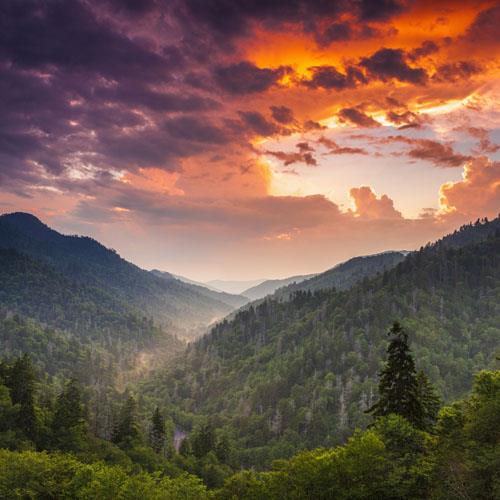
The Great Smoky Mountains National Park
The Great Smoky Mountains National Park straddles the border between North Carolina and Tennessee, in the quaint, resort-like village of Gatlinburg, nestled in the East Tennessee Mountains. The park is known for its stunning natural scenery, diverse plant and animal life, beautiful ancient mountains, and the remnants of Southern Appalachian mountain culture. It is the most visited National Park in the United States and the city of Gatlinburg has plenty to offer with a world-class aquarium, miniature golf course, mountains coasters, museums, great shopping, and more. The sprawling scenic landscapes of teh park are filled with lush verdant forest and an abundance of wildflowers that bloom year-round. There are sparkling streams, raging rivers, and cascading waterfalls along the hiking routes. Clingmans Dome is the highest peak in the park where an observation tower stands offering panoramic views of the mist-covered mountains. The views stretch out over 500,000 acres and there are auto tours, cycling trails, hiking trails, camping, fishing, and sightseeing through the park.
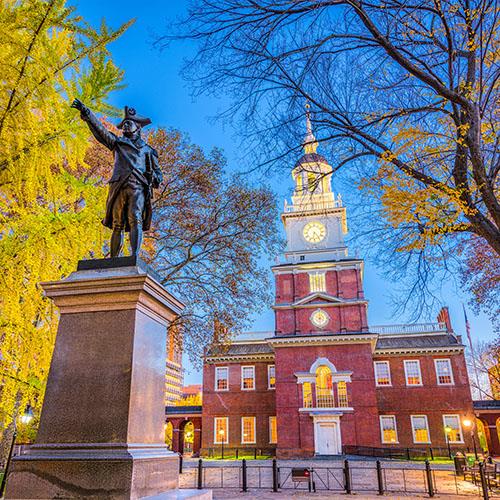
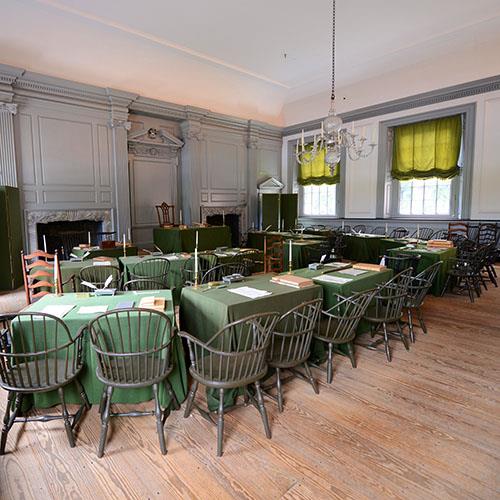
Independence Hall
Independence Hall is located on Chestnut Street, between 5th and 6th streets in Pennsylvania. The U.S. Declaration of Independence and the Constitution were both signed here, visitors can explore the First Bank of the U.S., Congress Hall, Old City Hall, Franklin Court, and Liberty Bell Center in the city. Independence Hall is the birthplace of America, the legacy of the nation’s founding documents, universal principles of freedom, and democracy which influenced lawmakers around the world, and distinguished Independence Hall a UNESCO World Heritage Site in 1979. Independence Hall is a part of the U.S. National Park Service, and an Independence National Historical Park, there are guided tours offered by National Park rangers, they begin in the first-floor courtroom where lawyers from opposing parties shared tables and law books. George Washington’s “rising sun” chair dominates the Assembly room, this room is arranged as it was during the original Constitutional Convention. The actual inkstand used to sign the Declaration of Independence and an original draft of the Constitution are prominently displayed in the West Wing. Construction of Independence Hall was completed in 1753 as the Pennsylvania State House, it served as the capital for the Province and Commonwealth of Pennsylvania until the state capital moved to Lancaster in 1799. The hall was the principal meeting place of the Second Continental Congress from 1775-1783 and was the site of the Constitutional Convention in the summer of 1787. There was a convention held here in 1915, by former US president William Howard Taft that marked the formal announcement of the formation of the League to Enforce Peace, which led to the League of Nations, and eventually the United Nations.
The Redwood National and State Parks
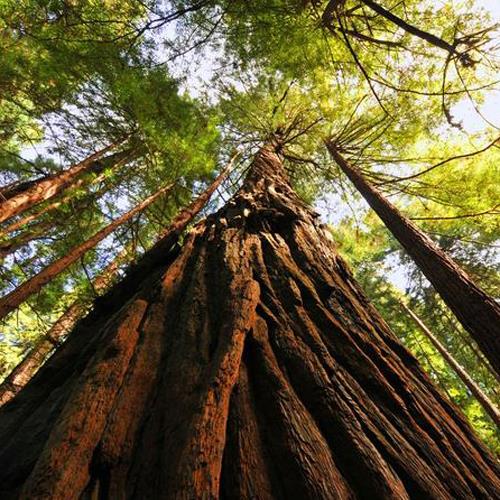
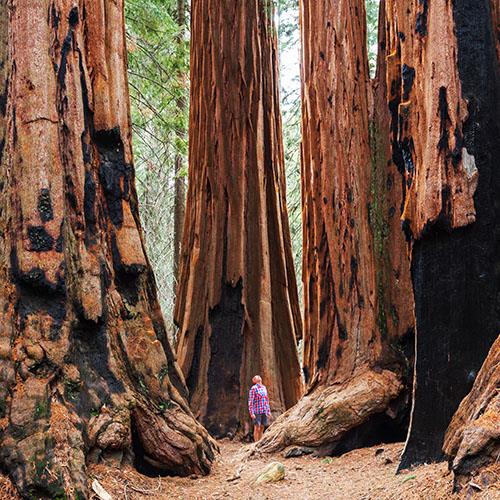
The Redwood National and State Parks (RNSP) are a complex of one national park and three state parks, located in the United States along the coast of Northern California. Comprising Redwood National Park (established in 1968) and California’s State Parks; Del Norte Coast, Jedediah Smith, and Prairie Creek, the combined RNSP cover an estimated 139,000 acres. The parks protect vast prairies, oak woodlands, wild rivers, and 40 miles of rugged coastline, most know the Redwoods to be home to the oldest and tallest trees on Earth, some have existed for 160 million years. The four parks are located within Del Norte, and Humboldt Counties, together they protect 45% of all remaining coast redwood (Sequoia sempervirens) old-growth forests, as well as other indigenous flora, and fauna. The Save the Redwoods League was founded in 1918 to preserve the remaining old-growth redwoods. When Redwood National Park was established in 1968, almost 90% of the original redwood trees had been logged. The ecosystem of the RNSP preserves a number of threatened animal species such as the tidewater goby, Chinook salmon, northern spotted owl, and Stellar’s sea lion. The parks were inscribed on the UNESCO World Heritage Site in 1980, and then part of the California Coast Ranges International Biosphere Reserve was added in 1983. The trees in the Redwoods included champion specimens that rise over 370 feet in height, which in comparison is five stories taller than the Statue of Liberty. There are opportunities for walking, biking, and horseback riding along the 200 miles of trails in the park system. The sprawling scenic park system also provides opportunities for stunning drives.
Mammouth Cave National Park
Mammouth Cave National Park is the world's longest known network of caves and underground passageways with an explored area that extends over 400 miles. The American National Park is located in west-central Kentucky and encompasses portions of the Mammouth Cave, it is one of the oldest tourist attractions in North America. Mammoth Cave National Park is filled with rolling verdant hills, deep river valleys and years of human history, and rich diversity of plant and animal life. It earned the title of UNESCO World Heritage Site in 1981, the park was established in 1926 when a group of private citizens formed the Mammoth Cave National Park Association, it was officially dedicated as a national park in 1941. The park supports over 130 species of flora and fauna, which provides rich cave-dwelling wildlife habitats. Covering over 52,000 acres the park offers cave tours, surface hikes, canoeing, picnicking, horseback riding, bicycling, camping, rushing, kayaking, and more. The Green River runs through the park, the cave system has over 420 miles of surveyed passageways.
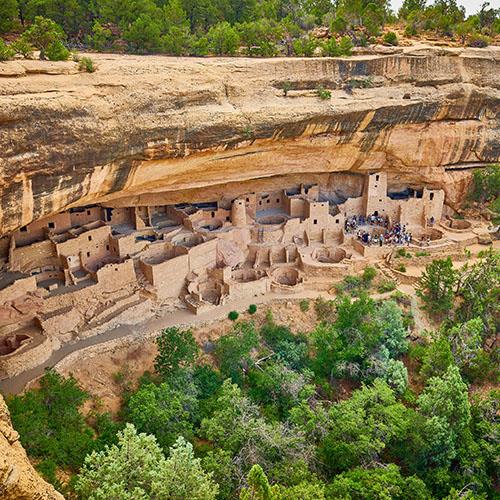
The Mesa Verde National Park
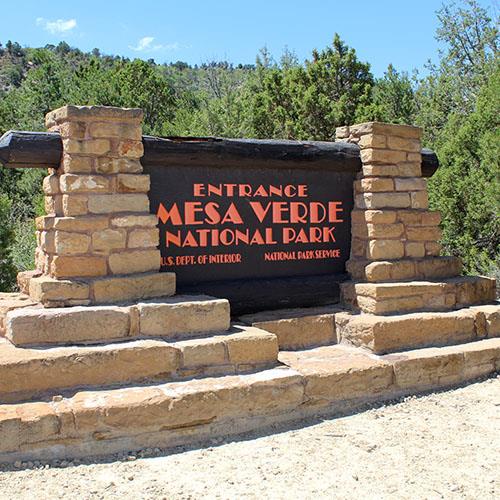
The Mesa Verde National Park is located in southwest Colorado, the location of exceptional archeological sites, best known for its well preserved Ancestral Puebloan cliff dwelling, notably the huge Cliff Palace. The landscapes of the park provide testimony to the ancient cultural traditions of Native American tribes and are among some of the best-preserved in the USA today. The park protects almost 5,000 known archeological sites which include the 600 cliff dwellings, the site represents a graphic link between the past and present ways of life of the Puebloan Peoples of the American Southwest. The Chapin Mesa Archeological Museum with exhibits on the ancient Native American culture. Mesa Top Loop Road winds its way past archaeological sites and overlooks that include Sun Point Overrook with panoramic canyon views. The National Park was named a UNESCO World Heritage Site in 1978, recognized for its exceptional archeological relevance. The park is filled with wild landscapes including deep canyons, and expansive vistas where over a thousand species, including several that live nowhere else on earth.
The Ancestral Pueblo people built thriving communities on the mesas and in the cliffs of Mesa Verde for over 700 years. Today the park protects the rich cultural heritage of 26 tribes, offering a spectacular view into the past. The park occupies over 52,000 acres, the park was established by Congress and President Theodore Roosevelt in 1906. The variety of projectile points found in teh region indicates they were influenced by surrounding areas that include the Great Basin, the San Juan Basin, and the Rio Grande Valley. The Mesa Verdeans survived by using a combination of hunting, gathering, and subsistence farming of crops such as corn, beans, and squash. The massive cliff dwellings that the park is best-known for were at the end of the 12th century, by 1285 they abandoned the area due to prolonged droughts and moved to Arizona and New Mexico.

Monticello and the University of Virginia
Monticello was the plantation home of Thomas Jefferson, author of the American Declaration of Independence, and the third president of the United States. Jefferson was a talented architect of neoclassical buildings, he designed Monticello and his ideal ‘academical village’ which is still the heart of the University of Virginia, in Charlottesville. The Academical Village exhibits a unique U-shaped plan dominated by the Rotunda with pavilions, hotels, student rooms, and gardens. The integration of the buildings into the natural landscape, the originality of the plan and design, and the refined proportions and decor make Monticello an outstanding example of neoclassical work of art, and the University of Virginia is an outstanding example of a great educational institution from the Age of Enlightenment. The Monticello house features a dome, porticos supported by Doric columns, cornices, and friezes derived from classical Roman buildings. In 1987, Monticello and the University of Virginia’s Academical Village were together named a UNESCO World Heritage Site. The rebuilding of Monticello began in 1796 and was completed by Jefferson in 1809, he transformed the original eight-room Palladian villa with two stories into a 21 room house designed in the fashionable Neoclassical style he saw in France.
The Olympic National Park
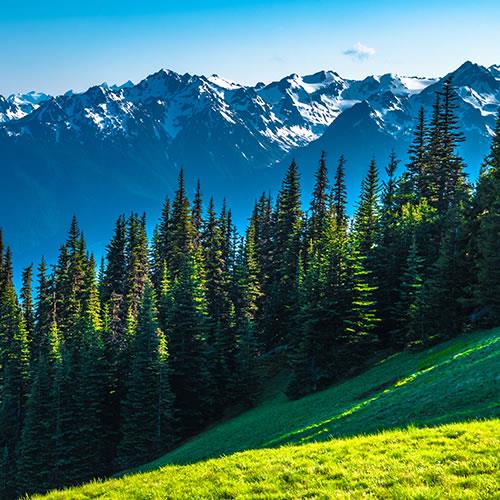
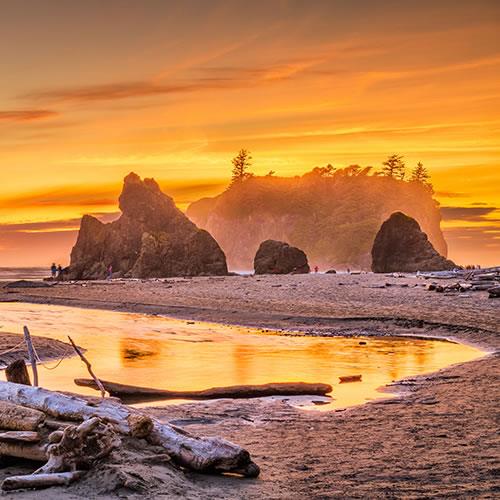
The Olympic National Park is a national park located in the State of Washington, on the Olympic Peninsula. The park features four regions; the Pacific coastline, alpine areas, the west-side temperate rainforest, and the forest of the drier east side. There are three distinct ecosystems within the park including subalpine forest, wildflower meadows, temperate forests, and the rugged Pacific Coast. The park was originally designated as Mount Olympus National Monument by President Theodore Roosevelt on March 2, 1909, it was re-designated as a national park by Congress and President Franklin D Roosevelt on June 29, 1938. In 1988, Congress designated 95 perfect of the park as the Olympic Wilderness which was renamed Daniel J Evans wilderness in honor of the Governor and U.S. Senator Daniel J. Evans in 2017, during his tenure in the Senate, Evans co-sponsored the 1988 bill that created the state’s wilderness areas, it is the largest wilderness area in Washington.
This stunning national park features spectacular stretches of coastline, scenic lakes, majestic mountains and glaciers, and magnificent temperate rainforest, the diversity of the ecosystems here is like vising three parks in one. There are five visitors centers, four lodges, campsites, and RV parks nestled in the scenic, alluring sections of the park. The park encompasses nearly a million acres and protects a vast wilderness, thousands of years of human history, and several distinctly different ecosystems. This fantastic and beautiful state is filled with outstanding attractions and outdoor activities including hiking, biking, sailing, rafting, skiing, and mountain climbing. The verdant forests here are filled with Douglas fir, hemlock, and ponderosa pines along with verdant fields where tulips blooms, and sprawling apple orchards and vineyards. There are over 900 wineries in this region.
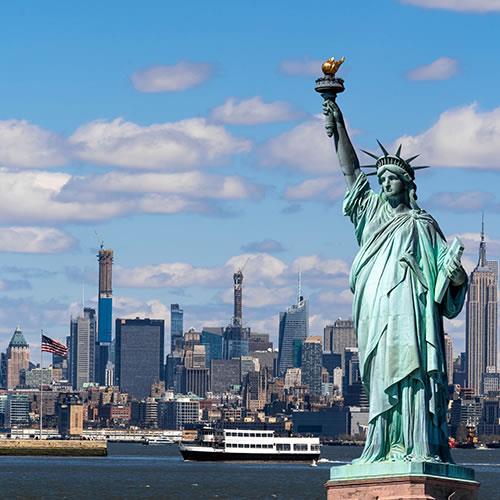
The Statue of Liberty Enlightening the World
The Statue of Liberty stands 151 feet 1 inch tall (copper statue) and 305 feet from ground level to the torch on Liberty Island at the entrance to the New York Harbor. One of the most iconic images in the entire world, and one of the first sights you will see when alighting the plane in New York. The Statue of Liberty Enlightening the World was a gift to the people of the USA from France to celebrate the centenary of American Independence in 1886. The statue was created by the one and only Gustav Eiffel, in conjunction with French sculptor Bartholdi. Highly potent symbolic elements of the statue's design include the United States Declaration of Independence, which the Statue holds in her left hand, as well as the broken shackles from which she steps. The Statue of Liberty is a colossal neoclassical sculpture, a copper statue of a Roman liberty goddess holding a torch above her head in her right hand, it was designated as a National Monument in 1924 and a UNESCO World Heritage Site in 1984. Visitors can visit the island and statue by ferry, there is a museum to visit and 377 steps to climb to the crown from the main lobby.
Taos Pueblo
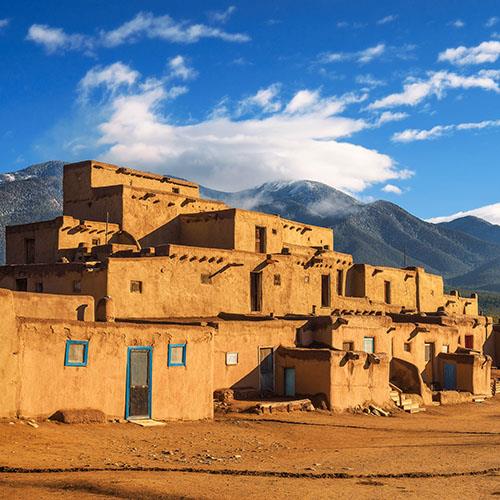
Taos Pueblo is a native settlement located in northern New Mexico, characterized by multistoried adobe houses and buildings, it is one of those settlements that represent the oldest communities in the U.S. Taos Pueblo is located about an hour north of Santa Fe a living cultural, and archaeological site, once a major center for the trade between the Rio Grande pueblos, and the Plains Indians. The main part of the adobe buildings at Taos Pueblo was built before the year 1400, people from the Tiwa-speaking tribe have called the Taos area home for at least 1,000 years. The site is both a National Historic Landmark and UNESCO World Heritage Site. Very few people live within the pueblo walls today (the governing Tribal Council does not allow modern amenities like electricity and running water) the pueblo is still used in traditional ways. Bread is baked in the humped earthen ovens, trained hands spin traditional pottery, and once a year the community still holds a ceremony to refinish the walls of each building. The native American settlement is made up of ceremonial buildings and dwellings, all built with the characteristics adobe (mixture of dirt, water, and straw) and wood, they entered through the roof which made them secure refuge during enemy attacks (they pulled up the ladders and bar the doors).
Yosemite National Park
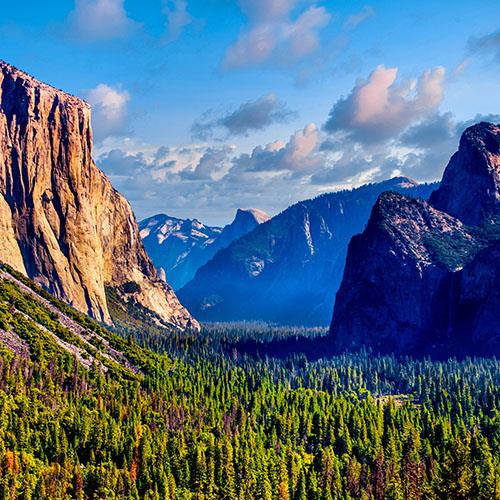
Yosemite National Park is easily accessible from the Bay Area in California, a beautiful site filled with amazing flora and fauna, and dramatic, diverse landscapes. The stunning scenic park is filled with beautiful mountains, verdant trees, cascading waterfalls, horseback riding, stargazing, auto touring, with 750 miles of hiking trails, and 12 miles of biking trails available. Yosemite was listed as a UNESCO World Heritage Site in 1984 for its preservation efforts, and biological diversity. It is among one of the best-known parks in the world, with spectacular sights such as Yosemite Falls (highest waterfall in America), the granite Half Dome, and El Capitan, rivers, meadows, canyons, and lakes, it attracts over 3 million visitors a year. There are almost 2,000 plant species found in Yosemite that including the famous Giant Sequoia, which is the tallest tree in the world. There are 250 species of reptiles, birds, fish, and other animals such as the American black bear, bobcats, and white-headed woodpeckers.


Yellowstone National Park
Yellowstone National Park is home to half of the world’s geothermal features numbering over 10,000. The park is like no other place on earth, famous for its abundant ecosystem, and the distinction of being the world’s first national park, which makes it unique. The park is filled with exceptional natural beauty, dramatic landscapes, thousands of hydrothermal features, and hundreds of geysers that make it otherworldly. Yellowstone was listed as a UNESCO World Heritage Site in 1978, the “superlative natural phenomena” are part of what qualifies the park as a UNESCO Site.
The park also features almost 300 geysers, which is the largest concentration in the world, the Old Faithful Geyser is one of the most notable which spews hot water 130 feet in the air every 60-110 minutes. The park is home to hundreds of threatened and endangered species of mammals, birds, reptiles, and fish, as well as megafauna including gray wolves, grizzly bears, and free-ranging herds of bison, and elk. The bison herd in the park is the largest and oldest herd in the country, Native Americans have lived in the park for over 11,000 years with their culture intensely rooted in the site's sceneries and features. Yellowstone sits atop an active supervolcano and is one of the largest calderas in the world, the park includes hot springs, mud spots, and geysers. Outdoor activities here include camping, biking, boating, and more.

The San Antonio Missions
The San Antonio Missions are a group of five frontier mission complexes situated along a 7.7 mile stretch of the San Antonio River in southern Texas. The five missions include a historic ranch, and related properties, architectural and archaeological structures, farmlands, residences, churches, and granaries. The complexes were built by Franciscan missionaries during the 18th century, they illustrate the Spanish Crown’s efforts to colonize, evangelize, and defend the northern frontier of New Spain. In addition to evangelizing the area’s indigenous population into converts loyal to the Catholic Church, the missions also included all the components required to establish self-sustaining, socio-economic communities loyal to the Spanish Crown. The missions are also an example of the interweaving of Spanish and Coahuiltecan cultures, illustrated by a variety of features such as the decorative elements of churches, that combine Catholic symbols with indigenous designs inspired by nature.
ADDITIONAL UNESCO WORLD HERITAGE SITES IN THE USA
Papahanaumokuakea Marine National Monument
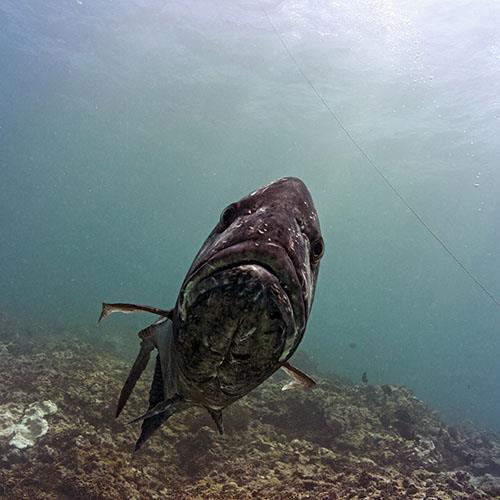
Papahanaumokuakea is a vast and isolated linear cluster of small, low-lying islands and atolls measuring 1,242 miles located northwest of Hawaii. The islands and atolls are surrounded by marine wilderness, a pristine site with tremendous natural value and one of the largest marine protected areas in the entire world. The site was created in 2006 and extended in 2016 to make it the largest protected area, UNESCO listed the Marine National Monument as a mixed World Heritage Site 2010. The site has cultural and natural values and is equally significant for its living Native Hawaiian culture, encompassing archeological pre-European settlement, as well as ancestral and spiritual sites. The preserve spans 1,200 nautical miles, which to put into perspective would stretch from New York City to Omaha. The World Heritage Site protects coral reefs that house 7,000 marine species, a quarter of which cannot be found anywhere else on earth. The site includes a significant portion of the Hawaii-Emperor hotspot trail, constituting an outstanding example of island hotspot progression. The property is mainly made up of pelagic and deepwater habitats, that have notable features like seamounts, submerged banks, extensive coral reefs, and lagoons. The area is home to many endangered and threatened species both terrestrial and marine, some of which depend solely on Papahanaumokuakea for their survival.
Hawaii Volcanoes National Parks
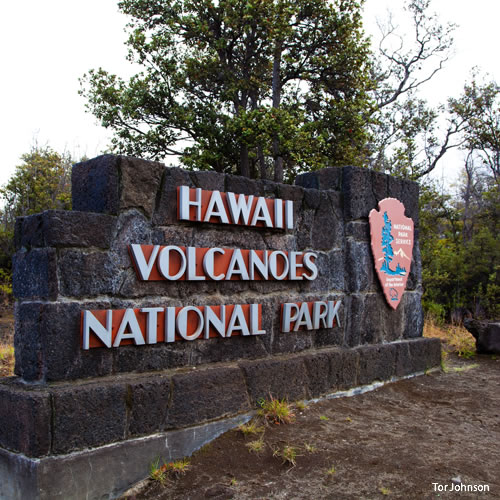
Hawaii Volcanoes National Park is located on the island of Hawaii that encompasses two active volcanoes; Kilauea, one of the world’s most active volcanoes, and Mauna Loa, the world's most massive shield volcano, both contribute to the island’s geography. The park offers dramatic volcanic landscapes, glimpses of rare flora and fauna, and a view into the traditional Hawaiian culture. Hiking is one of the best ways to explore this unique geological landscape that ranges from sea level to the volcanoes’ summits, the park is rich in biodiversity and history. It was designated as a UNESCO World Heritage Site in 1987 and was established as a national park in 1916, it's recognized for its outstanding natural values and as an international Biosphere Reserves since 1980. The national park is filled with some of the most unique geological, biological, and cherished landscapes in the world, they extend from sea level to over 13,000 feet and encompass two of the world’s most active volcanoes. Crater Rim Drive passes steam vents, and the Jaggar Museum, which features volcanology exhibits and a viewpoint that overlooks Halema’uma’u Crater. The park is located 45 minutes southwest of Hilo, it is filled with some of nature’s most awe-inspiring wonders and is one of the most popular attractions in Hawaii as well as a sacred place. The Hawaii Volcanoes National Park encompasses 335,000 acres from the summit of Maunaloa to the sea, there are 150 miles of hiking trails that pass through volcano craters, scalded deserts, and rainforests, and a visitors center.
Poverty Point State Historic Park and Poverty Point National Monument
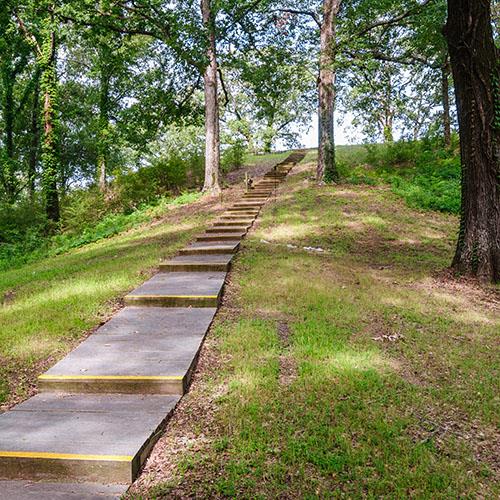
Poverty Point State Historic Park and Poverty Point National Monument is a prehistoric earthwork constructed by Poverty Point culture. Located in present-day northeastern Louisiana, the site is 15.5 miles from the current flow of the Mississippi River and is situated on the edge of Macon Ridge, near the village of Epps in West Caroll Parish, Louisiana. Evidence of the Poverty Point culture extends throughout much of the Southeastern Woodlands. The site contains earthen ridges and mounds that were built by the indigenous people between 1700-1100 BC during the Late Archaic period in North America. The property covers 402 acres and contains “the largest and most complex Late Archaic earthworks occupation and ceremonial site yet found in North America”. The Poverty Point Site has been designated as a state historic site, a Smithsonian Affiliate (2010), U.S. National Monument, a U.S. National Historic Landmark (1962), and a UNESCO World Heritage Site (2014). Archeologists have proposed a variety of possible functions for the site including a settlement, a trading center, and a ceremonial religious complex. The most significant feature here is a series of six semi-elliptical earthen ridges, that extend nearly three-quarters of a mile and surround a flat plaza. It was another 2,000 years before anything like this was constructed in North America, it has been the focus of professional archeological excavations since the 1950s.
The Kluane/Wrangell-St. Elias/Glacier Bay/Tatshenshini-Alesk National Park
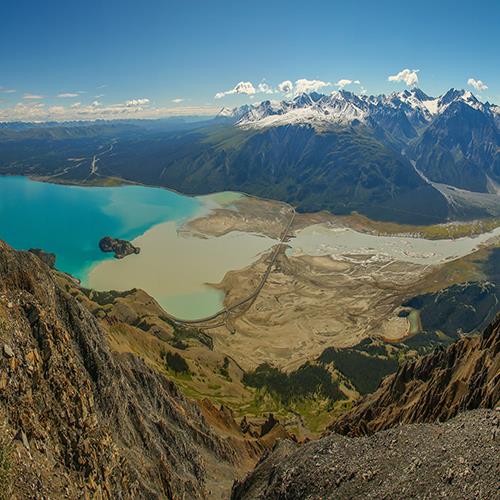
The Kluane/Wrangell-St. Elias/Glacier Bay/Tatshenshini-Alesk National Park and protected areas are found along the boundary of Canada and the United States that contain the largest non-polar icefield in the world, as well as some of the world’s longest and most spectacular glaciers. These parks' characteristics include an impressive complex of glaciers, icefields, and high peaks on both sides of the border along with spectacular scenic natural landscapes where grizzly bears, caribou, Alaskan Salmon, and Dall’s sheep can be seen. Declared a UNESCO World Heritage Site in 1994 with a total area of 37989.06 square miles. The parks together comprise the largest transboundary protected areas in the world, ranging from coastal and taiga forests, and alpine meadows to the arctic and glacial wilderness, and display a vast and scenic range of natural processes. Kluane National Park Reserve was established in 1942 and then as a Joint National Monument in 1976, along with Wrangell-St. Elias National Park and Preserve were first established in 1976 these were the two parks added to the World Heritage list in 1979. The World Heritage Site was then extended to inscribe Glacier National Park in 1992, and Tatshenshini-Alsek Provincial Wilderness Park in 1994. The four parks are remote and of immense size; The Wrangell - St. Elias Mountains contain the highest coastal range and ten of the fifteen highest peaks in North America, the four highest peaks in Canada, and the second-highest peak in the US. The complex protects over 24 million acres of wildlands and waters.