


Destinations
❮Main Menu
UNESCO WORLD HERITAGE SITES IN WALES
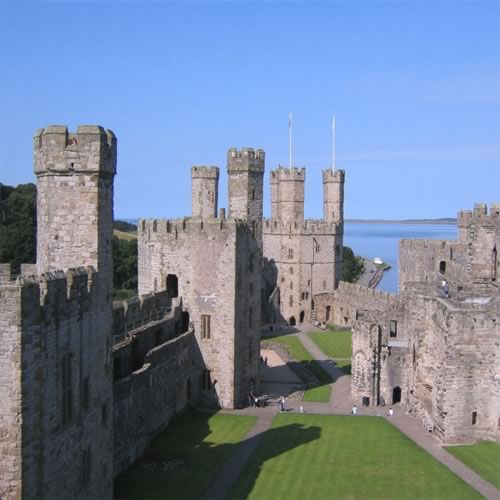
Castles and Town Walls of King Edward in Gwynedd - Caernarfon
The castles of Beaumaris and Harlech, the work of James of St George, the greatest military engineer of the time, and the fortified complexes of Caernarfon located in the former principality of Gwynedd, in north Wales. These castles are extremely well preserved and examples of the colonization and defense works carried out throughout the reign of Edward I (1272-1307) and the military architecture of the time. The Conwy Castle in the county of Conwy is a reminder of the might of the English Crown in the 13th century, and the staunch resistance it faced from the Welsh. The adjoining historic towns of Conwy and Caernarfon are both UNESCO World Heritage Sites in Wales. Caernarfon is the most imposing of Edward’s structures, visitors can climb the steep stairwell into the three-turreted Eagle Tower, where Edward II, the first Prince of Wales, was born. The castle grounds are open to explore as well as the ancient ramparts or the command battalions. These castles are a supreme example of medieval military architecture.

Castles and Town Walls of King Edward in Gwynedd - Conwy
The castle at Conwy, on the banks of its namesake river is one of the best-preserved medieval fortresses in Europe. Conwy located in the former principality of Gwynedd, in North Wales, is an extremely well-preserved monument that is an example of the colonization and defense works that were carried out throughout the reign of Edward I (1272-1307) and the military architecture of it. Visitors are able to wander around the castle and its grounds to see the fortress’s grand suites, the servant passageways, and the on-site chapel. The castle is a fine example of late 13th and 14th-century military architecture, demonstrated through its completeness, pristine state, evidence for organized domestic space, and extraordinary repertory of its medieval architectural form.
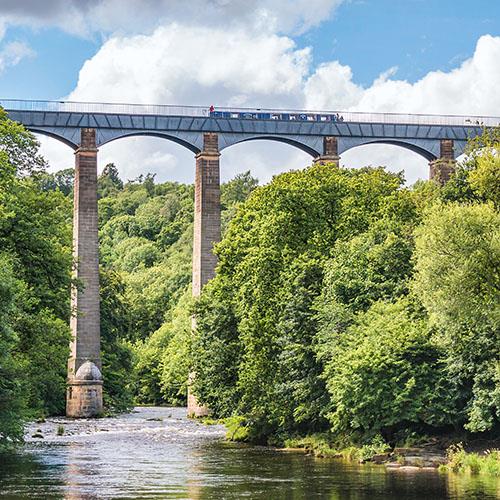
The Pontcysyllte Aqueduct
The Pontcysyllte Aqueduct carries narrowboats on a slender runnel of water 126 feet above the River Dee. It is nicknamed the “stream in the sky” and has 19 symmetrical metal arches with a lockless design (a consistent water level throughout), it is an impressive structure and considered a triumph of 19th-century design. It is the first masterpiece of celebrated civil engineer Thomas Telford, recognized as a UNESCO World Heritage Site in Wales, including 11 miles of scenic canal way, including the original engineer's houses and canal-side wharf’s. It is the highest navigable aqueduct in the UK, serving as a rite of passage for seasoned narrow boaters. Visitors can hire a boat for the day or hop on board a boat tour of the precipitous waterways for a ride along the canal. There are cycle paths that surround the canal, with a scenic stretch from Llangollen and Chirk, which is close to the English border.
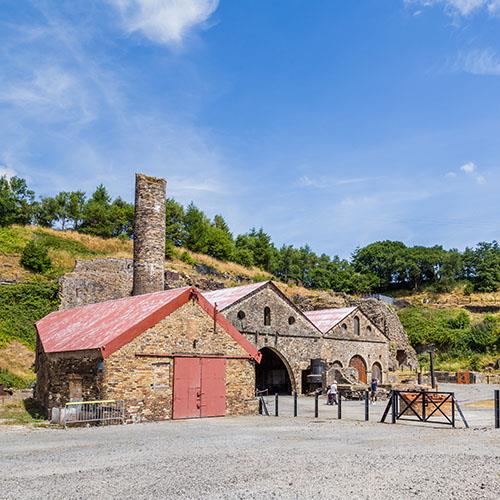
The Blaenavon Industrial Landscape - Newport
The Blaenavon Industrial Landscape is the old town’s iron works, a well-preserved site where giant stone structures, central to the iron-making process, loom large over visitors. Some of the notable landmarks found here include the giant blast furnaces, and the remains of the old water balance tower, that innovatively, transported wagons of iron between tram tracks using water-filled weights. The British Industrial Revolution transformed South Wales, and it became a hub for coal mining and iron production. The infrastructure from this period has long disappeared, however the preserved buildings and industrial machinery in the former mining town of Blaenavon, where a monument stands to commemorate this important chapter in recent Welsh history. Visitors can venture underground for a real taste of the miner life; the award-winning Big Pit National Coal Museum, a working mine until 1980, transports visitors 300 feet beneath the surface of Blaenavon for a tour around the tunnels where men spent long, tiring hours shoveling coal. These tours are led by former miners who share their insights from their own experiences of living a semi-subterranean existence.
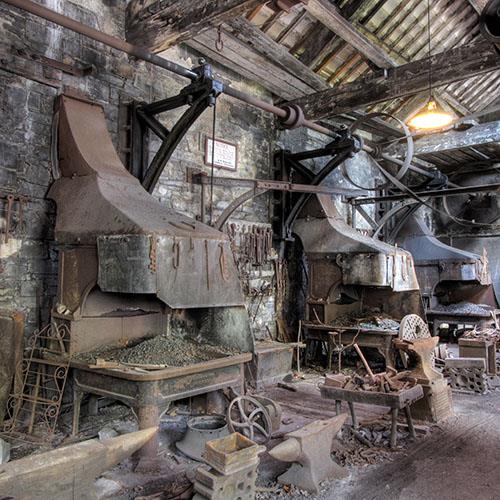
The Slate Landscape of Northwest Wales
The Slate Landscape of Northwest Wales is located in the United Kingdom, in the mighty mountains of Snowdon massif. These landscapes illustrate an exceptional example of the transformation that industrial slate quarrying and mining brought about in the traditional rural environment of the mountains and valleys of Snowdon. The territory, extends from mountain top to sea coast, that presented opportunities and constraints that were used and challenged by the large-scale industrial processes undertaken by landowners and capital investors, which reshaped teh agricultural landscape into an industrial center for slate production during the Industrial Revolution (1780-1914). The serial property comprises six components each encompassing relict quarries and mines, archeological sites related to slate industrial processing, historical settlements, both living and relict, historic gardens and grand country houses, ports, harbors, and quays built by leading industrialists contrast with workers’ vernacular settlements with their characteristic chapels and churches, band rooms, schools, libraries, and meeting places which retain multiple examples of their traditional way of life and strong minority language.