


Destinations
❮Main Menu
UNESCO WORLD HERITAGE SITES IN IRELAND
Sceilg Mhichil
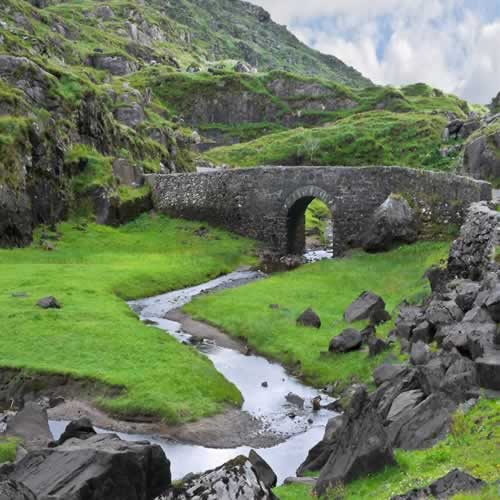
Sceilg Mhichil also called Great Skellig is a twin-pinnacled crag, and a UNESCO World Heritage Site located in County Kerry in Ireland. The island is named after archangel Michael, and “Skellig” is derived from the Irish word sceilig, which means a splinter of stone. These islands rose c. 374-360 million years ago during a period of mountain formation, later separated from the mainland by rising waters levels. Skellig Michael consists of around 54 acres of rock, the highest point which is known as the “Spit” stands 714 feet above sea level. The island is defined by its twin peaks, and the intervening valley known as “Christ’s Saddle”, which has an elevation of 422 feet with steep landscapes. The site is also well known for its Gaelic monastery which was founded between the 6th and 8th centuries, situated at an elevation of 600 feet. The island is home to a variety of bird species including gannets, puffins, a colony of razorbills, and a population of around 50 grey seals. The rock contains the remains of a tower house, a megalithic stone row, and a cross-inscribed slab known as the Wailing Woman. Skelling Michael became a UNESCO World Heritage Site in 1996, and the island is only accessible during the summer months.

Bru na Boinne
Bru na Boinne “mansion or palace of the Boyne” is an ancient monument complex and ritual landscaped located in County Meath, Ireland, in a bend of the River Boyne. It is one of the most important Neolithic landscapes in the world, comprising at least 90 monuments that include passage tombs, burial mounds, standing stones, and enclosures. The site is an important archaeoastronomical site, and several of the passage tombs here are aligned with the winter solstice and equinoxes. It was added to the UNESCO World Heritage Site list in 1993. The three main prehistoric sites of the Bru na Boinne Complex are Newgrange, Knowth, and Dowth which are situated on the north banks of the River Boyne. The area continued to be a site of ritual and ceremonial activity in the later Bronze Age and Iron Age, in Irish mythology these tombs are said to be portals to the Otherworld, and dwelling of the deities, particularly The Dagda, and his son Aengus. Studies of the area began in the 18th century by antiquarians, archaeological excavations began in the 20th century. The monument here had social, economic, religious, and funerary functions.

The Giant`s Causeway Coast
The Giant`s Causeway Coast lies at the foot of the basalt cliffs along the seafront on the edge of the Antrim plateau in Northern Ireland, and it remains a spectacular area of global geological importance. It is protected by UNESCO not only for its beauty but also because its cliffs, seashores, marshes, and grasslands are home to some 50 species of birds, as well as more than 200 species of plants. The most characteristic and unique feature of the site is the exposure of some 40,000 large, regularly shaped polygonal columns of basalt in perfect horizontal sections, forming a pavement. Though a volcano is likely the cause, more romantic and adventurous tales about giants and lost loves are certainly more thrilling explanations!