


Destinations
❮Main Menu
GALWAY COUNTY - ARAN ISLANDS
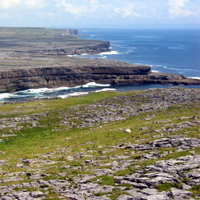
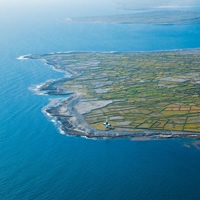
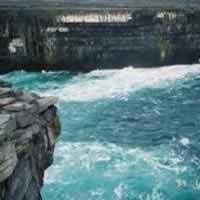
The Aran Islands are a group of three islands located at the mouth of Galway Bay. The Aran Islands are richly unique with landscapes of Limestone rock, a stretch of cliffs facing the moods of the Atlantic, large boulders, rock formations, and unusually clean beaches. It is also a place steeped in immense cultural heritage and history. The Islands themselves are an outdoor museum of artifacts of religious and cultural importance.
Inishmore is the largest of the three islands; it has many sites of interest including the Dun Aengus stone fort, Clochan-na-Carraige and Arkin`s Castle. Inishmaan is the middle island and was the setting of the film Riders to the Sea. Inisheer is the farthest island and has remains of several forts and churches. Irish is a spoken language on all three islands, and is the language used for the names of the islands and many of the island`s villages and place names. You can cycle or see Aran on horseback along the pathways of history on this unique island. Swim in unpolluted seas, study rare flowers and wildlife, write, paint, take pictures, fish for a specimen or just relax, unwind and learn spoken Irish in this bilingual community. And when the Celtic twilight comes, drop in for a quiet pint, or enjoy a wealth of Irish music and dance, at a village or spontaneous session in an Island pub.
Aran Islands are made up of Inishmore, Inishmaan and Inisheer.
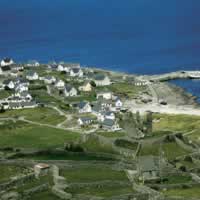
Inis Mor (Inishmore)
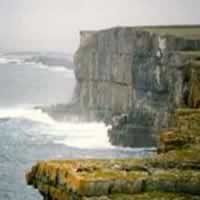
The island of Inis Mór (Inishmore) meaning the big island, is steeped in history and resembles an outdoor museum with over 50 different monuments of Christian, pre Christian and Celtic mythological heritage. The island`s featured monument is the world heritage site of Dun Aonghasa Fort which stands over a dramatic 300 foot cliff that spans the entire western part of the island and faces the moods of Atlantic sea. This is the largest of the prehistoric stone forts of the Aran Islands. It is enclosed by three massive dry-stone walls and a `chevaux-de-frise` consisting of tall blocks of limestone set vertically into the ground to deter attackers.
Dun Aengus is a fort situated on the edge of a cliff at a height of 300 fet overlooking the Atlantic. It consists of a series of concentric circular walls, the innermost; the citadel encloses an area approximately 150 feet in diameter with 12foot thick walls of stone. These walls have been rebuilt to a height of 18 feet and have wall walks, chambers, and flights of stairs as well. Two walls of stone that form semicircles from one cliff edge to the other surround it. Between the two `outer walls` is a small enclosure that extends as if an extension to the first wall. The restored walls are likely noticeable because of the use of mortar. The original walls were of dry stone construction. In all the enclosed area is comprised of approximately 14 acres.
Others sights include the Black Fort set over cliffs, the seven Churches, St Benins Church perched isolated on a hill at the southern tip of the island, Temphaill Chieran, and the old Light House at the islands highest point. The eastern side of the island with clear views of Connemara`s 12 bens mountain range is a splattering of some of Europe`s cleanest white sandy beaches fronting onto clear turquoise water and is host to a variety of water activities. The fishing port of Kilronan harbor is dotted with yachts in summer and is a hive of activity. The favored activities for holiday makers on the island are walking, fishing, cycling, swimming, sightseeing and just relaxing in the magnetic, majestic, magical energy of the island itself.
Inishmaan
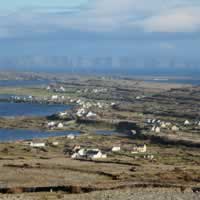
Inishmaan is where you`ll find a more authentic escape from the modern world. The less visited of the three islands; it will give you the best chance to acquaint yourself in the precious sanctuary of Irish Cultural tradition. This island has a hilly landscape. It also features crystal clear views of the Cliffs of Moher. This island was a retreat for Synge, one of the most famous playwrights to emerge from Ireland, and features a lot of artists. More recently it has become a center for diving with its beautiful marine life and clear waters. The island also features cultural courses such as dance and poetry.

Inisheer
The smallest of the islands is characterized by its distinctive charm. This island is close to the Burren with its unusual eclectic mix of color and the Cliffs of Moher clearly visible in its entire panoramic splendor. The Island itself also has the true feel of a classical isolated fishing village. From the pier you are greeted with a pristine carpeted white sandy beach facing clear crystal turquoise water and plenty of fishing boats, their nets, and fisherman returning at the end of the day with their catch. The main village area is right next to the beach and is enclosed by a small hill with a castle and a fort at the top as if they are taking care of the islanders and its visitors.
You can travel to Aran by ferry boat, directly from Galway City Dockside (approximately 90 mins), Ros a Mhil (Rossaveal) in Connemara (approximately 40 mins), Doolin in Co. Clare (approximately 20 mins) or by air from Indreabhan (Inverin) in around 10 mins.
Also be sure to check out what these islands are famous for!: Aran Sweaters
The Aran sweater first began to emerge in the early part of the twentieth century. Aran women had always been knitting fisherman`s jerseys, or `ganseys,` as islanders call them, to help their husbands and families weather the often-treacherous island conditions. Indeed, the very story of our lives is woven into the sweater - every stitch has a meaning. For instance, there is the `Ladder of Life` stitch, which symbolizes the pilgrimage to happiness, the `Tree of Life` which grants good luck to its wearer, and even the stitch of `Marriage Lines` with zigzags that represent the ups and downs of married life.