


Destinations
❮Main Menu
A SHORT HISTORY OF CHINESE CUISINE

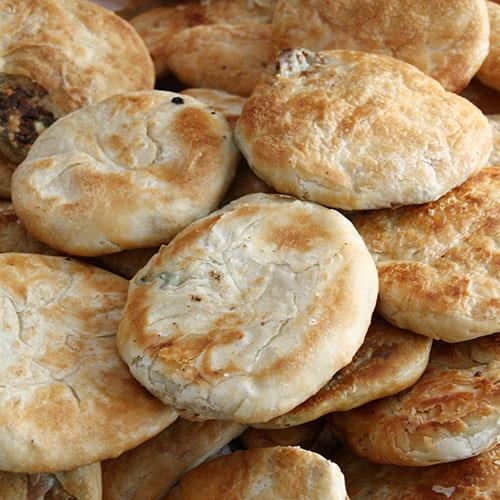
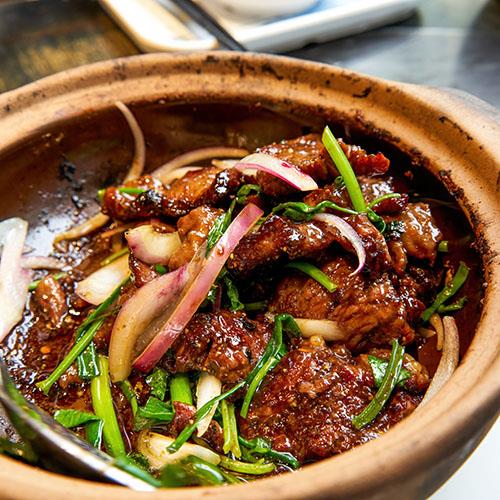
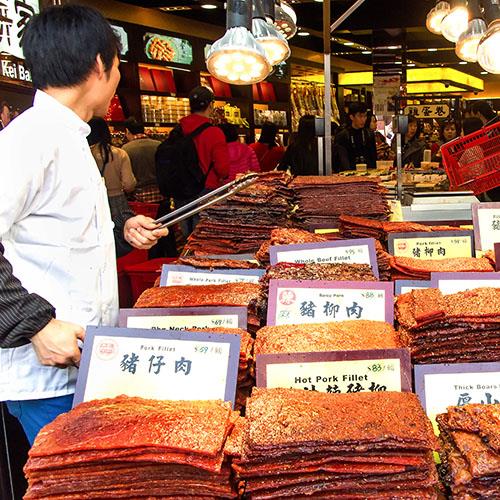
The history of Chinese cuisine stretches back thousands of years, and many staples consumed by Westerners originated in China, such as tea, rice, noodles, chili oil, soy sauce, kiwis, wine, and tofu. China is even considered to be the birthplace of the restaurant, with the first restaurants noted in historic texts around the 12th century CE.
Since China is such a large country, there are naturally many regional cuisines, some of which are very popular in the United States, such as Cantonese, Szechuan (Sichuan), and Hunan. The regional cuisines discussed on this page are referred to in popular culture and by the Chinese government as the "Eight Great Traditions", with each "tradition" comprising a regional cuisine. The Eight Great Traditions are:
-Cantonese cuisine: Cantonese cuisine is native to Guangdong Province, close to Hong Kong, where the major cities are Guangzhou and Shenzhen. Cantonese cuisine is known for its light use of sauces and its popularity of "dim sum", savory dumplings that can be steamed, fried, and baked (just for starters!). The concept of "dim sum" is similar to meze in Turkey and tapas in Spain, with the idea that you can taste small bites of various dumplings with delicious fillings. While you're in Guangdong, make sure to sit for "yum cha", a nice brunch that combines drinking tea and delicious dim sum selections.
-Szechuan (Sichuan) cuisine: Szechuan cuisine comes from Sichuan Province, where Chengdu is the largest city. Szechuan cuisine is known for being very spicy and for its liberal use of chili peppers and garlic. Kung pao chicken is one of many noteworthy Szechuan-style dishes.
-Anhui cuisine: Anhui cuisine is noted for being more vegetable and fish-focused, with locally-grown mushrooms and bamboo featuring prominently in dishes like Li Hongzhang-style chop suey.
-Fujian (Hokkien) cuisine: Mushrooms and bamboo are also ubiquitous in this regional cuisine, popular for its soups such as Fujian-style thick soup (geng).
-Shandong cuisine: Shandong is a coastal cuisine, and you can enjoy seafood dishes (cooked with or without high-quality Shandong vinegar), braised spare ribs (hongshao paigu), and sweet potatoes with caramelized sugar (basi digua).
-Jiangsu cuisine: Jiangsu Province includes the cities of Nanjing, Suzhou, and Zhenjiang, and its regional cuisine is well-known for its duck dishes, like Nanjing salted dried duck and "Farewell My Concubine", a delicious and flavorful soup with meat from turtles and hens, cooked with mushrooms and wine.
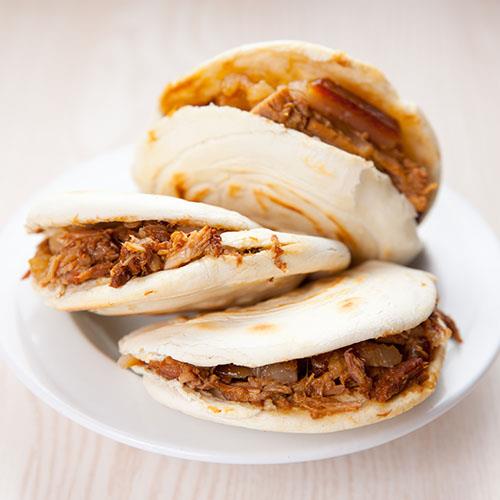
-Hunan cuisine: Hunan cuisine, like Szechuan cuisine, is noted for its sour and spicy tastes, ranging from pickles and fermented soybeans to braised pork (hong shao rou) cooked with soy sauce, rice wine, and a dozen spices. You might see it referred to as "Mao's family-style pork" as it was one of Chairman Mao Zedong's favorite meals.
-Zhejiang cuisine: Zhejiang's regional cuisine includes food scenes in Hangzhou and Shanghai. This region is known for dishes like shrimp cooked in Longjing tea, guoba (crunchy burnt rice from the bottom of the pot) served with tomato and shrimp, and Beggar's Chicken, a popular street food where marinated chicken is baked or smoked while wrapped in lotus leaves.
Additionally we'll be discussing the cuisines of Beijing, Hong Kong, and Macau. Beijing cuisine is also called Mandarin cuisine, and has brought us well-loved dishes like hot and sour soup, moo shu pork, Peking duck, and zhajiangmian (noodles in a fried meat-and-soybean sauce). Hong Kong and Macanese cuisines are not only influenced by the colonial powers that once ruled them (Great Britain and Portugal respectively), but also by mainland China and the cuisines of East and Southeast Asia. Hong Kong is well-known for everything from fish balls to egg tarts and pineapple buns to roast goose, while Macau is known for everything from dried beef and tofu jerky to pork chop buns to pasteis de nata and gallinha à portuguesa.
Must-Savor Specialties: Dim sum (by themselves or at yum cha), kung pao chicken, Li Hongzhang-style chop suey, Fujian-style thick soup (geng), Shandong vinegar, Shandong-style braised spare ribs, sweet potatoes with caramelized sugar (basi digua), Nanjing salted dried duck, Farewell My Concubine soup (turtle/hen meat), Hunan-style pickles and fermented soybeans, Mao's family-style braised pork (hong shao rou), shrimp cooked in Longjing tea, guoba with tomato and shrimp, Beggar's Chicken, hot and sour soup, Peking duck, zhajiangmian, fish balls, egg tarts, pineapple buns, Hong Kong-style roast goose, beef and tofu jerky in Macau, pork chop buns, pasteis de nata, gallinha à portuguesa
A SAMPLING OF FOOD CITIES AND THE EIGHT GREAT TRADITIONS OF CHINA

Beijing
Beijing has had a robust restaurant scene for a very long time. After the abdication of the last emperor in 1911, the chefs who cooked Imperial cuisine for the court opened their own restaurants, introducing regular Chinese diners to the dishes of royalty for the first time.
The most popular of these dishes is Peking duck, which dates from the Yuan Dynasty in the 13th century and is now considered one of China's signature dishes. Peking duck is roasted so it has crispy skin and juicy meat inside, and it is a heavenly experience when cooked just right. It is commonly served with hoisin sauce, plum sauce, or both. The most highly-recommended restaurants that serve Peking duck are Beijing Da Dong (Dongsi 10th Alley), Siji Minfu (where the duck is carved right at your table, 32 Dengshikou West Street), Quanjude Roast Duck (30 Qianmen Street), and Bianyifang (4/F, Bianyifang Mansion, 16 Chongwenmen Wai Street), the longest-running eatery serving Peking duck in the Chinese capital, founded in 1416!
Beijing cuisine is a mix of Shandong cuisine (which is known for having a variety of seafood dishes), northeastern Chinese cuisine from the city of Liaoning (known for its bright colors and flavors), and Chinese imperial cuisine. Here are some other popular foods and dishes that are native to Beijing:
-Youtiao: Puffed fried breadsticks with a tender inside, typically eaten at breakfast with porridge. Get these stuffed with breakfast meats and cheeses at Tasting Moments (Room L1-AB1, Floor 101, Parkview Green, No. 9 Dongdaqiao Road).
-Pinggu Da Tao peaches: These peaches come from the largest peach orchard in the world, and are renowned for their plump sugary sweetness.
-Napa cabbage: This Chinese cuisine staple is native to the region just outside Beijing.
-Zhajiangmian: Wheat noodles are served in a soybean sauce and also typically with vegetables such as radishes. Hands-down the best zhajiangmian can be found at the aptly-named Old Beijing Zha Jiang Noodle King (56 Dong Xinglongjie).
-Jing jiang rou si: Sliced pork cooked in a sweet bean sauce (sometimes hoisin sauce). Typically garnished with green onions or leeks. You can get yours served with warm porridge at Beijing Rongshunyuan Xiaojie Dalian Huosha (9 Neiwubu Jie).
-Dragon in the Flame of Desire: For the adventurous diner with a lot of money to spend, this Beijing delicacy is a fried and flambéed yak penis. Guolizhuang (34B Dongsishitiao) specializes in cooking this dish and other odd ones just like it.
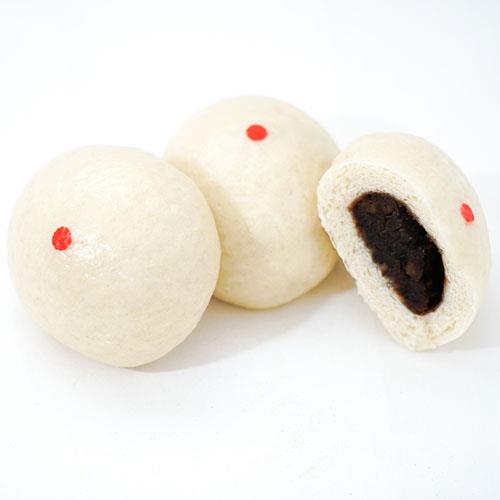
Beijing is also renowned for its street food, for example having the world's best doushabao (steamed buns filled with red bean paste), xianbing (fried dumplings stuffed with meat, soy sauce, onions, and ginger, a hallmark of Chinese halal cuisine) and jiaozi (meat and vegetable dumplings with dipping sauce, similar to Japanese gyoza), which you can get at Din Tai Fung (87 Jianguo Road) and Mr. Shi's Dumplings (74 Baochao Hutong) respectively. Kombucha is a fermented tea drink now popular in the West that originated in northeastern China. You can try kombucha blends at Gunpowder Kombucha House, on the second floor of the food hall YU (The Crib), located at 1-1 Gongti Beilu.
On the fine dining front, Beijing is home to 29 Michelin-starred restaurants, many of which specialize in one of the Eight Great Traditions. For Beijing-style cuisine, you should visit Poetry Wine (61 Dongsanhuan Middle Road) for their braised fish heads or jasmine-scented duck; Jing Yaa Tang (11 Sanlitun Road) for Peking duck and lotus root stuffed with glutinous rice; and Jingji (83A Jianguo Road), a popular place for those who like seafood cooked in the Chinese imperial style. For the vegetarians, your needs will definitely be met in Beijing, and there are Michelin-starred restaurants for you to enjoy like Vege Wonder (269 Wangfujing Street) and King's Joy (one of only three 3-star Michelin restaurants in mainland China, located at 2 Wudaoying Hutong).
Must-Savor Specialties: Peking duck, youtiao, Pinggu Da Tao peaches, zhajiangmian, Napa cabbage, jing jiang rou si, doushabao, xianbing, jiaozi, kombucha from northeastern China, braised fish heads, lotus root stuffed with glutinous rice, Dragon in the Flame of Desire (yak penis)
Shandong cuisine (Qingdao)
Shandong cuisine is known for its strong aromas, light taste and feel, and cooking styles that include roasting, stewing, and quick frying. Shandong is known for popular cooking staples as starchy corn, sweet peanuts and cabbages, mung bean sheets, and steamed breads such as shaobing (filled with dried or roasted pork, brushed with sesame paste and topped with sesame seeds). The most famous dish that Shandong cuisine is known for is moo shu pork, one of the most popular meat and vegetable stir-fries in Chinese cuisine (served with hoisin sauce). You can taste moo shu pork and many other Shandong delicacies, such as longkou fen si (what we know as vermicelli noodles or "cellophane noodles"), at the Rolling Restaurant on top of the Qingdao TV Tower. Located on Taiping Shan Road, this restaurant serves great eats and even greater views of the city. (And make sure to try the area's most popular alcoholic beverage -- Tsingtao beer!) While you're in town, take a stop at the brewery and museum on Dengzhou Road in Shibei District.
Must-Savor Specialties: Sweet cabbages and peanuts from Shandong, mung bean sheets, shaobing, moo shu pork, longkou fen si ("cellophane noodles"), Tsingtao beer

Jiangsu cuisine (Shanghai)
Shanghai cuisine is a combination of Zhejiang cuisine and Jiangsu cuisine. Jiangsu cuisine is known for its plentiful seafood, cooking with color and aroma according to season, and unique cooking techniques that leave meat tender but still on the bone (like with Jiangsu's famed braised spare ribs). Duck is a popular meat, while shrimp and fish are the most common seafood types you will see in this cuisine. Shanghai cuisine takes from Zhejiang cuisine the concepts of stewing many dishes and the usage of bamboo shoots in recipes.
Shanghai cuisine likes to cook meats in wine and spirits, and sugar and soy sauce are also frequent components in dishes. Tofu and Chinese cabbage are native to Jiangsu cuisine and feature in many dishes. The most popular dishes to come from Shanghai include xiaolongbao (dumplings filled with soup and minced pork), you bao xia (stir-fried shrimp), scallion pancakes (wheat flatbread cooked with scallions), shengjian mantou (pan-fried meat and vegetable dumplings filled with soy sauce and/or sesame oil), cumian (the thick noodles used in Shanghai-style fried noodles), and a popular constant on American Chinese menus, egg foo young (pan-fried egg pancake with meat and vegetables). You can try these dishes and many more at the Din Tai Fung branch in Shanghai (Shop 104A in Shanghai Centre) and at Crystal Jade (2F South Block Xintiandi).
Shanghai is one of the fine dining capitals of China, and there are 43 Michelin-starred restaurants in the city. The only three-starred restaurant in Shanghai is Ultraviolet, owned by French chef Paul Pairet, who also owns Mr and Mrs Bund and Polux (also located in Shanghai). The experience, meant to interact directly with the diners' senses, is very intimate (only one party is allowed in the restaurant at a time). The most affordable Michelin-starred restaurant in the city is Canton 8 (63 Runan Street), known for their Cantonese dishes. Hai Jin Zi (240 Jinxian Road) is a Bib Gourmand-listed restaurant and serves delicious Shanghai-style dishes like scallion pork chops and braised duck.
Jiangsu cuisine (which is the cuisine that is native to Jiangsu Province, the area in and around Shanghai) is of course the region that tofu and Chinese cabbage are native to, as well as delicacies like Yancheng Long Xia lobster, Zhenjiang xiang cu vinegar, Yangzhou fried rice with shrimp, and duck blood and vermicelli soup (with the aforementioned ingredients as well as shrimp, duck organs, shallots and ginger). The xiaolongbao cooked in Wuxi, Jiangsu Province, is known for being a lot sweeter than the Shanghai style that is more famous.
Must-Savor Specialties: Braised spare ribs, Shanghai (and Wuxi)-style xiaolongbao, you bao xia (stir-fried shrimp), scallion pancakes, shengjian mantou, egg foo young, scallion pork chops, braised duck, Chinese cabbage, Yancheng Long Xia lobster, Zhenjiang xiang cu vinegar, Yangzhou fried rice with shrimp, duck blood and vermicelli soup, Shanghai-style fried noodles
Anhui cuisine (Hefei)
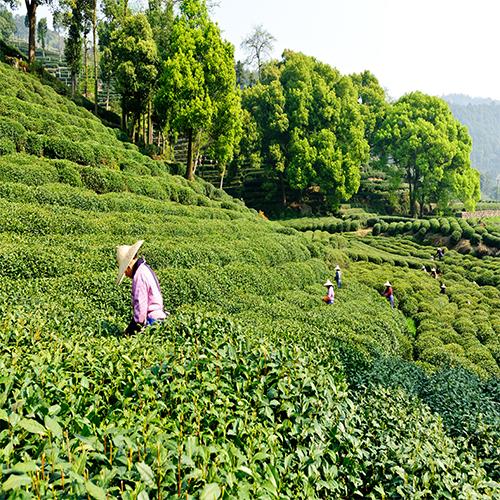
Anhui cuisine is known for its liberal use of herbs and primarily braising and stewing dishes as methods of cooking. Anhui Province is also one of the tea regions of China, and is known the world over for Huangshan Maofeng green tea, renowned for its quality, and Keemun black tea, a popular black tea that is consumed by many Westerners in their morning hot tea or evening iced tea. Popular dishes in Anhui cuisine are derived from seafood, such as "phoenix tail shrimp" (fried shrimp), xiang la xia (literally "fragrant and hot shrimp", cooked with salted chilis and chili bean paste), and crab and fish stomachs, cooked with wine, chicken stock, shiitake mushrooms and various seasonings such as chili flakes. You can try many of these seafood dishes on the Haiheng Pedestrian Street in Hefei. Anhui cuisine isn't always hot, but it can be quite spicy, so be warned!
Must-Savor Specialties: Huangshan Maofeng green tea, Keemun black tea, phoenix tail shrimp (fried), xiang la xia ("fragrant and hot shrimp" with chilies), crab and fish stomachs
Zhejiang cuisine (Hangzhou)
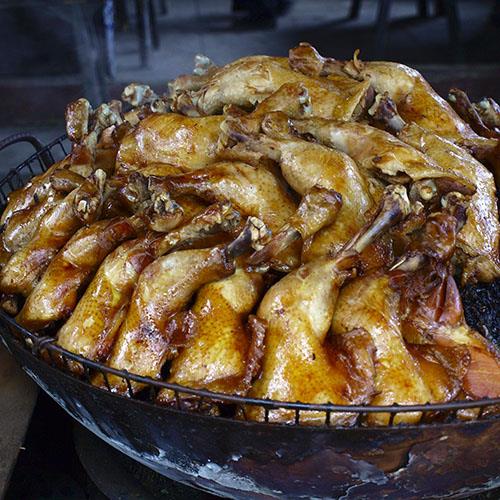
Zhejiang cuisine is known for having a lighter taste and aroma compared to other regional cuisines. This region is known for dishes like shrimp cooked in Longjing tea, guoba (crunchy burnt rice from the bottom of the pot) served with tomato and shrimp, and Beggar's Chicken, a popular street food where marinated chicken is baked or smoked while wrapped in lotus leaves. Popular dishes native to Hangzhou in Zhejiang Province include dongpo rou (pork belly cooked in soy sauce and rice wine), best enjoyed at the acclaimed restaurant Hubin 28 (28 Hubin Road); Hangzhou-style "spiced duck" pickled with soy sauce, best served at Zhangshengji (91-93 Jiefang Road); and "drunken chicken" cooked with Shaoxing wine, which you can try at Lou Wailou (30 Gushan Road).
Must-Savor Specialties: Shrimp cooked in Longjing tea, guoba with tomato and shrimp, Beggar's Chicken, dongpo rou, Hangzhou-style spiced duck picked with soy sauce, "drunken chicken" cooked with Shaoxing wine
Fujian (Hokkien) cuisine (Fuzhou and Xiamen)
Fujian (or Hokkien) cuisine is known for how light its dishes are, but they are still packed with xianwei (the Chinese word for "umami"). Fujian cuisine also prides itself on allowing the main ingredients of dishes be savored without a large emphasis on spices, although they are used. All meals will be served with some of the best tea in China, as Fujian Province is a popular tea-growing region. Oolong tea, a tea now very popular in the West, originates from Fujian Province.
As was mentioned previously, mushrooms and bamboo shoots are integral to Fujian-style dishes such as geng (Fujian-style soup thickened with corn starch and served with such meats as fish, shark fin, or beef). Fuzhou is the largest city in the region and is known for its sweet-and-sour approach to cooking, using staples such as fish sauce liberally. Xiamen, in southern Fujian, is known for its emphasis on meat from livestock as opposed to seafood, and a hallmark of Xiamen-style cuisine is its use of Chinese five-spice. Taiwanese cuisine is largely based on the Fujian style of cooking and cuisine in Xiamen.
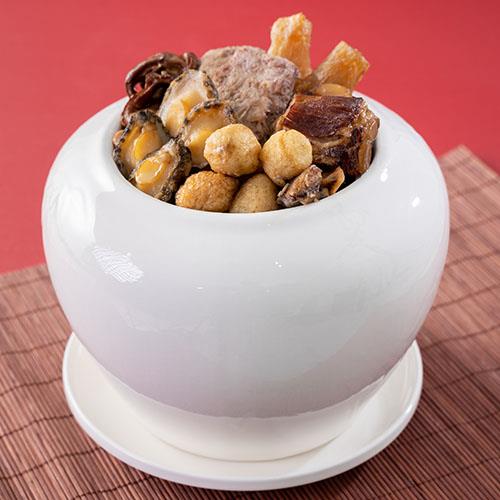
Some of the most notable dishes that come from Fujian cuisine include "Buddha Jumps Over the Wall", originally served for the Qing imperial court but now can be eaten at restaurants across the region. This soup includes a lot of fresh seafood like shark fin and abalone, and the seafood is cooked in Shaoxing wine. Yanpi is also a popular dish, and they are minced pork pieces covered by a very thin piece of wonton wrapper. Additional dishes you must try while in Fujian include:
-Popiah: A crepe served with a filling of either bean sauce or soy sauce.
-Oyster omelet: Omelet thickened with starch and filled with small oysters.
-Misua: Thin noodles made from wheat flour that are popular in Fujian stir fry dishes.
-Red wine chicken: A braised chicken soup dish served with misua noodles and red yeast rice, a Fujian delicacy.
-Hokkien fried rice: Fried rice with egg covered in a thick mushroom-and-beef sauce.
Must-Savor Specialties: Oolong tea, red yeast rice, geng (Fujian-style thick soup), Buddha Jumps Over the Wall, yanpi, popiah, oyster omelet, misua noodles, red wine chicken, Hokkien fried rice


Cantonese cuisine (Guangzhou, Shenzhen, Hong Kong, Macau, and Guilin)
Cantonese cuisine covers the culinary traditions of the Pearl River Delta, which includes Guangdong Province (where Guangzhou and Shenzhen are the largest cities), Hong Kong, Macau, and Guangxi Province (known for its own smaller sub-cuisine). It is a very popular regional Chinese cuisine in the United States due to the high number of restaurateurs who come from this region of China. Cantonese cuisine values fresh ingredients and measured flavors, so as not to overwhelm the main ingredients. Unlike many other regional Chinese cuisines, herbs are not typically used in Cantonese cuisine, with the exceptions of chives and cilantro. Preserved, fermented, or pickled ingredients are, however, commonly used. Most dishes in Cantonese cuisine are stir-fried or steamed, although there are entrées that are fried and braised as well.
Guangzhou and Shenzhen
Most Westerners familiar with Cantonese cuisine already know about char siu barbecue (glazed and cooked with honey, hoisin sauce, and spices like Chinese five-spice), chow mein, lo mein, and wonton noodles. They might also know about dim sum, a popular breakfast and lunch option which consists of various dumplings, spring rolls, and buns, served in rolling courses. As mentioned previously it is particularly popular as "yum cha", a weekend brunch with lots of delicious tea. One popular dim sum appetizer is siuumai, a dumpling made with pork and mushrooms. The dim sum experience at Man Ho Chinese Restaurant (88 Haide Yi Road, Nanshan District) in Shenzhen is highly recommended, as is Beiyuan Cuisine (202 Xiaobei Rd, Yuexiu District) in Guangzhou. For the full "yum cha" experience, go to Guangzhou Restaurant (2 Wenchang South Road, Shang Xia Jiu, Liwan District) in Guangzhou.
Hong Kong and Macau
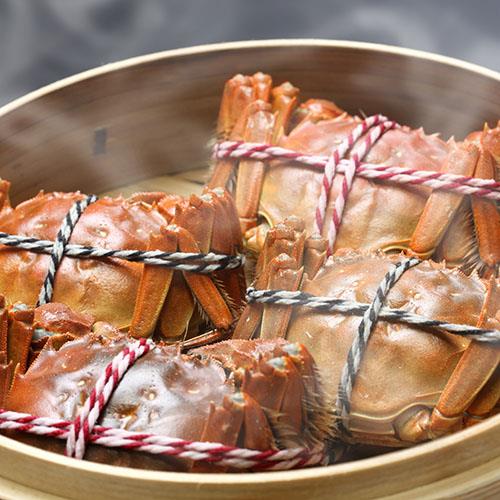
Hong Kong and Macau's cuisines are influenced heavily by their former colonial rulers, Great Britain and Portugal respectively. They are also influenced heavily first by Cantonese cuisine, and then finally nearby cuisines and sub-cuisines like Fujian, Hakka, and Teochew. Due to their extreme wealth, Hong Kong and Macau are known for the most luxurious and decadent dining experiences you'll find in China. There are 69 Michelin-starred restaurants in Hong Kong, and 18 in Macau, so you are spoiled for choice. The best dim sum experience you'll have in Hong Kong is at the Michelin-starred Tim Ho Wan (Sham Shui Po) (9-11 Fuk Wing Street). Other Michelin-starred Cantonese favorites include Man Wah (5 Connaught Road Central), Duddell's (1 Duddell Street), and Fu Ho (132 Nathan Road). In Macau the most luxurious dining options in the Cantonese category are The Eight (Avenida de Lisboa), where you can enjoy steamed crab claws with ginger and wine, and Jade Dragon (Estrada do Istmo), with their specialty double-boiled tonic soups made from traditional herbal remedies.
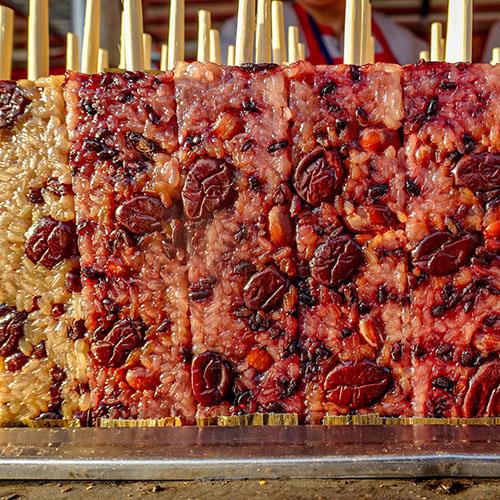
Dishes and drinks unique to Hong Kong include Hong Kong-style milk tea (black tea served with sugar and evaporated or condensed milk); put chai ko (a street food that is a pudding cake on a stick, made from sugar, rice flour, and red beans); egg waffles (or bubble waffles), served alone, with compotes, or as a cone with ice cream; pineapple buns (sweet biscuit-like treats that -- typically -- have no pineapple); "cart noodles", purchased from a hawker on the street and customized with your choice of ingredients like fish balls and beef brisket; and pork chop rice (exactly how it sounds). Both Hong Kong and Macau love a good egg tart, introduced to the Chinese by the Portuguese, who call it pastel de nata. Macanese-inspired dishes include pork chop buns, serradura (sweetened condensed milk and pulp of passion fruit layered with crumbled Maria cookies); sweetened pork jerky; and minchi, a minced meat dish cooked in molasses and soy sauce, sometimes served with potatoes, and topped with a fried egg. Street food is everywhere in Hong Kong, and you can find hawkers in the Central Business District, in Wanchai, and in Kowloon City, among other places. The best place in Macau to sample street food is the Hong Kung Night Market on Rua de Cinco de Outubro.
Guangxi cuisine
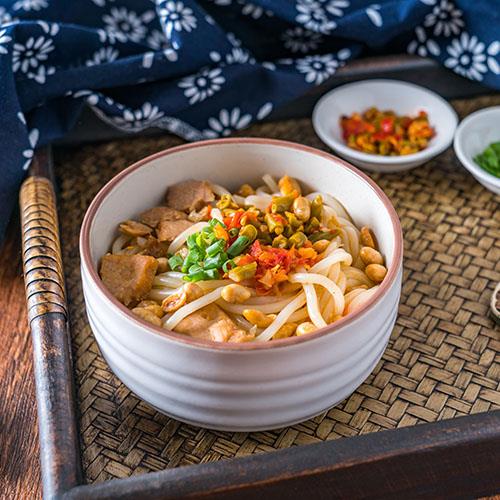
A distant cousin of Cantonese cuisine is Guangxi cuisine, centered around the culinary traditions of Guilin. The most popular dishes from this region include meat wrapped in taro and baked or smoked, a tradition also shared with Zhangjiajie in Hunan Province; Guilin rice noodles (known for their distinct taste and typically served with horse meat); and luosifen (a rice noodle soup made from a river snail-and-pork broth and served with vegetables and peanuts). You can try many of these dishes with Guilin Sanhua wine at Fo Long Xuan (Mulonghu Lake Scenic Area, Dongzhen Road, Diecai District). For a mix of local favorites and Western dishes, try Rosemary Café (Zhengyang Pedestrian Street). The best soup dishes can be found at Zhengyang Tang Cheng, also on Zhengyang Pedestrian Street.
Must-Savor Specialties: Char siu barbecue, chow mein, lo mein, wonton noodles, dim sum (dumplings, spring rolls, and buns), yum cha brunch with Chinese tea, siuumai, double-boiled tonic soups in Hong Kong, steamed crab claws with ginger and wine, Hong Kong-style milk tea, put chai ko, cart noodles, egg waffles, pineapple buns, pork chop rice, egg tarts, pork chop buns, serradura in Macau, sweetened pork jerky, minchi, taro-wrapped meats in Guilin, Guilin rice noodles (standalone or with horse meat), luosifen
Hunan cuisine (Changsha and Zhangjiajie)
Hunan cuisine is bold and spicy like Sichuan (Szechuan) cuisine, but Hunan cuisine differs from it in that it employs many more dried spices and herbs into its recipes. Szechuan peppercorns are used in many Hunan-style dishes as well, although not as frequently. Chili peppers, shallots, and garlic are the most popular seasonings, and much less chili oil than in Sichuan Province. Yongfeng chili sauce, a very popular condiment that originates from Hunan, is more of a thick paste, contrasted with the oils popular in Sichuan. The most popular dishes and condiments that Westerners know that are derived from Hunan recipes are orange chicken, sweet and sour sauce, General Tso's chicken, and the "century egg" (eggs preserved in clay, ash, and salt for weeks to months, not centuries like the name would suggest). Only the century egg can be found in Hunan; the rest are American-style Chinese dishes with roots in Hunan.
Changsha, the largest city in Hunan, is known for its takes on "stinky tofu" (a pungent tofu made from a brine flavored with mushrooms and bamboo shoots, with the Changsha version being very spicy) and rice vermicelli (popularly eaten without soup, although vermicelli soup is also popular). Changsha is also well-known for its spicy crawfish (longxia). You can try the popular dishes of Changsha at Lao Changsha Longxiaguan (72 Xiangjiang Zhonglu) and Huogongdian (127 Pozi Jie). Zhangjiajie offers a wide selection of dining options too: you can try the fish head hot pot at Lao Wu Yu Tou (784 Ziwu Road) and taro-roasted spare ribs at Le Kou Fu (Guyong Road, Yongding District). Zhangjiajie is also known for its "blood tofu", a popular meal for the Tujia minority group who sell it as a street food. "Blood tofu" is tofu mixed with pork blood, chili peppers, and salt, and smoked.
Must-Savor Specialties: Yongfeng chili sauce, century egg, Changsha-style stinky tofu, Changsha-style rice vermicelli (standalone or as a soup), spicy crawfish (longxia), fish head hot pot in Zhangjiajie, taro-roasted spare ribs, blood tofu

Sichuan (Szechuan) cuisine (Chengdu and Chongqing)
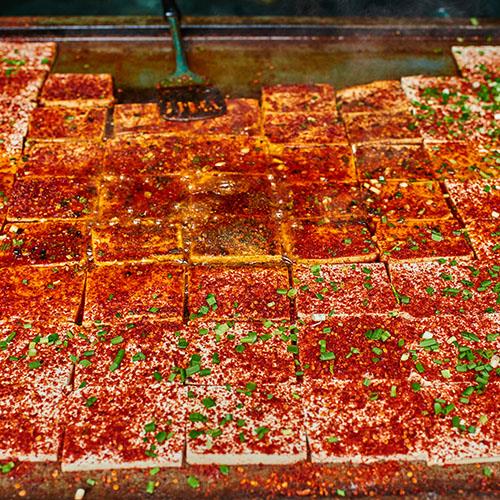
Sichuan (also spelled Szechuan) cuisine is probably one of the most identifiable regional Chinese cuisines to Westerners. It is known for its dynamic flavors; high spice content; liberal uses of chili, garlic, and Szechuan peppercorns (known for their almost numbing quality when consumed); and strong aromas. Sichuan Province has a very long culinary tradition, and Chengdu is a UNESCO Global City of Gastronomy. Due to the wide variety of crops grown in Sichuan and the varied livestock that are raised here, the province has gained the nickname "the heavenly country"; as is commonly said, nobody wants for any food in Sichuan.
The most recognizable Szechuan dishes for Westerners include kung pao chicken, hot and sour soup, mapo doufu (spicy tofu coated in black bean and chili paste), dan dan noodles (noodles served with hot chili oil, mustard stems, and Szechuan peppercorns), and Chongqing hot pot (called Szechuan hot pot in other cities; meat and vegetables cooked in a large communal pot with chili oil, sesame oil, and spices). Other popular dishes that might be less well-known include Ants Climbing a Tree (Mayishangshu), which is ground pork and bean thread noodles served over a chili sauce; Yuxiang shredded pork, known for its "fish-flavored sauce" which includes Szechuan pickled chili peppers but no fish; Zhangcha duck, smoked in tea leaves; and twice-cooked pork (belly), stir-fried with cabbage, peppers, and green onions and typically cooked with either hoisin sauce, Shaoxing wine, or both.
The best places to try hot pot in Sichuan are Lao Ma Tou Hotpot (27 Yulin North Road) in Chengdu and Zhaoer Hot Pot (Qinglong Road, Nan'an District) in Chongqing. Pork belly and mapo doufu are some of the specialties you can try at Ming Ting Fan Dian (Wai Cao Jia Alley Market). Make sure to try the delicious smoked duck at Yu's Family Kitchen (43 Zhai Xiang Zi, Xia Tong Ren Road) in Chengdu. Finally, we recommend Wai Po Qiao (Sanxia Square Pedestrian Street, Shapingba) in Chongqing if you want to try a literal buffet of Sichuan delicacies.
Must-Savor Specialties: Szechuan peppercorns, kung pao chicken, hot and sour soup (with or without noodles), mapo doufu, dan dan noodles, Chongqing (or Szechuan) hot pot, Ants Climbing a Tree (Mayishangshu), Yuxiang shredded pork, Zhangcha duck, twice-cooked pork
ADDITIONAL NOTEWORTHY REGIONAL CHINESE CUISINES
Shaanxi cuisine (Xi'an)
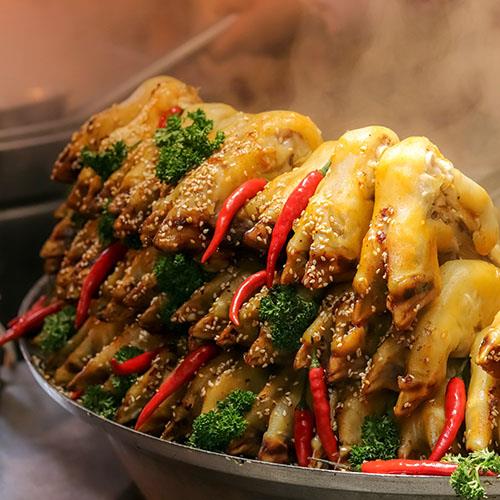
The best-known dish to come from Shaanxi Province is no doubt its biangbiang noodles, wide wheat flour noodles served in a spicy and sour soup. You can try these legendary noodles at BiangbiangMian (107 Xin Min Jie). Chinese and Middle Eastern influences meet in The Muslim Quarter, where you can try street food dishes like stir-fried mutton in a chili sauce or smoked walnuts. Rouchuan is also a popular street food sold there, which in English is called (no joke) "things on a stick". It's so named because you can find anything from chicken and mutton to quail eggs deep-fried and on skewer sticks. Other Xi'an-specific delicacies include braised sheep hooves and hammered candy, typically sprinkled with ground nuts as Xi'an is famous for its walnuts.
Must-Savor Specialties: Biangbiang noodles, stir-fried mutton in chili sauce, braised sheep hooves, hammered candy and walnuts in Xi'an, rouchuan (treats on skewers)
Yunnan cuisine (Kunming and Lijiang)
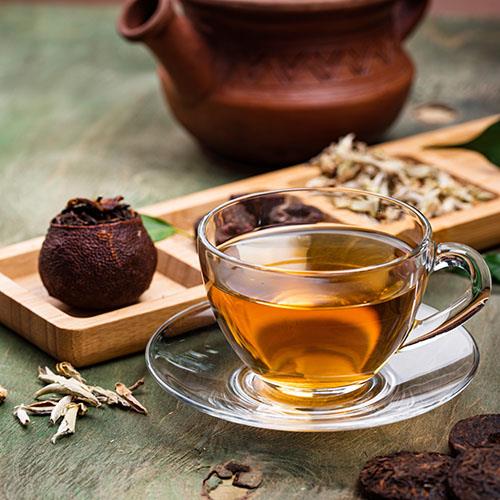
Yunnan cuisine combines many regional Chinese cuisines with the traditions of the local minority groups who live here, and the cuisine is also inspired heavily by the neighboring cuisines of Southeast Asia. The Bai people who live in Yunnan are renowned for their cheese-making, and you should try the goat milk Rubing cheese and the cow's milk Rushan cheese while you are in the region. Yunnan cuisine is known for three contributions in particular: the fermented pu'erh tea; the dry-cured Xuanwei ham, renowned for over 250 years, which is the ham typically used in Chinese recipes when they call for it; and guoqiao mi xian ("crossing-the-bridge noodles", cooked with pickled pork, chopped chicken, and pig liver and kidney). JianXinYuan (195 Baoshan Street, Wuhua District, Kunming) is the best place to try crossing-the-bridge noodles. Lijiang is the epicenter of pu'erh tea production, with a plantation just outside town and over a dozen tea houses and shops selling the fermented tea.
Must-Savor Specialties: Rubing cheese, Rushan cheese, pu'erh tea in Lijiang, Xuanwei ham, guoqiao mi xian (crossing-the-bridge noodles)
Hainan cuisine (Sanya)
Hainan cuisine from Hainan Island is known for its seafood, uniquely-raised fowl and livestock, and its lighter taste, as foods are more moderately seasoned here and not as greasy or oily. Popular dishes that are well-known in Hainan cuisine include Hainanese chicken rice (poached chicken served with rice, cucumber slices, and chili sauce), Jiaji duck (steamed duck that was fed a special diet of cereal and bean curd), Wenchang chicken (boiled small chickens fed a diet of coconut and peanut bran), and yi bua (a steamed dumpling made of glutinous rice flour and enjoyed as a dessert). Sanya, as a resort town, is spoiled for choice as far as international cuisines are concerned, but if you want some of the best Hainanese cuisine that the locals would eat, try Hai Ya Restaurant (138 New Wind Road). Go to Hongsha Port and the dock leading to Wuzhizhou Island for more traditional restaurants. If you want to buy food from hawkers at street stalls, head to the Sanya waterfront.
Must-Savor Specialties: Hainanese chicken rice, Jiaji duck, Wenchang chicken, yi bua