


Destinations
❮Main Menu
Top French UNESCO World Heritage Sites

Amiens Cathedral
Amiens Cathedral, in the heart of Picardy, is one of the largest 'classic' Gothic churches of the 13th century. It is notable for the coherence of its plan, the beauty of its three-tier interior elevation and the particularly fine display of sculptures on the principal façade and in the south transept. The building itself is cruciform in shape, with the apse facing the east and entrance towards the west, a common orientation for churches. The western entrance is adorned by a massive rose window, with incredible feats of sculpturing in the tympanum and jambs of the three portals.
Amiens Cathedral possesses excellent authenticity and significantly illustrates the radiating Gothic style that marked the 13th century. Numerous evolutive episodes over the centuries that followed have marked the building without changing its nature.
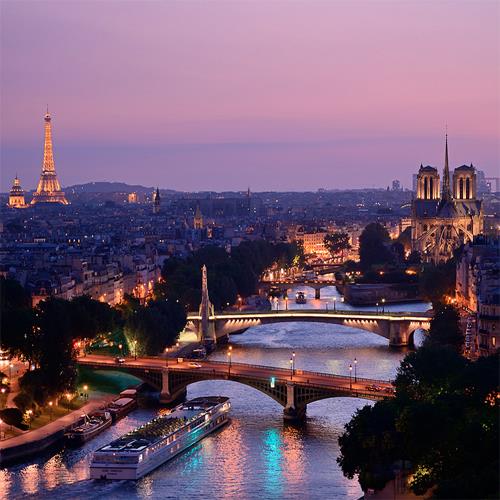
Banks of the Seine, Paris
Paris, Banks of the Seine, is a collection of properties that cover cultural importance to France and its neighboring areas. Hence, it was inscribed as a UNESCO World Heritage Site in 1991. The total area covered includes Paris and those that are along the banks of the Seine, which is about 365 hectares in land area. The world heritage property consists of some of the most iconic landmarks and tourist attractions in Paris such as the Eiffel Tower, the Louvre Museum, Place de la Concorde, and many more. These structures and buildings also attest to the evolution and history of Paris and those areas near the banks of the Seine.
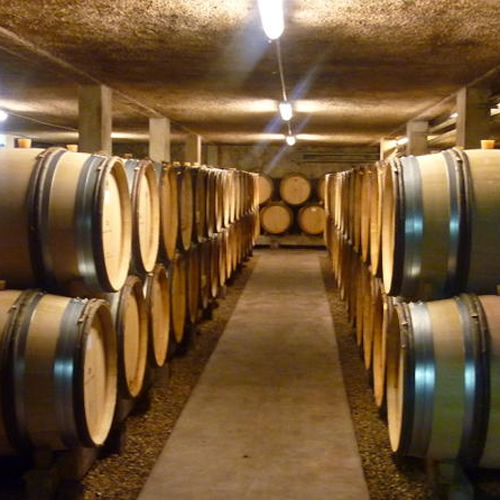
Beaune - Viticulture practices
The climates are precisely delimited vineyard parcels on the slopes of the Côte de Nuits and the Côte de Beaune south of the city of Dijon. They differ from one another due to specific natural conditions as well as vine types and have been shaped by human cultivation. Over time they came to be recognized by the wine they produce. This cultural landscape consists of the vineyards and associated production units including villages and the town of Beaune, and the historic center of Dijon, which encompasses the political regulatory impetus that gave birth to the climats system. The site is an outstanding example of grape cultivation and wine production developed since the High Middle Ages.

Bourges Cathedral
Bourges Cathedral of St. Etiénne, one of the finest Gothic cathedrals, was built mainly between 1195 and 1260. The unknown architect designed it without transepts, which, combined with the interior’s unusual height and width, makes it seem much lighter than most Gothic cathedrals. Structural problems with the South tower led to the building of the adjoining buttress tower in the mid-14th century. The North tower was completed around the end of the 15th century but collapsed in 1506, destroying the Northern portion of the façade in the process. The North tower and its portal were subsequently rebuilt in a more contemporary style.

Cathedral of Notre-Dame and Palace of Tau
Cathedral of Notre-Dame, Former Abbey of Saint-Rémi and Palace of Tau, Reims is a remarkable example of new architectural techniques in the 13th century. The harmonious marriage of sculptural decoration with architecture, has made Notre-Dame in Reims one of the masterpieces of Gothic art. The former abbey still has its beautiful 9th-century nave, in which lie the remains of Archbishop St Rémi (440–533), who instituted the Holy Anointing of the kings of France. The former archiepiscopal palace known as the Tau Palace, which played an important role in religious ceremonies, was almost entirely rebuilt in the 17th century.

Champagne Hillsides - Houses and Cellars
The property encompasses sites where the method of producing sparkling wines was developed on the principle of secondary fermentation in the bottle since the early 17th century to its early industrialization in the 19th century. The property is made up of three distinct ensembles: the historic vineyards of Hautvillers, Aÿ and Mareuil-sur-Aÿ, Saint-Nicaise Hill in Reims, and the Avenue de Champagne and Fort Chabrol in Epernay. These three components – the supply basin formed by the historic hillsides, the production sites (with their underground cellars) and the sales and distribution centers (the Champagne Houses) - illustrate the entire champagne production process.
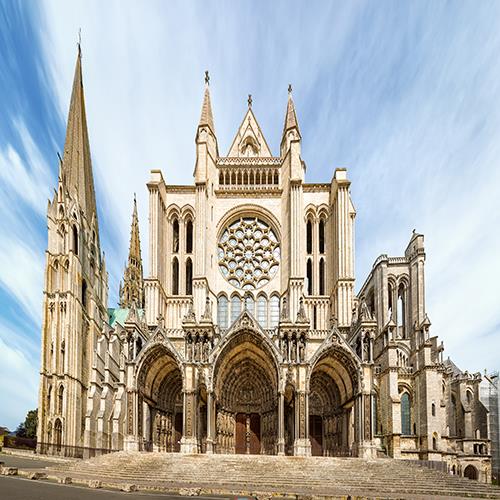
Chartres Cathedral
In 1979, Chartres cathedral was inscribed as a UNESCO World Heritage site. It has changed very little since its construction was finished in the 13th century, and many of the original stained glass windows have remained intact. UNESCO refers to the cathedral as "the high point of French Gothic art". The huge cathedral dominates the small town of Chartres, which lies 50 miles southwest of Paris. Some of this wonderful cathedral’s defining characteristics are its flying buttresses, which dominate the exterior of the cathedral.
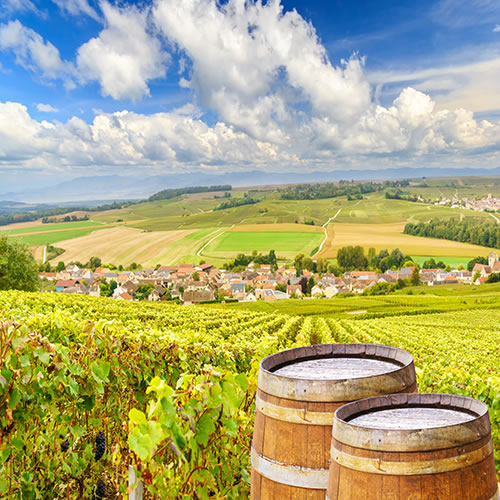
Dijon - Viticulture practices
The “Climats” (a wine-growing plot), terroirs of Burgundy, have been inscribed on UNESCO World Heritage List. It recognizes the unique character of the wine-producing area between Dijon and Beaune and as far as Santenay. Outstanding scenery, exceptional built heritage, unique know-how – these are the elements that supported an application that came to a conclusion on July 4th 2015.

Historic Fortified City, Carcassonne
Since the pre-Roman period, a fortified settlement has existed on the hill where Carcassonne now stands. In its present form it is an outstanding example of a medieval fortified town, with its massive defences encircling the castle and the surrounding buildings, its streets and its fine Gothic cathedral. Carcassonne is also of exceptional importance because of the lengthy restoration campaign undertaken by Viollet-le-Duc, one of the founders of the modern science of conservation.

Loire Valley - Sully-sur-Loire to Chalonnes
The Loire Valley between Sully-sur-Loire and Chalonnes is a cultural landscape symbolic of human interaction with the river Loire. It comprises historic towns and villages, great castles and cultivated lands, mainly tracing back to the Renaissance and the Age of the Enlightenment. The designated area covers a 124-miles long, thin stretch of land along the river. It includes the towns of Blois, Chinon, Orléans, Saumur and Tours.
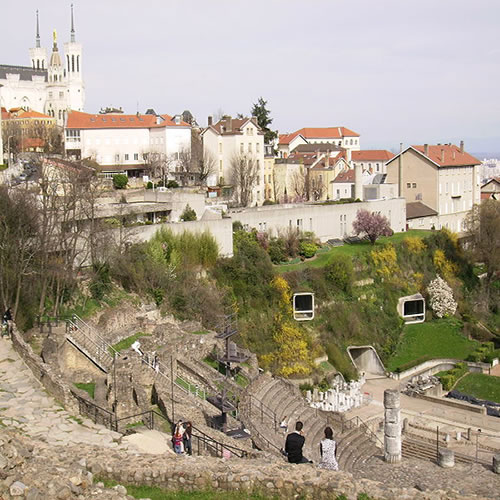
Lyon Historical Districts
The long history of Lyon, which was founded by the Romans in the 1st century B.C. as the capital of the Three Gauls and has continued to play a major role in Europe's political, cultural and economic development ever since, is vividly illustrated by its urban fabric and the many fine historic buildings from all periods. Humans have settled at this site destined for urbanization for more than two thousand years and built a city whose stages of development are still visible today: from the Roman vestiges of antique Lugdunum to the medieval streets on the slopes of Fourvière and the Renaissance dwellings of Vieux-Lyon, from the peninsula with a wealth of classical architecture to the slopes of Croix-Rousse with its very particular canut dwellings.

Mont-Saint-Michel
A magical island topped by a gravity-defying Abbey, the Mont-Saint-Michel and its Bay count among France’s most stunning sights. For centuries one of Europe’s major pilgrimage destinations, this holy island is now a UNESCO World Heritage Site, as is its breathtaking bay.
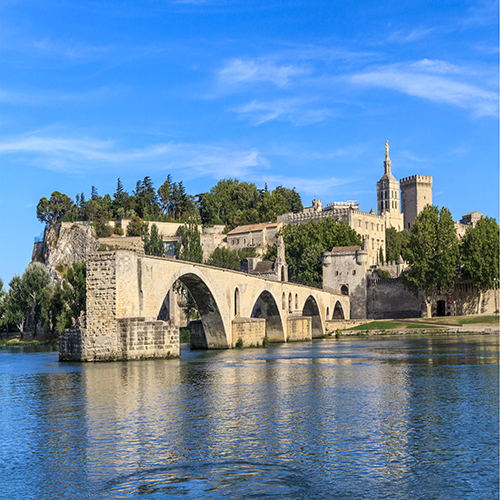
Papal Palace and Avignon Bridge
Palais des Papes (the Popes’ Palace) in Avignon is one of the most well-known and beloved monuments in France and a national tourist attraction. It has a history that includes rebellion, enlightenment, pilgrimage, and massacre. Overlooking an iconic bridge on the river Rhone (made famous by the song, “Sur le pont, d’Avignon”), the palace has seen a lot of history since construction began and provides an astonishing architectural legacy that has dominated the town ever since.
Place Stanislas, Place de la Carrière and Place d'Alliance in Nancy
The Place Stanislas, Place Carrière and Place d’Alliance in Nancy comprise one of the most harmonious urban landscapes of the Enlightenment, illustrating in an exemplary and masterful way the idea of the royal square as an urban, monumental and central space. Stanislas Leszczynski, father-in-law of Louis XV, king of France, and unhappy pretender to the Polish throne, received in compensation for his abdication the dukedoms of Lorraine for life. He reigned from 1737 to 1766. The town planning works of Nancy are the most beautiful achievements of the patronage of this prince.
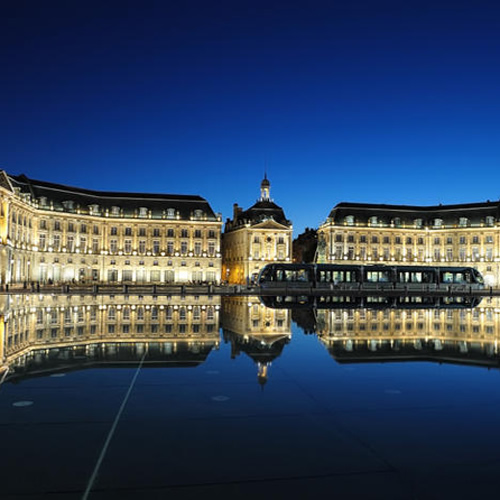
Port of the Moon, Bordeaux
The Port of the Moon, port city of Bordeaux in south-west France, is inscribed as an inhabited historic city, a remarkable urban and architectural ensemble, created in the age of the Enlightenment, whose values continued up to the first half of the 20th century, with more protected buildings than any other French city except Paris. It is also recognized for its historic role as a place of exchange of cultural values over more than 2,000 years, particularly since the 12th century due to commercial links with Britain and the Low Lands.

Prehistoric Decorated Caves of Vezere Valley
The Vézère valley contains 147 prehistoric sites dating from the Palaeolithic and 25 decorated caves. It is particularly interesting from an ethnological and anthropological, as well as an aesthetic point of view because of its cave paintings, especially those of the Lascaux Cave, whose discovery in 1940 was of great importance for the history of prehistoric art. The hunting scenes show some 100 animal figures, which are remarkable for their detail, rich colors and lifelike quality.
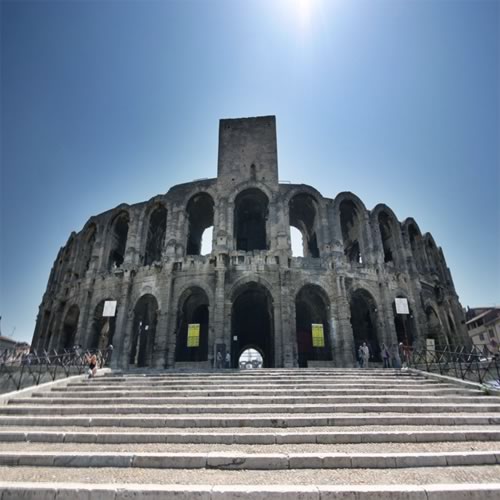
Roman and Romanesque Monuments, Arles
Arles, the Roman Arelate, became a Roman colony in 46 BC, and had considerable importance in the province of Gaul Narbonensis. The history of Arles begins in the Bronze Age as a Celtic-Ligurian settlement. In 1981 the Roman and Romanesque monuments of the city were inscribed on the UNESCO World Heritage List. Arles preserves important Roman remains, the most important of which are: the Roman Theater (12 BC), the Arena or Amphitheater (80 AD), the Alyscamps (Roman necropolis), the Baths of Constantine (4th century AD ), the cryptoporticus (i.e. the area of the Roman Forum). Even part of the ancient Roman walls are still visible today.

Roman Theatre and Triumphal Arch, Orange
Situated in the Rhone valley, the ancient theatre of Orange is one of the best preserved of all the great Roman theatres. Built between A.D. 10 and 25, the Roman arch is one of the most beautiful and interesting surviving examples of a provincial triumphal arch from the reign of Augustus. It is decorated with low reliefs commemorating the establishment of the Pax Romana.

Strasbourg (from Grand Ile to Neustadt)
The initial property, inscribed in 1988 on the World Heritage List, was formed by the Grande-Île, the historic center of Strasbourg, structured around the cathedral. The extension concerns the Neustadt, new town, designed and built under the German administration (1871-1918). The Neustadt draws the inspiration for its urban layout partially from the Haussmannian model, while adopting an architectural idiom of Germanic inspiration. This dual influence has enabled the creation of an urban space that is specific to Strasbourg, where the perspectives created around the cathedral open to a unified landscape around the rivers and canals.