


Destinations
❮Main Menu
EXPERIENCE CANTABRIA

Overview
The autonomous region of Cantabria is the epicenter of "Green Spain", the area of the country known for its lush vegetation due to its position on the Bay of Biscay which brings the area more precipitation than others. It is one of the most historic parts of Spain, in the sense that it has been populated for over 40,000 years. Evidence of this population can be seen in the UNESCO World Heritage Site the Cave of Altamira, dating from 37,000 years ago. Nine other Cantabrian caves are included in the UNESCO listing and many are within a short driving distance of the cities and towns we offer on Tripmasters. This region is also well-known for its beautifully-curated and protected historic old towns, many of which boast buildings dating from the 13th century.

History and Culture
As the area has been populated for tens of thousands of years, many different ethnic and cultural groups were proven to have settled the area. The Celtic settlement of Cantabri gives the region its current name. As they were defeated by the Romans, Cantabria became a key portion of the colony Hispania Tarraconensis. The region first received independence in the 6th century CE, and was unified as a province of the Spanish crown in 1779. By the early 1980s, devolution had been granted to many regions in Spain, including Cantabria. Today, the region's parliament convenes in Santander.
Weather
Due to its place on the Bay of Biscay coast in the line of the Atlantic jet stream, most of Cantabria enjoys a humid oceanic climate. While most of Cantabria doesn't see snow during winter, higher elevations regularly do, including areas such as Liébana. (By the same token, Liébana is drier than most of Cantabria in summer with almost no precipitation traditionally recorded during those months.) Average highs in Santander during the winter are in the 50s Fahrenheit, with lows in the 40s. By summertime, temperatures warm into the upper 60s and low 70s, which stay through most of October. Lows are in the upper 50s and low 60s in the summertime, retreating below 50 by evenings in November.
Towns and Villages
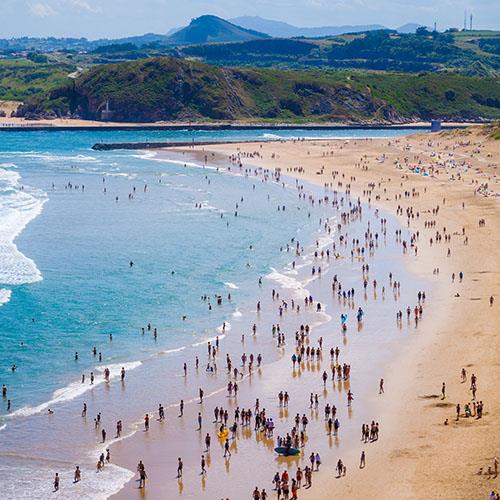
Santander is the largest city in Cantabria, and where you will be arriving if you are flying directly to the region from the United States. Santander is well-known for its beautiful beaches, fishing industry, and historic buildings (many of which were rebuilt after a devastating 1941 fire). Santillana del Mar is a historic town with Romanesque and Gothic masterpieces dotting the landscape, with the Paleolithic Cave of Altamira situated just outside town. Cantabria is home to a number of well-touristed beach towns, such as Noja, Suances, and the historic Castro Urdiales. The Bay of Santoña region, including both Santoña and Laredo, are known for their beaches and their delectable sardines and anchovies.
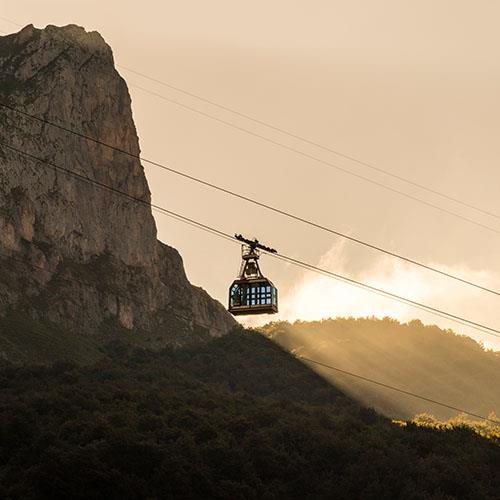
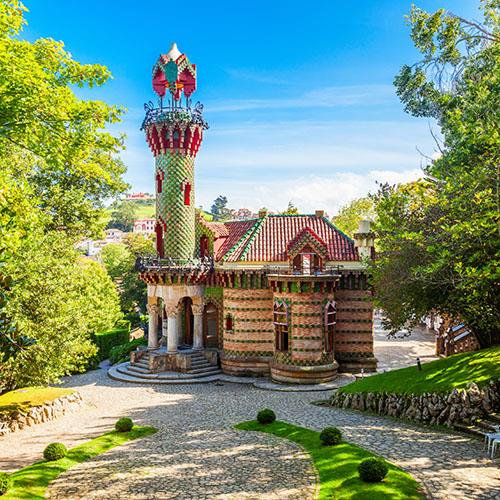
In the west, the historic dual towns of San Vicente de la Barquera and Comillas are not to be missed, especially if you have an interest in the Spanish royal family and nobility, in which case you definitely want to spend more time in Comillas specifically. In the southwest of the region, the valleys of Liébana are verdant and wedged in between mountains and cliffsides at the edge of Picos de Europa National Park.

Food & Drink
The most popular delicacies in Cantabria are the filling bean stew called cocido montañés and a satisfying sponge cake called sobao pasiego. These dishes will be ubiquitous in restaurants focusing on Cantabrian cuisine. Multiple towns in the region are known for their anchovy and sardine production, as well as a yellow brandy spirit called orujo. In the Liébana region, the Tresviso blue cheese is renowned by foodies in Spain and beyond.