


Destinations
❮Main Menu
EXPERIENCE CONSTANTINE

Overview
Constantine,
Algeria's "City of Bridges," stands out for its dramatic geography and
deep historical roots. Built atop steep cliffs and connected by bridges
that span the Rhumel Gorge, Algeria's third-largest city has had its
character and architecture shaped by its unique topography. From Roman
outposts to Ottoman governance and French colonial expansion,
Constantine's history is visible in its layered streets and striking
landmarks.
Far from a city frozen in time, Constantine remains a cultural and
intellectual hub. Its medina hums with life, offering a snapshot of
daily Algerian rhythms, while its theaters and universities keep its
reputation for learning and artistry alive. Whether crossing the Sidi
M'Cid suspension bridge or visiting the monumental Emir Abdelkader
Mosque, Constantine is a city that balances its past with a present
rooted in Algerian tradition and modernity. For those willing to
explore beyond the surface, it offers an authentic and multifaceted
experience.
History and Culture
Constantine's history stretches back over 2,500 years, originally founded by the Phoenicians and later becoming a significant Roman city known as Cirta. Throughout the centuries, it has been influenced by various civilizations, including the Byzantines, Arabs, Ottomans, and French, each leaving its own mark on the city's cultural and architectural landscape. Constantine's strategic location made it a vital center for trade and learning in the Islamic world, and it played a crucial role during Algeria's struggle for independence. Today, Constantine is celebrated for its contributions to music, particularly Malouf (a traditional Andalucian genre). Its arts scene, which includes festivals, theaters, and a rich literary tradition, is also celebrated.
Weather
Constantine
has a Mediterranean climate with inland influences, which translates
into warm, dry summers and mild, rainy winters. Summer temperatures
range from the mid-80s to low 90s Fahrenheit, with pleasant breezes at
higher altitudes. Winters are cooler, with daytime highs in the 50s and
60s, and occasional frost on chilly nights. Spring and autumn are
particularly appealing, with comfortable temperatures in the 60s and
70s and clear skies, perfect weather for exploring.
The city's elevated position means that evenings can be significantly
cooler, so visitors should pack accordingly. Rain is most common
between November and February but rarely disrupts activities. The
spring months bring lush greenery to the surrounding countryside, while
autumn bathes the cliffs and gorges in warm golden light.
Must-See Sights in Constantine
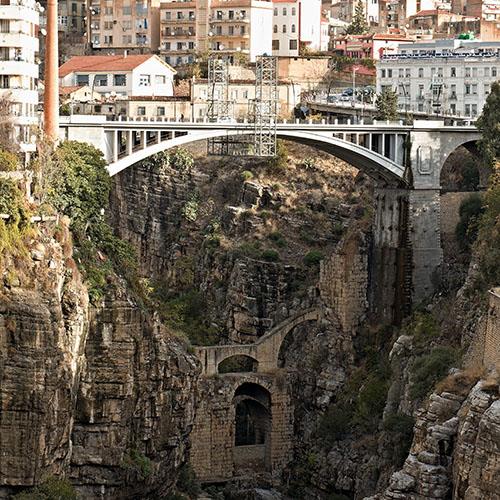
Constantine's bridges are its most iconic feature, connecting neighborhoods across the dramatic Rhumel Gorge. The Sidi M'Cid Suspension Bridge is an engineering marvel, soaring nearly 600 feet above the gorge and offering breathtaking views. The Sidi Rached Bridge, a stone viaduct from the early 20th century and one of the largest stone bridges in Africa, is another must-see. The El Kantara Bridge, with Roman origins,
provides a direct link to Constantine's ancient past. Walking across
these bridges is not just a way to navigate the city, it's an
experience in itself, offering unparalleled perspectives of the cliffs,
river, and skyline.
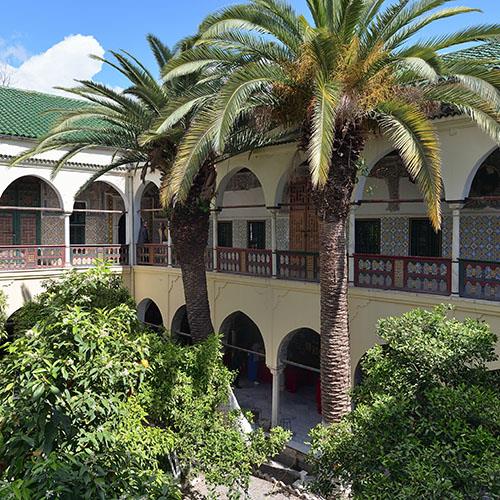
The Ottoman-era Palace of Ahmed Bey
is a jewel of Constantine's historical landscape. Its elaborately tiled
interiors, painted ceilings, and serene courtyards are the epitome of
19th-century Ottoman refinement. Once home to the city's governors, the palace now serves as a museum, showcasing artifacts that chronicle Constantine's rich history.
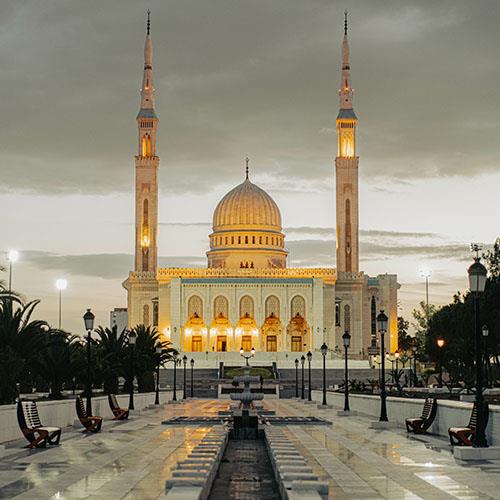
One of Algeria's most impressive landmarks, the Emir Abdelkader Mosque
is a modern architectural wonder. Its towering minarets, intricate
mosaics, and vast prayer hall can accommodate thousands of worshippers.
This spiritual and cultural centerpiece also houses a university, making it a hub of education as well.
Constantine's medina is a maze of narrow streets filled with shops, cafés, and artisan workshops. The Souk El Asser
(Friday Market) is the heart of this district, where vendors offer
handmade pottery, textiles, and traditional jewelry. The medina is a
sensory delight, with the aromas of fresh bread, spices, and mint tea
lingering and mingling in the air. Wandering through the souk's alleys is an essential part of the Constantine experience.
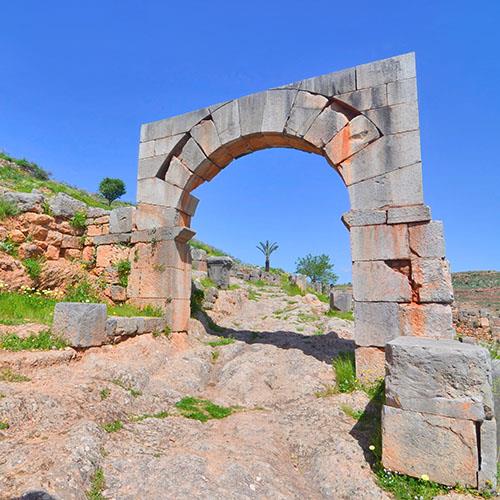
A short drive from Constantine, the Tiddis ruins provide a fascinating glimpse into Roman life in North Africa.
This ancient settlement, perched on a hillside, features well-preserved
baths, houses, and temples. It's a peaceful and evocative site,
offering stunning views of the surrounding landscape and a sense of
stepping back in time.

Activities
Constantine's range of activities cater to history enthusiasts, nature lovers, and culture-seekers. Explore the winding streets of the old medina, where traditional souks bustle with vendors selling spices, textiles, and handcrafted goods. For outdoor enthusiasts, the nearby gorges and hills provide opportunities for hiking and photography, with trails boasting stunning views of the city's unique topography. Attend a performance at the Regional Theater of Constantine to experience local performing arts, or visit during the annual Malouf Festival to immerse yourself in the sounds of this traditional Andalucian musical genre. The city's cafés and restaurants offer a chance to savor Algerian cuisine, from hearty couscous dishes to sweet pastries like baklava. (Read more about Constantine's cuisine in our Food & Drink section!)
Shopping
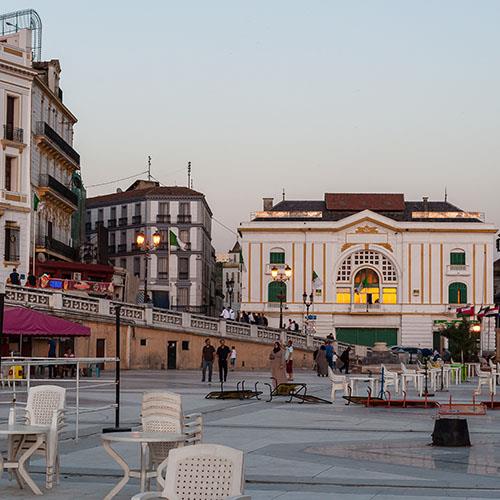
The old medina is a treasure trove for shoppers seeking traditional Algerian crafts. Here, you can find beautiful jewelry, handwoven carpets, and pottery adorned with Berber designs. The Souk El Asser is particularly popular for textiles and leather goods. For a more modern shopping experience, the city center boasts several boutiques and shops offering contemporary fashion, electronics, and souvenirs. Don't miss the opportunity to purchase locally-produced dates, olive oil, and spices, which make for excellent gifts and personal mementos. Remember the rules for shopping in Algeria: if the price is written down and publicly posted (like in a modern shopping center or boutique), haggling is not acceptable (nor accepted). In the souks, haggling is expected.
Nightlife
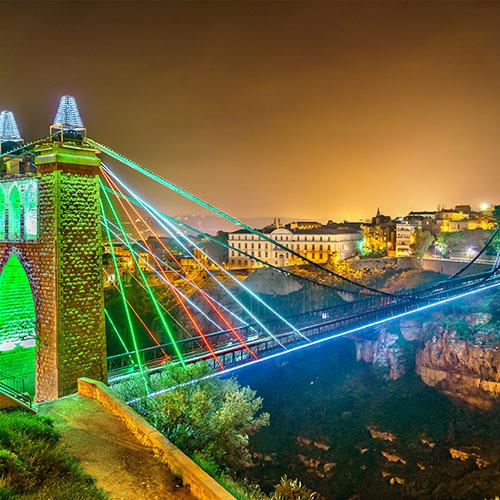
While Constantine's nightlife is more subdued compared to larger Algerian cities, it offers a selection of cafés, lounges, and cultural venues that come alive in the evening. Traditional tea houses serve mint tea and pastries, often accompanied by live Malouf music. Modern cafés and lounges in the city center offer a relaxed atmosphere where locals and visitors can enjoy coffee, mocktails, and light snacks. Cultural centers and theaters
frequently host evening performances, including music concerts, plays,
and dance shows, providing a glimpse into the local arts scene.
It's
important to note that, due to cultural norms, nightlife in Constantine
is more family-oriented and modest, with establishments typically
closing by midnight. Alcohol is served in Constantine (and in Algeria),
but with far less openness than in Morocco or Tunisia; high-end
restaurants and bars inside hotels are your best bet for this and they
too will wind down by midnight.
Food & Drink
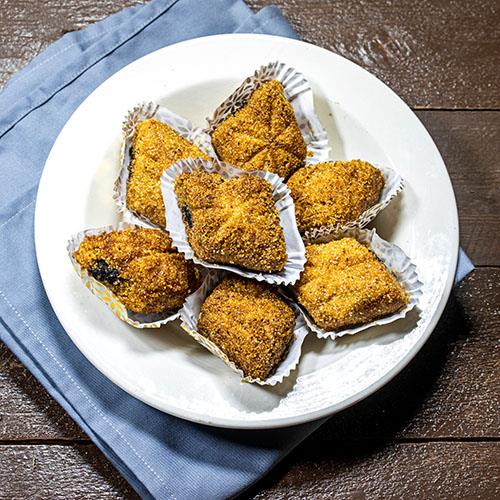
Constantine's culinary scene blends Berber, Arab, Ottoman, and French influences into a unique mix of flavors. Breakfast often features msemen (layered flatbread) with honey and strong Algerian coffee, while lunch might include chakhchoukha, a hearty dish of shredded flatbread in a spicy tomato sauce with lamb or chicken. Evening meals typically offer couscous with vegetables and meat or dolma, stuffed vegetables simmered in savory sauce, with grilled seafood also popular thanks to Constantine's proximity to the Mediterranean. Street food like brik (crispy stuffed pastries) and sfenj (doughnuts) offer quick, flavorful bites, while desserts like makroud (date-filled semolina cakes, pictured) and baklava provide a sweet finish. Pair these with a glass of nous-nous (espresso and milk) or Algeria's refreshing lemon soda, Hamoud, to complete your culinary tour of the city.