


Destinations
❮Main Menu
EXPERIENCE GUATEMALA CITY
Overview
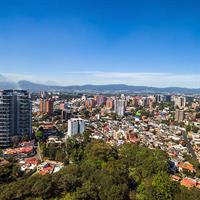
Many travelers often choose to skip Guatemala City due to concerns about safety, but the capital has much to offer for those willing to explore. Rich in history, the city provides valuable insights into Guatemala's evolution. Notably, it is the fourth capital of the country since Spanish colonization in 1524. The first was established at the archaeological site of Iximché, followed by Ciudad Vieja, and then the picturesque city of Antigua Guatemala. In 1776, after natural disasters like earthquakes and mudslides destroyed the previous capitals, the capital was relocated to its current location.
Before the Spanish arrived, the area was home to the pre-Classic Maya city of Kaminaljuyú, remnants of which can still be visited today. Situated on a broad plateau at an altitude of 4,897 feet above sea level, Guatemala City is surrounded by mountains and volcanoes, adding to its dramatic landscape.
While the city has a reputation for being unsafe, it offers numerous attractions for travelers. The principal commercial and tourist areas, such as Zona Viva and Cuatro Grados Norte, feature top-tier hotels, excellent restaurants, and vibrant nightlife. Additionally, Guatemala City boasts a rich cultural scene, with theaters, art galleries, and several noteworthy museums that showcase the country's fascinating history and heritage.


Orientation
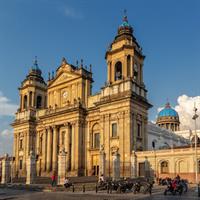
The area where most of the architectonic treasures can be found is located in Zona 1. Here you will find the Historical Center with many buildings conserving a neo-classic style. Its walls and streets are the reflection of past generations. Highlights include: National Palace of Culture (Palacio Nacional), a stunning architectural gem and symbol of Guatemala's history; Metropolitan Cathedral (Catedral Metropolitana), a beautiful 18th-century cathedral with intricate designs; and Central Market (Mercado Central) a colorful market offering handicrafts, local food, and vibrant cultural experiences.
If you’re a fan of handicrafts, the Central Market in the city center is a must-visit destination. Here, you’ll discover unique Guatemalan souvenirs alongside a vibrant array of local flowers, fresh fruits, and vegetables. You can also sample delicious local foods and immerse yourself in the lively culture simply by strolling through its bustling streets.
While exploring Guatemala City, don’t miss the impressive Relief Map, an impressive 3D topographical map of Guatemala built in 1904, showcasing the country’s landscapes with remarkable detail.
Zone 4, also known as 4° Norte (Four Degrees North) is a hip part of Guatemala City. The area consists of 4 blocks, all of them in the direction to the four cardinal points, making it the only place with diagonal streets in Guatemala City. Resurging from an old zone of factories and warehouses, this place is nowadays the trendy side of the city offering you a high concentration of restaurants, cafés, galleries and bars.
Zone 10, on the other hand, is known as Zona Viva, a commercial district where you will find most of the hotels in Guatemala City, restaurants, bars, hospitals, and financial institutions. La Reforma is a tree-lined boulevard that separates Zone 9 from Zone 10. Here you can have a bike ride or walk around and discover the monuments along the road.
Museums
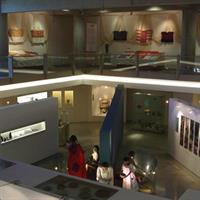
Museo Ixchel (Ixchel Museum of Traditional Costumes) is a museum dedicated to the original Mayan culture, with a collection of traditional costumes, information on weaving and dying techniques, and the ways this all changed from village to village. It is also home to a collection of paintings by Carmen Petterson. The museum also has a shop where you can get fine examples of Guatemalan artisans.
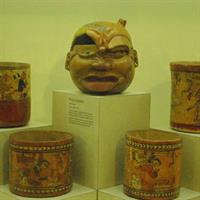
Popol Vuh Museum, located at the campus of Universidad Francisco Marroquín, houses one of the biggest collections of Mayan artifacts. It has no particular focus on the Popol Vuh as the name suggests, but rather a nice collection of archaeological items from the pre-Hispanic Mayan world. It's known for its ceramic art, stone sculptures, and Maya pottery collection. There is also a room dedicated to Colonial items.
Museo de Historia is one of the few buildings that survived the earthquakes in 1917 and 1918 in Guatemala City, it was restored in 1984 with is walls now reaching up to one meter thick on the outside and 0.6 meters in the interior. Conferences, sightseeing films, and concerts are organized here for the public to enjoy. There is also a documentation center and library if you are interested in learning more of Guatemala’s history.
National Palace Guatemala, also known as El Guacamolón (the Big Guacamole) for its greenish color, is one of Guatemala’s most important buildings. This is the beginning point of all roads in Guatemala. Its interior design is beautiful, mixing Spanish and Arabic styles, this palace is a unique masterpiece in the country that offers a collection of fine arts and rotating gallery spaces.
Other Highlights in Guatemala City
Walk Through Paseo Cayalá, a modern outdoor complex resembling a European town, filled with shops, restaurants, and entertainment. This is a perfect place to enjoy a few hours dining, shopping, and strolling.
Discover Kaminaljuyú is one of the region’s most significant archaeological sites. These ruins are from the pre-Classic Mayan city.
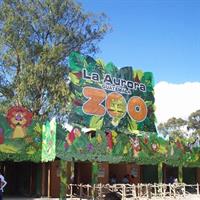
Visit La Aurora Zoo (Parque Zoológico La Aurora), one of the top zoos in Central America. The zoo is home to a variety of animals and beautifully landscaped grounds. This is a perfect family activity to enjoy.
Relax in the city’s green spaces. Parque Central is a historic park in the city center surrounded by significant landmarks. Parque Las Américas is a beautiful urban park perfect for strolling and enjoying the outdoors.

Shopping
In Guatemala City your shopping opportunities are abundant. Visit the shopping park Paseo Cayalá Guatemala City, with its neo-colonial buildings is the most exclusive place to live in the city. Here you will find many fancy shops, restaurants and bars. Oakland Mall or Pradera Concepción will give you the chance to experience some of the nicest architectural works represented in the shopping malls of Guatemala City.
Middle- and upper-class Guatemalans tend to shop in modern malls. Some of the malls in Guatemala City include Centro Comercial Miraflores, in Zona 11; Centro Comercial Tikal Futura, Zona 11; and Gran Cento Comercial Los Próceres, Zona 10.
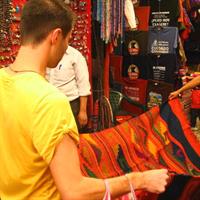
There are two main markets in Guatemala City, the Central Market, in Zona 1, and Artisans' Market, in Zona 13. Both are very large and filled with a wide range of arts, crafts, textiles, and souvenirs.