


Destinations
❮Main Menu
Experience Martinique Island
Overview
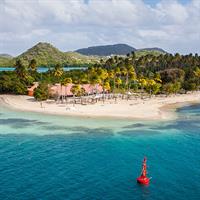
Martinique is a hidden treasure with a rich history, where nature takes center stage. Known as the "Ile aux Fleurs" (Island of Flowers), it boasts volcanic landscapes, vibrant vegetation, and endless sugarcane fields. Nestled in the Caribbean Sea as part of the Antilles archipelago, it lies about 280 miles northeast of South America and 670 miles southeast of the Dominican Republic. With a size of just 22 miles wide and 50 miles long, the entire island is easy to explore. In the capital, Fort-de-France, locals and visitors bustle through waterfront streets and cozy restaurant-lined alleys, while only a short drive away, the melodies of birds echo through the nearby rainforests. It’s a paradise for those seeking a blend of fine dining, luxury resorts, pristine beaches, and awe-inspiring nature. With a history shaped by French influence, a cosmopolitan culture, and a landscape unlike any other in the Caribbean, Martinique offers an unforgettable blend of history, culture, and natural beauty on every visit.
Things to See & Do
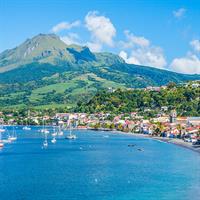
Visit Saint Pierre, Martinique’s main harbor until the eruption of the volcano Montagne Pelée in 1902, which destroyed the city and killed its inhabitants. The new Saint Pierre is built on the ruins of the former city, and it is worth a visit to enjoy the beach, learn about the terrible history of the eruption at Musée Vulcanologique Franck Perret, and see some of its ruins (we recommend the visit to the ruins of the Old Theater). Divers will love Saint Pierre to explore the shipwreck.
Hike the Montagne Pelée (Mount Pelée). This is the active volcano that destroyed Saint-Pierre in 1902. Today, it is a sleeping volcano, hikers can climb to the summit for fabulous views over saint-Pierre Bay and the Atlantic Ocean. The path starts at Le Morne-Rouge, and it’s just over a mile hike one way. The summit tends to be covered by clouds, so we recommend starting walking very early in the morning if you want to enjoy the views.
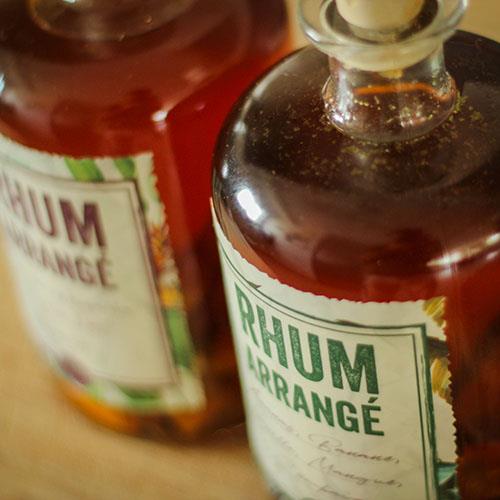
Habitation Clément, one of the oldest rum distilleries on the island. You can tour the gardens where they have numerous art installations from local artists. Walk the gardens on your own before the guided tour of the historic distillery begins. The tour ends at the gift shop where you can taste a variety of rum produced on the property and purchase a bottle or two.
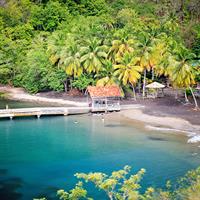
Enjoy the Beaches of Martinique. If the weather is nice, you’ll want to take advantage by spending a day (or a few) beach hopping on the southern parts of the island. For many visitors, this is the island’s main attraction. The Grande Anse des Saliines is always voted as the most beautiful beach in Martinique with white sand, corals, and swaying palm trees - it’s very popular (and crowded). Anse Dufour is another beautiful beach great for snorkeling. Anse Noir is the neighboring beach, which is named after its black sand and has a long pier that you can jump off of into the water. This is a more secluded and wild beach, surrounded by exuberant vegetation.
Take a Day Out on a Catamaran Cruise to see the Martinique beaches from another point of view. Catamaran tours are one of the top things to do in Martinique and they typically include local lunch and drinks onboard. They always include a couple of stops to take a dip in the clear blue waters for some snorkeling.
Hike the Presque Ile de la Caravelle. The Caravelle is the peninsula that gives Martinique Island its characteristic shape. There are many easy hikes to choose from, Le Gran Sentier (4 miles) is the most popular one offering forests, mangroves, cliffs, and savannahs. On the way, there are also the ruins of the Dubuc Castle which you can visit for a small fee.
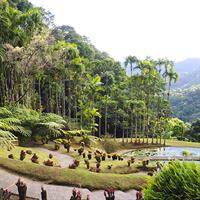
Discover the Balata Garden. Nestled in the hills of Fort-de-France, these gardens showcase over 3,000 species of tropical plants and flowers. It's an ideal spot for a tranquil stroll, with serene ponds adorned with lotus flowers and water lilies, creating a peaceful and picturesque setting.
Explore the charming towns. Fort-de-France is the main gate to Martinique Island, and is an excellent base for many fun day tours. However, if you really want to know Martinique, get out into the other picturesque towns of the island where you’ll find colorful architecture, little squares, and colonial mansions.
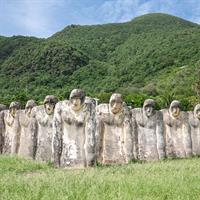
Cap 110 is a must-visit to see the memorial to slavery erected on Anse Caffard Beach. The statues that face the ocean were erected to pay homage to the slaves who died on the slave ship that crashed into these cliffs in 1830. This memorial is the work of the local artist Laurent Valère and consists of 15 statues of white stone deposited on the ground. The characters look afflicted at the sea horizon.
Cuisine
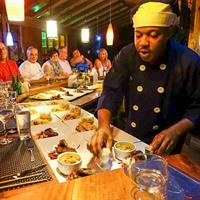
Martinique's cuisine is a key element of the island’s rich culture and traditions. While seafood is a staple in French Caribbean gastronomy, chicken-based dishes are also popular. Dishes from the French Antilles often feature marinated meat and fish, seasoned with bold, flavorful spices. Some local favorites include stuffed crabs, poulet boucané, and Colombo, a spiced chicken curry, as well as the famous assiette créole, which features local blood sausage, cod fritters, and salad.
Fruits and vegetables play a significant role in Martinique's cuisine as well. The bananas from the French Antilles, particularly Martinique and Guadeloupe, are renowned for their quality and flavor, providing an extra energy boost—be sure to visit the Banana Museum in Sainte-Marie! In addition to bananas, the island offers a variety of exotic fruits, including carambole (starfruit) and corossol (soursop), some of which are unique discoveries for many visitors.