


Destinations
❮Main Menu
EXPERIENCE OAXACA
Overview
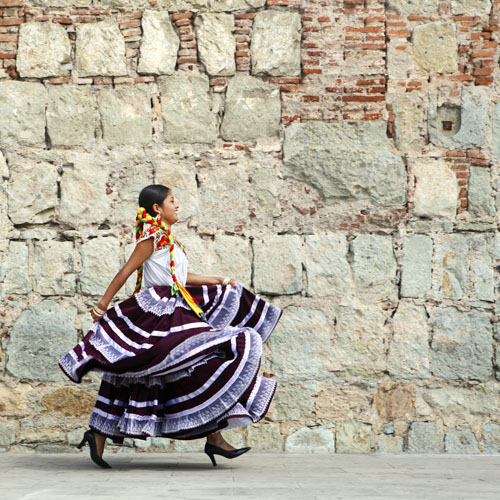
One of the most culturally rich places in Mexico, Oaxaca is the most ethnically diverse states in the country with a variety of cultures that contribute to the traditions, the food, and more. The city is known for its mezcal, chocolate, and mole; as well as the diverse indigenous groups that still call the Oaxaca Valley home after hundreds of years. Explore the aloe decorated cobblestoned streets, and find a mix of local markets, stylish shops, and historical architecture with modern twists. There are also several day trips to mezcal tastings, textile towns, and cliffside mineral pools.

Things to See & Do
Start exploring the city with a walking tour of Oaxac. There are several free walking tours you can take around the city. You can also get a map and do it yourself. Take the opportunity to admire places and capture photographs. As you explore, don’t miss the Centro Historico Plaza and look up at all the gilded details.
Oaxaca has a wealth of street art, ranging from political pieces commenting on social issues to murals focused on indigenous culture and history. The areas of Xochilmilco and Jalatlaco are two of the best for murals. You can also join a street art bike tour.
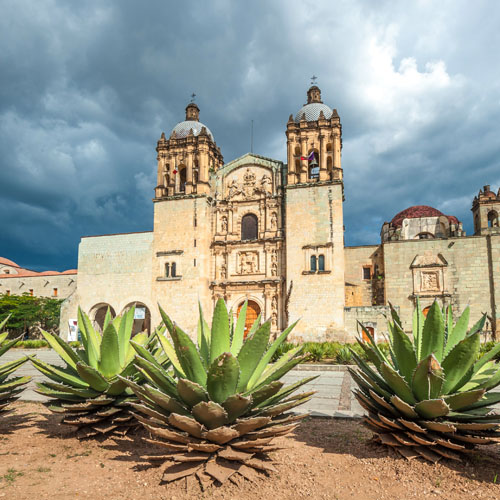
Stop in the 17th-century Santo Domingo Church, located in the heart of the city. The church looks like a pretty basic church as far as they go in Mexico, however, when you enter inside, you’ll be surprised to see intricate decorations including more than 60,000 plates of gold. The church also features a cultural museum and a botanical garden.
Explore the Jardin Etnobotanico, the botanical gardens next to Santo Domingo and a great example of the biodiversity of the state. This 6-acre garden is next to the Santo Domingo church and features plants from across the state (many of which have been transplanted here since the garden is so young. In addition to the flowers, trees, and cacti that dot the garden, there are also sculptures and works of art.
Take in the beautiful views of the city from the Cerro Del Fortin. Make your way uphill to the stadium for panoramic views of the city.
For a great way to take in the culture, stroll the many colorful local markets of the city. Markets are full of assortments from spices and meat, to leather shoes and textiles, to artisan products great for souvenirs. Wander down the corridor filled with vendors who grill your food after selecting your meat. You can find everything from chorizo to cow udders.
There are many markets in Oaxaca, the most noteworthy in the city for tourists are Mercado Benito Juárez, Mercado 20 de Noviembre, and the Tlacolula Sunday Market. The Tlacolula market is especially famous but unfortunately 45 minutes outside of Oaxaca City. If you want an easy way to visit, consider taking a tour.
Learn about the local mezal (this is the birthplace of mezcal), a spirit distilled from agave, at one of the local mezcal distilleries. Unlike tequila, which is also made from agave, when making mezcal, the heart of the plant is cooked in a pit in the ground before it is crushed. Then water is added, and it’s allowed to ferment. Since the plant is cooked, mezcal has a much smokier flavor than tequila. Rambling Spirtis runs one of the best mezcal tours in Oaxaca. Additionally, you can pop into one of the many mezcalerías in town to taste and learn more about the region’s favorite spirit.
To experience the local food, try the street food, local markets, and try everything - this city is passionate about its food! A great way to explore the culinary scene is a guided food tour. Oaxaca is considered one of the most important hubs for gastronomy in Mexico. Many companies run tours around the city that last around four hours. You’ll get to sample several dishes and learn a lot about the food and its history.
Venture the Outskirts of the City
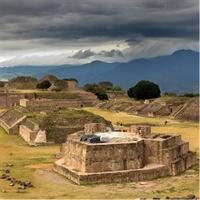
See Monte Albán, a pre-Columbian UNESCO World Heritage Site located 15 minutes outside of town. It was founded in the 6th century BCE and was one of the earliest Mesoamerican cities and an important sociopolitical and economic center for almost a thousand years. Wander the sprawling site, climb ancient Zapotec pyramids and admire the tombs, terraces, and canals that are spread over several miles of the land. The site takes about 2-3 hours to visit.
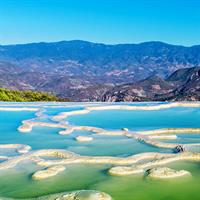
Visit the Hierve el Agua, one of Mexico’s most beautiful natural sites and a sacred place for the Indigenous Zapotec people. These petrified waterfalls have been forming for thousands of years. As water from natural springs flows over the side of the cliffs, the minerals from the water create rock formations. Bring a bathing suit to swim in the natural and manmade pools at the top.
Another historic site and a must-see is the UNESCO World Heritage Site of Mitla. This was one of the main religious and spiritual hubs for the indigenous Zapotec and Mixtec people. Used as a sacred burial ground and is believed to be a gateway between the realms of the living and the dead, Milta was built in 850 CE but was mostly destroyed by the Spanish in the mid-16th century. Some buildings are still intact, which you can explore.
Visit other Oaxaca’s artisan towns dotted throughout the state of Oaxaca. These small folk-art villages offer a fascinating insight into the culture and traditions of the area. Each village specialized in different crafts: Teotitlán del Valle is known for its textiles, San Bartolo Coyotepec for black pottery, and San Martín Tilcajete and San Antonio Arrazola for (brightly colored fantastical animal sculptures), to name just a few.