


Destinations
❮Main Menu
Experience Satu Mare
Overview
The city of Satu Mare has a history dating back to the Middle Ages, mentioned first in 1181 under the name of “Castrum Zotmar” in the first Hungarian chronicle. The city is nestled in northwestern Romania on the Hungarian border, the gateway to Maramures, it is the cultural, academic, and industrial center of the region. Archaeological findings show that the area was inhabited during the Stone Age and Bronze Age, and was the residence of the Hungarian King Stephan V. Satu Mare became part of Romania definitively in 1945.
Situated on the Somes River just 8.1 miles from the Hungarian border and 17 miles from Ukraine at an altitude of 413 feet on the Somes Meadow on both sides of the river. Legend has it that the city was discovered by boatmen that were carrying salt down the Somesul River, and served as a market center. The city’s great fortress was destroyed by the Tartars in 1241.
Things to see and do
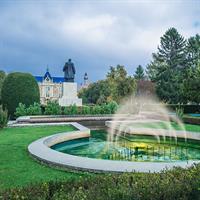
The Garden of Rome is the city’s largest park filled with rare trees including the pagoda tree which is native to East Asia and Pterocarya also native to Asia. The park was designed by Hamburg-born landscapist Johann Hein who created over 300 other parks and gardens. A great place for a stroll or to relax and enjoy a picnic in the summertime. Central Park is a beautiful green oasis in the heart of the city featuring a glistening fountain with colored water.
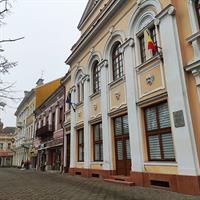
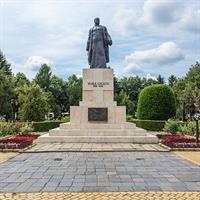
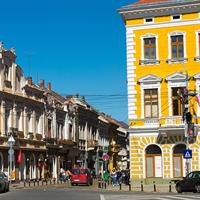
Wander around the historic center of the city decorated with well-preserved tenement houses, charming historical churches, and exciting museums. See the Tower of Firefighters a landmark of the city and the tallest building until 1904 dominating the city’s scenery. The city center is also home to the old city hall, the military barracks, Catholic and Reformed churches, and the first park.
There is a county museum, an art museum, and a theatre located in the city. The North Theatre was built in 1889 featuring a Romanian and Hungarian section. There are concerts held here by the “Dinu Lipatti Philharmonic” formerly the state symphonic orchestra of Satu Mare. The concert hall is housed in the wing of the Dacia Hotel.
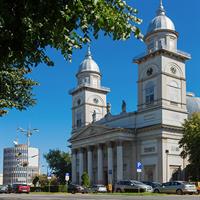
The impressive Roman Catholic Cathedral of the Assumption of the Blessed Virgin Mary in Satu mare is a building that stands out the city, built-in 1798 the cathedral features a spectacular altar made from Carrara marble. There is a 200-year-old painting of the altar screen depicting the Lord’s Ascension.
Catch a Football (soccer) game when in Satu Mare, it is the most popular recreational sport in the city and there are two major football clubs; Olimpia, and Somesul Oar, two football stadiums; Stadionul Olimpia with 18,000 seats, and Somesul Stadium with 3,000 seats.
The city of Satu Mare has a tradition in fencing since 1885, it has supplied the most world, and Olympic champions in all of Europe. Ecaterina Stahl, Marcela Moldovan, Suzana, and Stefan Ardeleanu, Petru Kuki, and Alescandru Csipler to name a few.
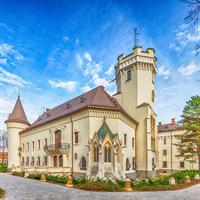
Visit Karolyi Castle in Carei dating to the 15th century when a noble family gave it its name. Carei is 22 miles away from Satu Mare, a good place for a day trip to see the beautiful well kept castle that features a museum and the city.
The Wooden Churches of Maramures are located very close to Satu Mar, there are around 100 wood-built churches that stand as testimony to the ancestral traditions and strong beliefs of the area’s inhabitants. These churches are exquisitely built and date from periods range from the 17th to 19th centuries, there are 8 classified as UNESCO World Heritage Sites; Rogoz, Budesti, and Barsana.
The Merry Cemetary is located in the village of Sapanta, Maramures famed for its brightly colored tombstones with naive paintings describing the people buried there with scenes from their lives. The Merry Cemetary became an open-air museum and a national tourist attraction where visitors can appreciate the handiwork of sculptor Stan Ion Patras, who began carving these epitaphs in 1935. The cemetery features colorful five-foot carved oak crosses that feature portraits or scenes from the deceased’s life. The crosses feature geometric designs in symbolic colors, yellow for fertility, red for passion, green for life, and black for early death, the backgrounds are always blue which is the color of hope and freedom.
Food and Nightlife
The city of Satu Mare has plenty of dining and cuisine options to offer travelers from traditional Romanian cuisine to European, vegetarian and delicious bakeries. Many of the city’s eateries can be found around the compact city center with cute cafes offering outdoor terrace seating, great restaurants with many options on their menus, bustling pubs and bars, you name it the city has it.
Typical food in Romanian is made with meat, usually, pork with menus made up of several different types of pork dishes. Romanians enjoy comfort food, and Satu Mare is a great city for dining options with plenty of diversity and dozens of traditional Romanian restaurants. Many of these local restaurants are located in authentic historic buildings, some playing folk music or featuring folk dancing shows and serving up some of the countries finest cuisine. There are also plenty of international restaurants in the city whether you fancy Italian, Chinese, Indian, Turkish, French, Japanese, or Greek food they can all be found in the city.
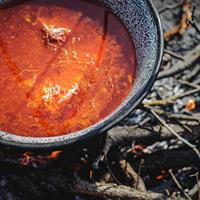
A few popular dishes in the city include sarmale, cabbage stuffed with spiced minced pork or beef. Mamaliga is a cornmeal porridge similar to polenta served with many main courses topped with sour cream and cheese. Mici (“small ones”) is made of combinations of ground meat and spices grilled on the barbecue, normally served with mustard and fresh bread. Ciroba de burta (Tripe soup) is a popular first course in Romania made with boiled beef tripe, vegetables, and served with sour cream, vinegar, and a garlic paste.
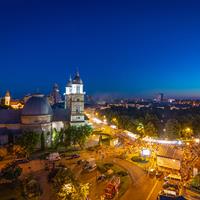
There are some great nightlife options to discover in Satu Mare including pool parties, DJs at nightclubs, busy bars, pub crawls, and festivals. The Rock Bar is a great place to enjoy drinks and rock music. The Back Door Pub features a traditional Irish theme with live music, Guinness on tap, and a fun, friendly atmosphere. Insomnia and Bosky are among a few of the great nightclubs to visit in the city.
History and Culture
The small northwestern Romanian town of Satu Mare was known as Szatmar in Hungarian believed to have come from the personal name of Zotmar, as the 13th century Gesta Hungarorum which gave the name of the 10th century fortified settlement at the site of today’s Satu Mare as castrum Zotmar or Zotmar’s fort. The name Satmar was used until 1925 when it officially became Satu Mare meaning “great village” in Romanian.
The city was part of Hungary until World War I, and again between 1940-1944. Towards the early 18th century Jews appeared in the city and distilled brandy, and leased taverns on crown estates. Satu Mare became a royal town in 1715, and jews who had arrived earlier than this date were expelled and only allowed in town for fairs. The Jewish arrivals in the city accelerated in the 1850s and the population grew tremendously with over 25% of the population by 1941.
Satu Mare was the seat of the Teitelbaum and Gruenwald Hasidic Jews during the 19th and 20th centuries and lived there until World War II. The Jewish community was served by eight synagogues, a yeshiva, and a Hebrew painting house by the early 1940s. The Nazis deported most of the local Jewish population in 1944 to death camps, there is a Jewish memorial dedicated to over 18,000 Jews from around Satu Mare who were murdered during the Holocaust. The memorial stands between the city’s two remaining synagogues, and there are bullet holes that still show on tombstones in the Orthodox Jewish Cemetery from World War II.
There are archeological findings from Tara Oasului, Ardud, Mediesu Aurit, Homoroade, and more that clearly show settlements in the area dating to the Stone and Bronze Ages. Also, evidence shows that the local Dacian population remained in the area after the Roman conquest in 101/106 AD. Castrum Zotmar dates to the 10th century, the important defensive fortress mentioned in Gesta Hungarorum after Stephen I of Hungary created the Kingdom of Hungary in the year 1000.