


Destinations
❮Main Menu
Experience Vik
Overview
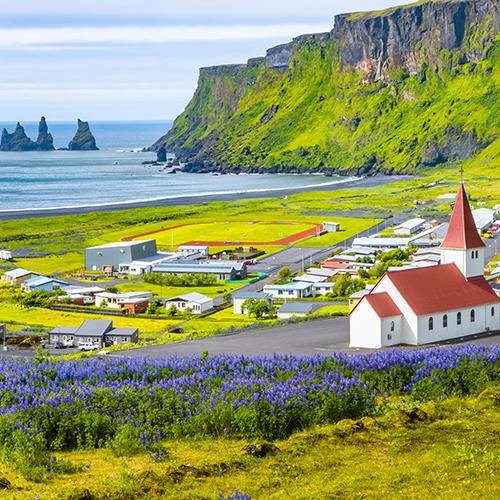
Vik, also known as Vik i Myrdal, is Iceland’s most southerly village and one of the most popularly photographed areas in the country. The peaceful seafront village sits along a dramatic stretch of coastline, quaintly poised between glacier-topped mountains, rugged sea cliffs, and black sand beaches.
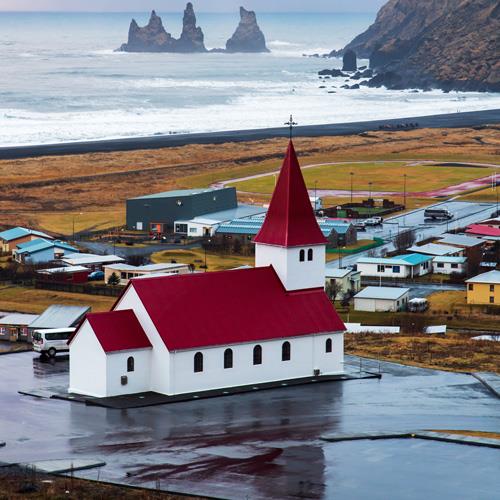
The village was largely settled in the early 20th century and its iconic red-roof church was built in 1934. It’s interestingly one of the only coastal towns in Iceland without a harbor. This is due to the rocky shoreline and dangerous waters in the area.
Things to See & Do
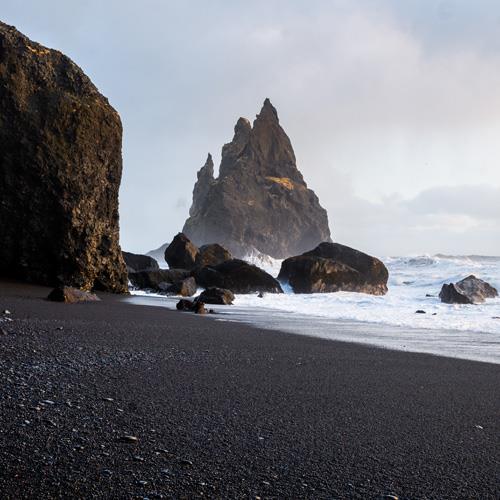
Discover the Black Sand Beaches. The southern coast has beautiful black sand beaches. The easiest black sand beach to access is from the town of Vik itself. The dark black sand stretches as far as the eye can see, with black cliffs covered in green moss towering over the beach. If you visit at the right time of year, you can see hundreds of puffins flying above.
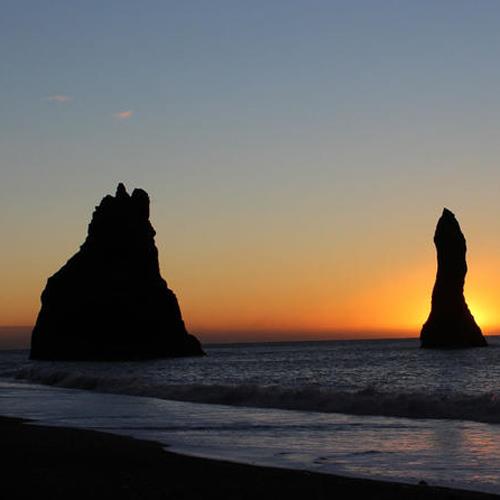
The Reynisfjara black sand beach is considered the premier black sand beach in all of Iceland! With its iconic rock formations and crashing waves, the beach makes for quite the spectacle. Even better, it’s only about a 15-minute drive from Vik.
Hjorleifshofdi is an enormous rock overlooking the beach, some ways up the road from Vik. It is said that the first settler of Iceland, Hjorleifur Hrodmarsson, died on this very rock, and his remains are buried on top of it in pagan ritualistic fashion. The rock has also been used in the past as a farming site high above the ocean, and you can visit the old farmstead that still stands on the rock to this day.
You can visit the Viking grave and farmstead while you’re there, and the hike is not too strenuous to get there. On top of that, you get views of the surrounding beaches, glaciers, and basalt columns that only Iceland can offer.
Check out the Church of Vik, an iconic sight of the town. If you're planning on hitting the black sand beach of Reynisfjara, you don't want to miss heading up the hill to check out the church of Vik. This charming little church has a beautiful vantage point over the beach, as well as over the town of Vik itself. It is a great spot to stop for some pictures and to soak up the stunning views.
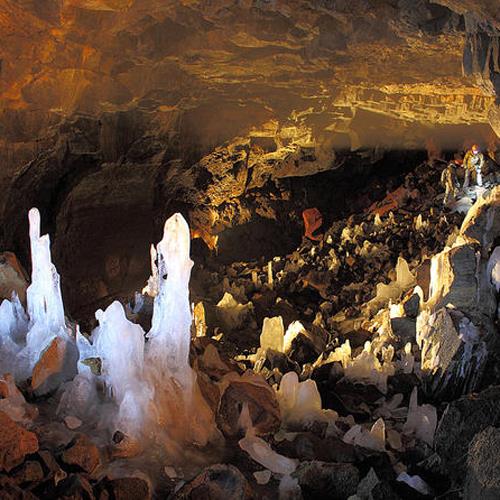
Check out an Icelandic Lava Show. Located in the heart of Vik, the Icelandic Lava Show is one of the biggest attractions in Vik. Here you'll witness a one-of-a-kind experience of seeing lava up close - watch it flow, hear it sizzle, and learn about volcanoes. You may even get the chance to touch cooling lava! This is truly a unique experience not offered anywhere else.
Explore the Skaftfellingur Museum. This is a boating museum that displays a 100-year-old ship while giving the history of naval navigation and boating by the Icelandic people. The full ship is on display, which was in operation from 1918 to 1974. Its engine and working parts are displayed and described in great detail. beyond this, you can also read up on the 112 marine accidents and shipwrecks that have occurred on the South Icelandic shore over the years.
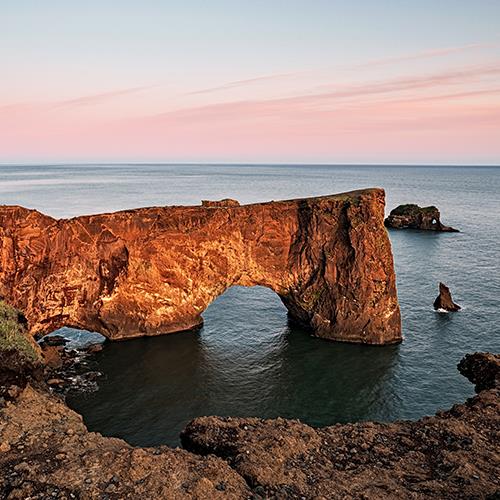
Check out the Dyrholaey Lighthouse and Viewpoint. From Dyrholaey, there are incredible views of seemingly endless black sand beaches facing the west. There is a lighthouse on the point and also views of an arch which is actually the southernmost point of Iceland. If you are visiting at the end of the summer, Dyrholaey is one of the best places to possibly see puffins up close.
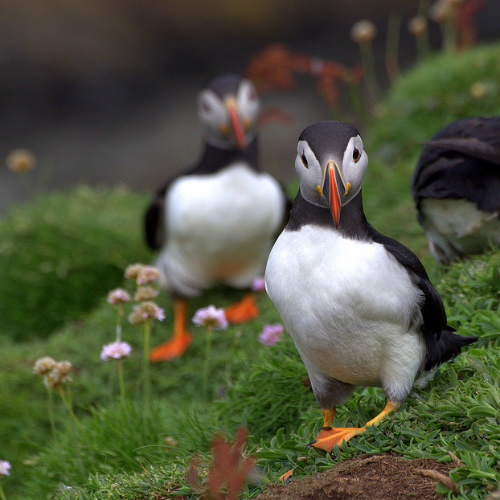
See Puffins. Summer in Iceland is puffin season, the beautiful little birds with funny beaks that live in very specific areas. Iceland is one of the best places to see puffins. It is said that puffin season is from May to August, but it depends on the year. You'll discover the most puffins around Dyrholaey, Reynisfjara, and the black sand beach from Vik. From the beaches, you can see them flying up above, while at Dyroholaey you can see them much more up close as they like making their nests in high-up areas on the cliffs.
Solheimasandur Plane Wreck is a wreckage of a plane crash that can be found along a black sand beach Westward of Vik, up the Ring Road. It may take some time to get to the wreckage site, as you cannot drive along the black sand, but it is well worth it for some interesting history as well as unique views. The wreckage of the plane along the pristine black sand is an odd juxtaposition, and one that you won’t get to see anywhere else.
The plane itself crashed at this site in the 1970’s, and while no one was killed in the crash, the wreckage was never cleared. You can walk right up to it, and even climb on top of it.
The History of Vik
The southernmost village in Iceland, Vik village dates back to the 9th century, but permanent traders didn’t settle here until 1890 when southern merchants bedded in to sell flour, vegetables, and meat. It’s the only southern village that doesn’t have a harbor, which may explain why it took so long for traders to settle here.
Vik is a place steeped in myth and folklore, with tales of drowned sailors and trolls haunting its history. It is said that the striking sea stacks just off the coast of Vik are trolls turned to stone. Legend has it that the trolls were pulling a ship towards the land and were turned to stone as day broke.
Today, the population of Vik stands at around 320 (around 750 including the surrounding municipality of Mýrdalshreppur). It’s around 110 miles from Reykjavik. Despite its small size, Vik is one of the biggest settlements in the area, and most south shore adventures include a stop at Vik.
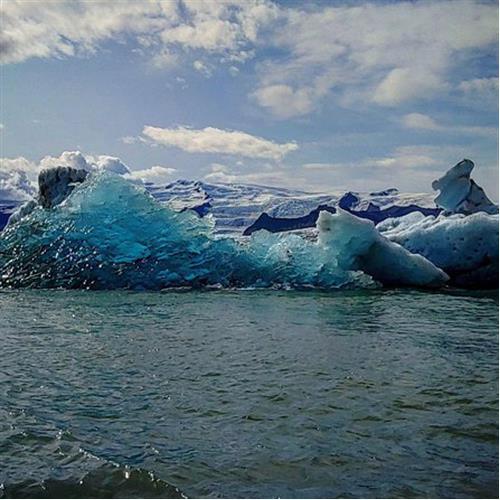
Jökulsárlón Glacier Lagoon
Vik pretty much marks the halfway point between Reykjavik and Jökulsárlón glacier lake. If you carry on driving along the south coast from Vik, you will reach this natural wonder in around two and a half hours.
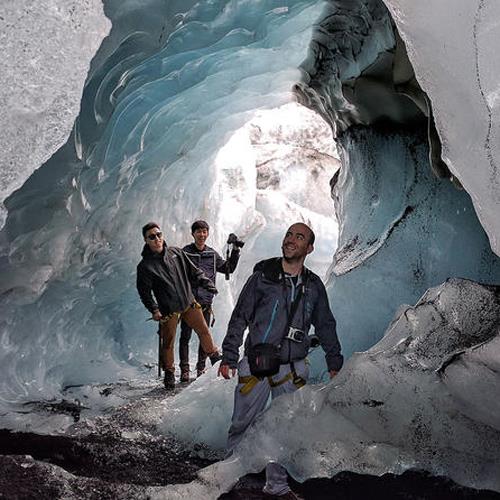
Jökulsárlón is the deepest lake in Iceland, but that’s not what attracts visitors here. Huge floating blocks of ice from Vatnajökull glacier, glowing blue and shimmering in the sun create a typical Arctic-looking scene. You can get up close and personal with the icebergs on a glacier tour to Jökulsárlón.
The lagoon itself only started to appear in the 1930s and over the last fifty years, it has quadrupled in size. This natural wonder is actually a testament to a warming world. If you head out onto Jökulsárlón by boat, you may even hear the crack of thousands-of-years-old ice crashing into the water.
Just across the road from Jökulsárlón glacier lagoon, the Diamond Beach is a black-sanded beach unlike any other on the island. Shimmering orbs of ice look like crystals washed up on the shore and glow golden at sunset.
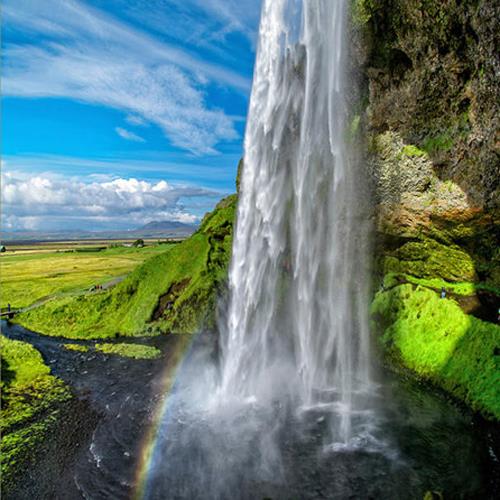
Waterfalls in South Iceland
Chasing waterfalls is practically a national past-time in Iceland. There are over 10,000 waterfalls across the island and the south coast around Vik is no exception.
Driving from Reykjavik to Vik, you pass some of Iceland’s most beautiful waterfalls, like Seljalandsfoss where you can actually walk behind the cascade and Skogafoss whose mist creates rainbows floating in the air.