


Destinations
❮Main Menu
EXPERIENCE MASSIF CENTRAL
Overview
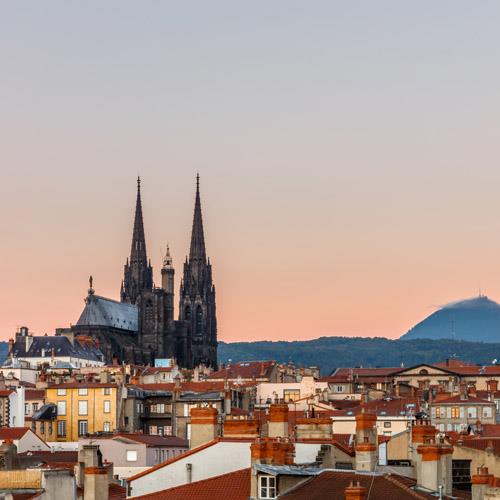
This is the most undiscovered and scenic regions of France, with much of the area being wild, mountainous, and even inaccessible. What you will find is rolling farmlands, countryside, and chateaux and manor houses. Visitors come to this region to see the landscapes rather than towns, churches or museums. And it is the variety of landscapes that makes the Massif Central so interesting. It includes such diverse highlights as the Gorges du Tarn, the volcanic landscapes of the Puy-de-Dome region, the exposed plateau around Mont Lozere, the scenery along the Upper Allier River, the stunning Gorges de l'Ardeche, and much more.
Culture
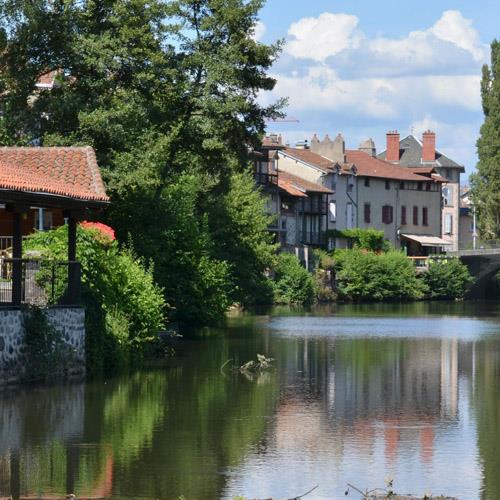
The Massif Central is remote to the rest of the country by train, so it is often perceived as being isolated. It is culturally one of the most firmly rooted in the past. Industry and tourism have yet to play a large role here, and the people remain rural, and the landscape can make it a difficult place to live.
The industry in this sparsely populated region of France is mostly agriculture, but it also happens to be the home of Michelin, the world-famous tire company. Michelin is based in Clermont-Ferrand, the historic capital of the region and the largest city in the Auvergne, Le Puy-en-Velay is one of the region's most important cultural centers with a deep religious history, serving as one of the main stops along the historic Camino de Santiago pilgrimage route.



Cuisine & Local Specialties
Being that the Massif Central is a rural area, the cuisine is less refined, consisting of deliciously hearty peasant fare. The Auvergne highlands to the east are ideal for raising cattle. The famous ingredients of the region consist of cheese, pork, lamb, and beef.
The most popular dish is potée auvergnate, a kind of cabbage soup, with added potatoes, pork or bacon, beans and turnips. Another popular cabbage dish is chou farci, cabbage stuffed with pork and beef and cooked with bacon.
La truffade and l’aligot are the best-known potato dishes. For truffade, the potatoes are sliced and fried in lard, then fresh Cantal cheese is added; for an aligot, the potatoes are pureed and mixed with cheese. For the more adventurous eater, try the tripoux, usually filled with either sheep's feet or calf's innards, cooked in a casting of stomach lining. Fricandeau, a kind of pork pate, is also wrapped in sheep's stomach.
Pike, a type of freshwater fish, is popular from the mountain lakes. This is typically simply prepared with a butter sauce. Trout and crayfish from the rivers are used in many dishes as well.
Wild mushrooms, called cèpes (Limousin Flap mushrooms) are considered one of the finest French delicacies. Often picked in early Autumn, you might find them for sale on roadside stands.
Clafoutis is a popular desert that consists of fruit tart in which the fruit is baked with a batter of flour and egg simply poured over it. Most desserts include fruit jellies and candied fruit from Auvergne. Vichy candy is very famous.
The Auvergne and the Ardèche in the east produce some wines, though these are not well-known. Cheese, however, is a different story. In addition to the great cow’s milk cheeses (St-Nectaire, Laguiole, Cantal, Fourme d’Ambert and Bleu d’Auvergne) this region also produces the renowned, Roquefort, made from sheep’s milk at the edge of the Causse du Larzac near Millau.


Things to See & Do
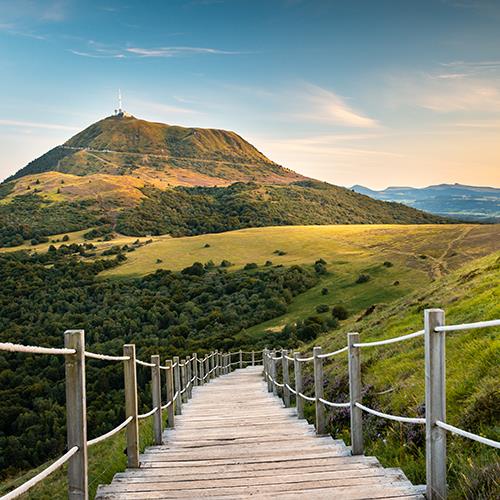
Discover Puy-de-Dôme. the huge lava dome reaching over 4,800 sq ft. is located justa few minutes southwest of Clermont-Ferrand. Follow the footsteps of the Gallo-Romans and take the 2,000-year-old path that leads to the ruins of the Temple of Mercury, or join the GR4, which approaches the summit from the northern side. If you'd rather not walk, the new Panoramique des Domes is a rack railway that brings to the top in comfort.
Learn all about Michelin at L’Aventure Michelin. The tire brand has been a big source of industry in Clermont-Ferrand for more than a century, and whole parts of the city were actually constructed by the company to house its workers. Learn everything about Michilin at its museum, that houses almost 130 years of machinery: an electric car dating to 1899 and a plane from the First World War, and you can see the largest tire in the world by the entrance.
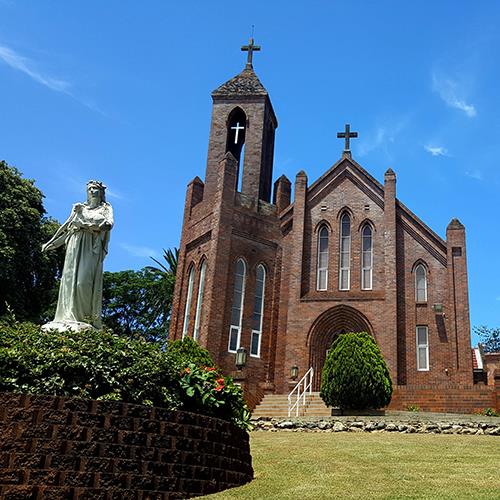
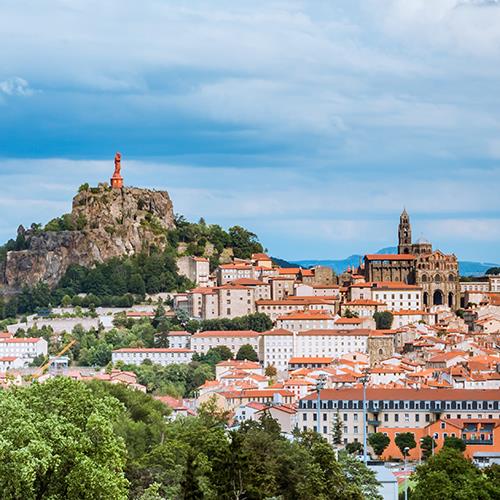
Admire the beautiful Le Puy Cathedral. Auvergne has 5 lovely Romanesque churches that are worth discovering. The Le Puy Cathedral is probably the greatest of them all. It's mostly from the 1100's but has some parts in its sanctuary that go back to the 400's and is a UNESCO site for its location on the Way of St. James. To get to Le Puy Cathdral you have to climb 132 steps on the stairway from Rue des Pelerins to reach the entrance.
Visit the MuPop, Montluçon museum and its largest collection of musical instruments, totaling 3,500 items. The museum is within two historic mansions, joined by a modern foyer. You can browse the electric guitars, sets of bagpipes, accordions, brass accordions and drum sets, as well as several kinds of musical equipment pieces that go back to the early 1900s.
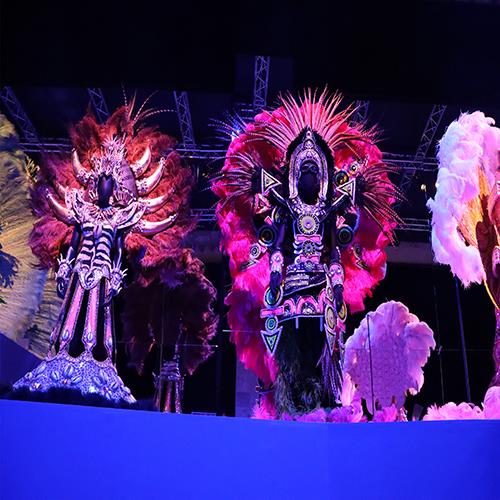
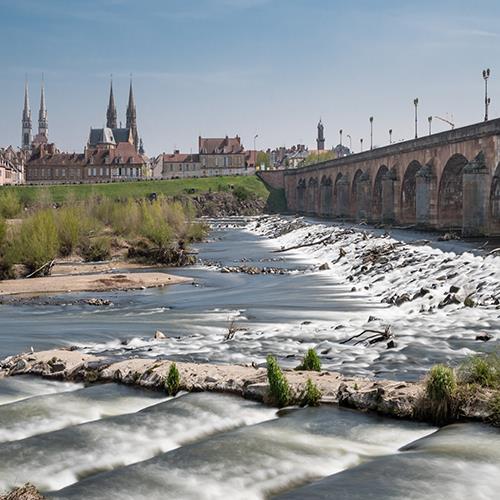
Visit the Centre National du Costume de Scène, Moulins. Explore the world's first museum devoted to scenography and costume design. The collection is varied, with 10,000 ballet, opera and theatre costumens, and numberous prestigious theatres donating their costumes to the museum when their shows close.
The museum building is elegant; Villars is an 18th-century former cavalry barracks on the left bank of the Allier River.
Explore the Réserve Naturelle de Chaudefour. This natural park protects a large U-shped valley, the results of the titanic volcanic event some 600,000 years ago, causing the partial collapse of the Massif de Sancy. On the sides of the valley are volcanic rocks that bring climbers. Further down are beautiful wildflowers, and several Alpine species such as the alpine snowbell, which tend to be very rare in central France.
Admire the beautiful Église Saint-Austremoine d’Issoire. This church has a beautiful exterior. Inside, it is very bright with restored frescoes from the 19th century and, amongst other scenes, show Eve fleeing the Garden of Eden. The choir is surrounded by eight pillars, each one with a capital with images from the bible.
Tour the Musée de la Coutellerie, Thiers. Declared a French historic monument in the 19th century, this castle dates back to at least the 1000s and maybe even earlier. It had been in ruins for many centuries until a new owner took it over in 2000 and has since been restored. In the 13th-century this castle was considered "unconquerable', and defended the town of Riom, which had a privileged status with the French royalty as a "Bonne Ville". Tours are provided by the children of the owner, which provide insights about the restoration work, including how some wooden beams were reinstalled with the help of a helicopter.

Regions and Departments of Massif-Central
Auvergne: Allier
Offers several different protected areas to explore including ancient forests, moors and woodlands, and a traditional unspoiled countryside of small villages and farms.
Auvergne: Cantal
Many visitors come to the north of the department to the Regional Natural Park of the Volcanoes of Auvergne and also part of the Monts du Cantal region of the hills. There are several highlights here including the summits of Puy Mary and the Plomb du Cantal, both offering breathtaking views across the Massif central.
Auvergne: Haute-Loire
The Haute-Loire department is where the pilgrimage town of Le Puy-en-Velay. The landscape in this area is dominated by the valleys and gorges created by the Allier and Loire rivers, with the Gorges of the Haute-Allier being among the greatest scenic highlights.
Auvergne: Puy-de-Dome
In the east of this department is the peaceful unspoiled landscapes of the Parc du Livradois-Forez. To the west of this department is the National Parc des Volcans.
Languedoc-Roussillon: North Aude
The northern part of the Aude department falls withing the Massif Central and includes the wooded hills and small hamlets of the Montagne Noire region. There are also several cave systems and historic villages perched on hills and with panoramic views of the plains to the south of the region.
Languedoc-Roussillon: North-West Gard
The northern part of the Aude department falls withing the Massif Central which includes the steep wooded hills and small hamlets of the Montagne Noire region. There are also several cave systems and historic villages perched high on hills with panoramic views across the plains to the south of the region.
Languedoc-Roussillon: North-West Gard
The northern Gard includes caves of Aven d'Orgnac and the Gorges de l'Ardeche on its northern border with the ARdeche depatment. The National Parc des Cevennes is also fpartly in within Gard. Further north-west you'll find highlights such as the Cirque de Navacelles, the Abime de bramabiau and Mont Aigoual.


Summertime Festivals and Concerts
The summertime in the Massif Central brings lively festivals and concerts to enjoy all over. Below is a list of the highlighted events:
The Festival de Musique en Bourbonnais brings Baroque music performances at the 12th-century Eglise Saint-Pierre de Châteloy in Hérisson and other Romanesque churches nearby.
The Concerts de Vollore series of classical musical concerts takes place in the village and at the château of Vollore. This program is year-round and includes a variety of performances, from classical music to jazz.
La Chaise-Dieu Festival de Musique takes place in August. This festival brings classical piano, symphony, and sacred music concerts at the Abbey Church of Saint-Robert and in nearby villages.
One of the most memorable things to do in Auvergne is attending a cultural festival. On the third weekend of September, the Roi de l'Oiseau Renaissance Festival in Puy-en-Velay delights crowds with its "Tir de l'Oiseau" archery competition, circus performances, and an authentic Renaissance market.
In mid-July, Issoire hosts the highly entertaining Festival International Danses et Musiques du Monde, which brings together musicians, dancers, and singers world-wide.
In August, Aurillac streets and squares becoming lively with entertainment for the International Street Theater Festival (Festival International de Théâtre de Rue).
The town of Gannat (near Vichy) holds a Festival of World Cultures for 10 days in July.