


Destinations
❮Main Menu
ROUTE 66 (EAST) - MUST SEES

Route 66 Begin Marker
The 2,448-mile journey on Route 66 starts at the intersection of East Adams Street and South Michigan Avenue in Chicago`s Loop. You will note the begin sign across the street from The Art Institute of Chicago, at 78-98 East Adams Street, next to a Walgreens drugstore located at 122 South Michigan Avenue.
78-98 E. Adams St., Chicago, Illinois

Chicago, Illinois
Chicago, Illinois is the third-largest city in the United States and the starting point for Route 66. It is a city steeped in history, excitement, and charm, and there are two UNESCO World Heritage Sites in the vicinity, in addition to the sites near Route 66`s starting point that are outlined below.
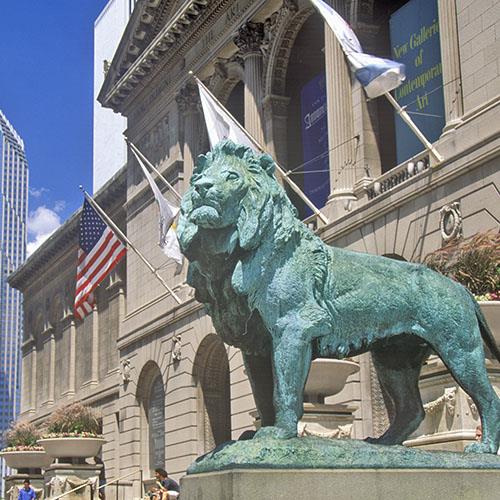
The Art Institute of Chicago
The Art Institute of Chicago is directly across the street from the Route 66 Begin Marker and is a great place to visit before starting your trip. It is one of the oldest art museums in the United States, and is the permanent home for such important paintings as Georges Seurat`s `Sunday on La Grande Jatte`, Grant Wood`s `American Gothic`, and Edward Hopper`s `Nighthawks`. The current building was designed and built just in time for Chicago to host 1893`s World`s Columbian Exposition. With over a million square feet of exhibition space, only the Metropolitan Museum of Art in New York City offers more square footage for exhibits out of all U.S. art museums.
111 S. Michigan Ave., Chicago, Illinois
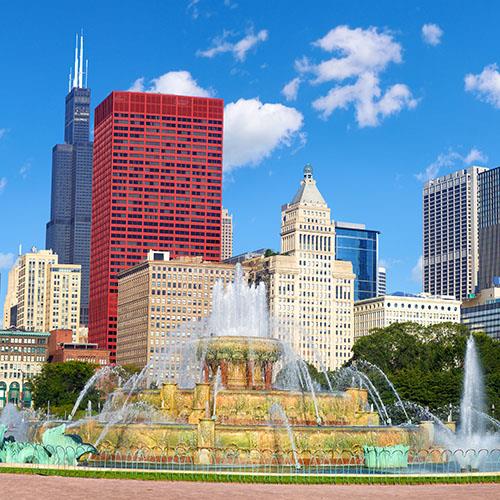
Buckingham Fountain
Buckingham Fountain, located in Grant Park near the beginning of Historic Route 66, is one of the largest fountains in the world. It was built in 1927 in the Beaux-Arts and Rococo styles, meant to mimic the famous Latona Fountain found at the Palace of Versailles in France. It`s definitely a must-see sight before you begin your journey, and a great place to snap a picture to remember your trip for later!
Grant Park, Chicago, Illinois

Grant Park
Spread out across 319 acres, Grant Park is called `Chicago`s front yard`. It sits between Lake Michigan and the starting point of Route 66. The park is the length of 14 city blocks and consists of a number of important must-see destinations close to Route 66: Buckingham Fountain, Millennium Park, and the Art Institute of Chicago, just to name a few.
Between Randolph Street and Roosevelt Road, The Loop, Chicago, Illinois
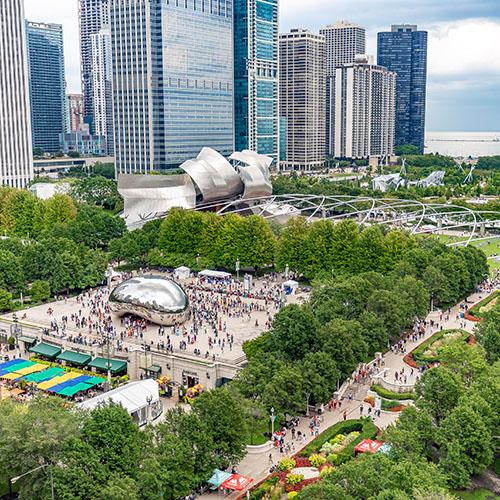
Millennium Park
Millennium Park is not only the most popular tourist attraction in Chicago but the entire Midwestern United States. So named because it was supposed to open to the public in 2000, it opened instead in July 2004, at a cost of nearly half a billion dollars at the time. With over 25 million annual visitors, it is one of the most popular public green spaces in the United States, with such points of interest as the sculpture Cloud Gate (nicknamed The Bean), AT&T Plaza, the Pritzker Pavilion, Crown Fountain, Lurie Garden, the McCormick Tribune Plaza & Ice Rink, the BP Pedestrian Bridge, and many more.
201 E. Randolph St., Chicago, Illinois
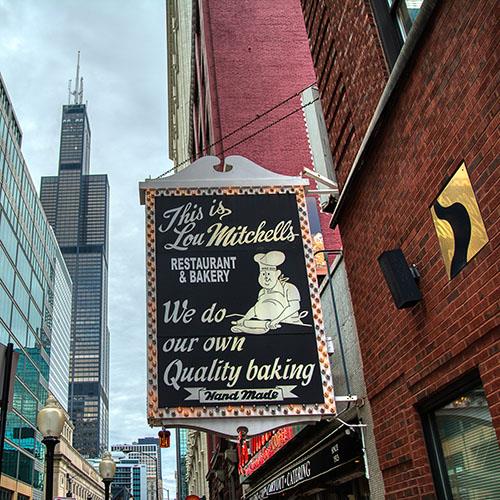
Lou Mitchell`s Restaurant
Lou Mitchell`s has been open since 1923 and it is not only a popular restaurant for Chicago residents and office workers, but also for travelers starting their journeys on Route 66. Lou Mitchell`s, described as `the first stop on the Mother Road`, is known for its charming customer service quirks such as serving donut holes to people waiting in line to order to-go meals and little cups of ice cream with dine-in meals.
565 W. Jackson Blvd., Chicago, Illinois
Dell Rhea Chicken Basket
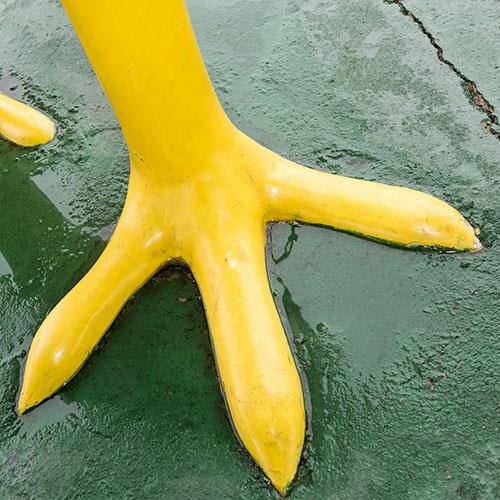
The Lombardi family, who bought the iconic Route 66 Chicken Basket restaurant in 2019, continues the tradition of Irv Kolarik who started selling fried chicken from a lunch counter in the 1920s. Business at Kolarik`s gas station and lunch counter boomed as a result of being right on Route 66, and it was often people`s first stop for food after leaving Chicago. The restaurant building dates from 1946 and still serves customers today. Dell Rhea, a former owner, placed his name on the legendary Chicken Basket starting in 1963, and the Rhea family owned the National Historic Place through the end of 2018.
645 Joliet Rd., Willowbrook, Illinois
Gemini Giant
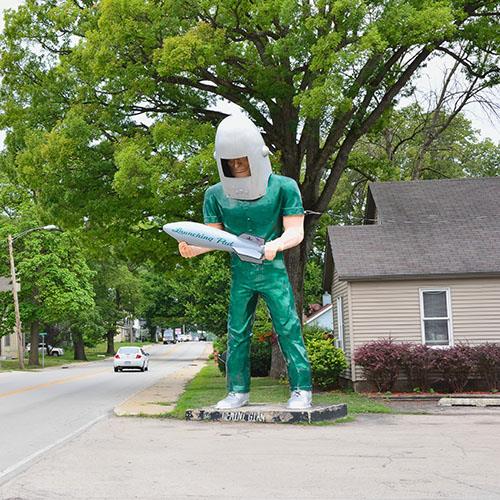
The Gemini Giant is one of the `Muffler Man` statues popular in the 1960s in U.S. advertising and pop culture. This particular Muffler Man, 30 feet tall, was designed with a space helmet and a rocket ship in his hands, with the name `Launching Pad` drive-in restaurant on it. The Launching Pad restaurant has been open off-and-on since 1965, and as of 2019 it is open to diners once more. It is a must-see as one of the approximately 200 extant `Muffler Men` across the country.
810 E. Baltimore St., Wilmington, Illinois
Ambler`s Texaco Gas Station
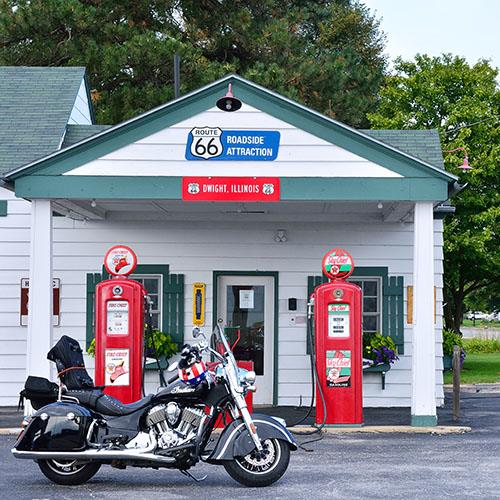
Ambler`s Texaco Gas Station is one of the longest-lived gas stations along Route 66, having been open for business from 1933 until 1999. After a renovation with the help of the National Park Service, it reopened as a visitor center in 2007. The inside of the visitor center is a restored filling station as it would have looked to travelers in the 1940s.
U.S. Historic Route 66 and Illinois Route 17, Dwight, Illinois
Miller`s Standard Oil Gas Station
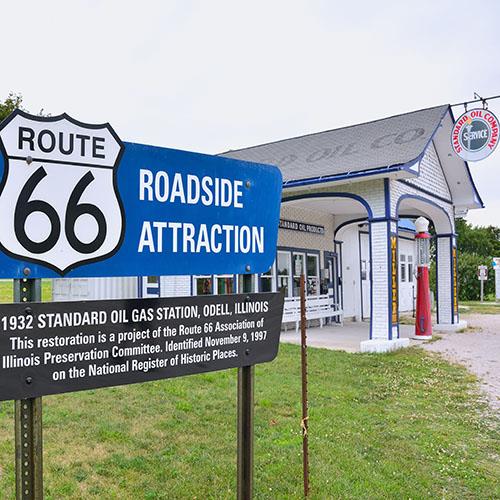
Miller`s Standard Oil Gas Station, built in 1932, is one of the iconic old-time filling stations of Route 66. It operated under the Standard Oil, Philips 66, and Sinclair banners until 1967 when it was closed to customers except for body detailing, which continued at the old filling station for three more decades. It became a National Historic Place in 1997 and portions of the building have been restored and opened to visitors.
400 S. West St., Odell, Illinois
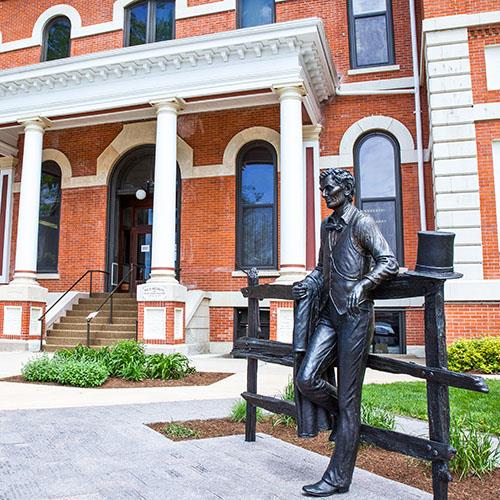
Pontiac, Illinois
Pontiac is a popular stop on Route 66 due to its Instagram-worthy Route 66 shield mural in the center of town, and for its Route 66 Association of Illinois Hall of Fame and Museum (110 W. Howard St.), featuring artifacts from The Mother Road as it relates to Illinois.
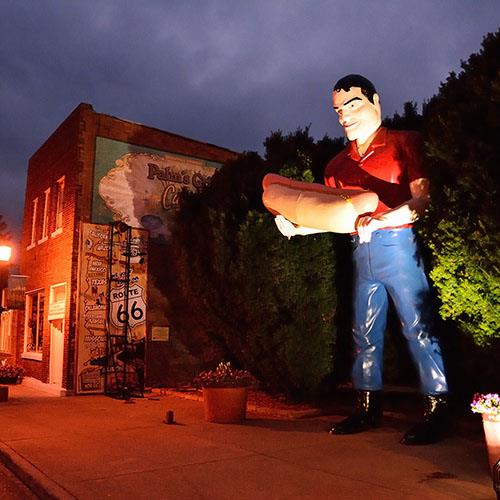
Tall Paul Bunyon Hot Dog Statue
Out of the 200 `Muffler Men` statues from the 1960s still standing in the U.S. today, many of them are located along Route 66, including this 19-foot-tall statue of Tall Paul Bunyon (spelled differently than `Bunyan` on purpose) holding a large hot dog. The roadside attraction is the quirky advertisement for the Palms Grill Café, a restaurant which offers authentic Classic Route 66-era fare and is located across the street from the statue.
112 SW Arch St., Atlanta, Illinois
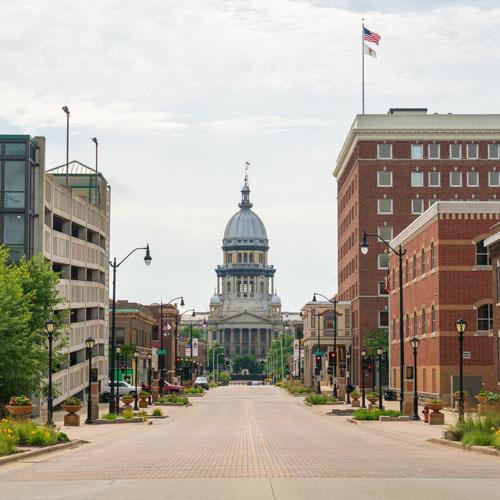
Springfield, Illinois
Springfield is the first of the major cities on eastern Route 66 after departing Chicago. It is the capital of Illinois, and best-known as the adopted hometown of the 16th President of the United States, Abraham Lincoln, who lived here for nearly 24 years before going to Washington D.C. and the White House. Many of Springfield`s sights are points of interest associated with Lincoln, such as the tomb where his family is interred, his presidential library and museum, and the house the Lincolns lived in before they went to Washington.
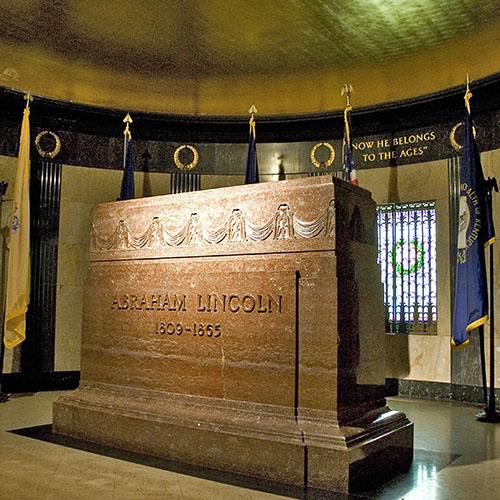
Lincoln Tomb
Located in Oak Ridge Cemetery, the Lincoln Tomb is the final resting place of Abraham Lincoln, the 16th President of the United States, as well as First Lady Mary Todd Lincoln and three of their four children. The interior and exterior is built from marble from throughout the world and a smaller bronze replica of the seated statue of Lincoln from inside Washington D.C.`s Lincoln Memorial is located in the entryway of the memorial. Abraham Lincoln`s burial room was decorated in the Art Deco style. One of the first National Historic Landmarks in the United States, the tomb was built between 1868 and 1874.
Oak Ridge Cemetery, 1441 Monument Ave., Springfield, Illinois

Abraham Lincoln Presidential Library and Museum
The Abraham Lincoln Presidential Library consists of a presidential library portion and a museum portion, and the entire complex educates visitors on the life and legacy of Abraham Lincoln, Springfield`s most notable resident and 16th President of the United States. One of the most popular presidential libraries in the United States, it was dedicated in April 2005.
212 N. 6th St., Springfield, Illinois

Old Illinois State Capitol
The Old Illinois State Capitol served as the state capitol building from 1840 until 1876. Abraham Lincoln argued cases and served as a lawmaker here, and he delivered the famous House Divided speech here in 1858. His body was also presented in state after his assassination and before his burial in 1865. Then-U.S. senator Barack Obama also announced his ultimately successful 2008 bid for president on the steps of the Old Capitol. After serving as the capitol building, it served as the county courthouse until 1961. The building was opened to public tours after a renovation process which lasted from 1966-70.
526 E. Adams St., Springfield, Illinois
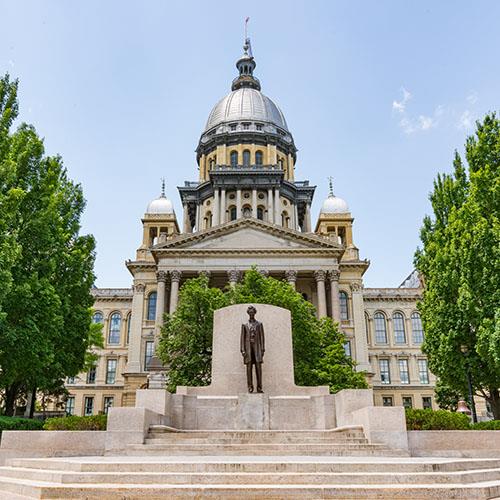
Illinois State Capitol
The Illinois State Capitol is the sixth building to serve as the capitol building of Illinois, in use since 1888. It is the tallest capitol building in the United States to not incorporate a skyscraper (361 feet), and for almost a decade it was the tallest building in the United States outside of New York City.
Capitol Avenue and Second Street, Springfield, Illinois
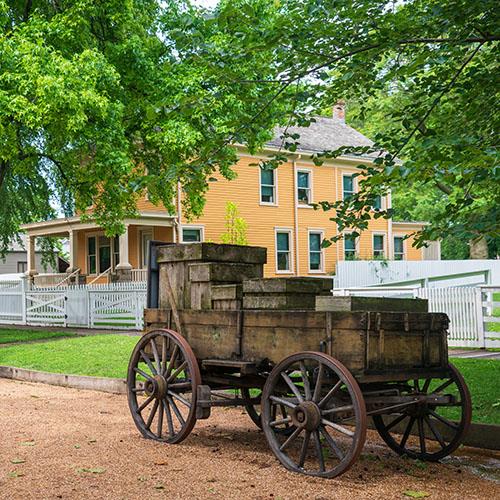
Lincoln Home National Historic Site
The Lincoln Home National Historic Site, administered by the National Park Service, consists of an area that is centered around Abraham Lincoln`s residence for 17 years prior to becoming President of the United States. Bought by Lincoln and his wife Mary in 1844, it was the only home the Lincolns purchased for themselves. Three of their four children were born here. The four-block radius around the house is considered a presidential memorial, and there is also a visitor center in the area.
413 S. 8th St., Springfield, Illinois
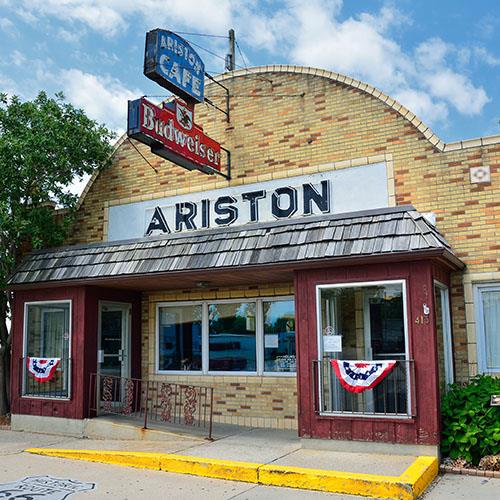
The Ariston Café
The Ariston Café, built in 1935, is the oldest continuously-operating restaurant on Route 66. It opened its doors to its first customers in July 1935 and has served delicious meals at various price points for 85-plus years. There is something for everyone at Ariston Café, ranging from steaks to Southern-style meals to Tex-Mex. Much of the establishment looks just as it did in the heyday of The Mother Road in the 1930s.
413 Old Route 66, Litchfield, Illinois
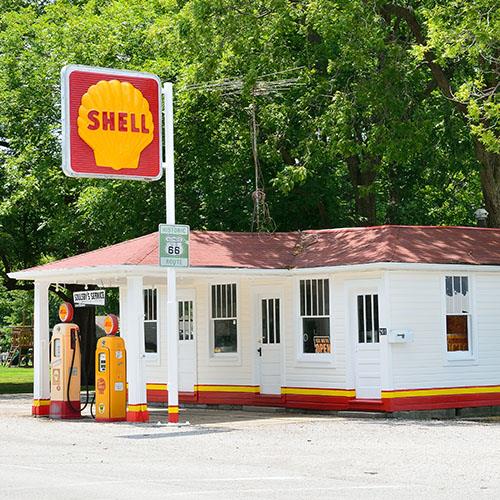
Soulsby Service Station
The Soulsby Service Station is the oldest operational service station on Illinois`s portion of Route 66, and sold gasoline from the beginning of The Mother Road, in 1926, for 65 years until 1991. The service station closed completely in 1993, and has since been listed on the National Register of Historic Places. In 2004, an exterior renovation was completed, and an interior renovation was completed in 2016. Most days the service station`s interior will be open to tour, and has been restored to a look similar to the 1920s.
710 W. 1st S St., Mount Olive, Illinois
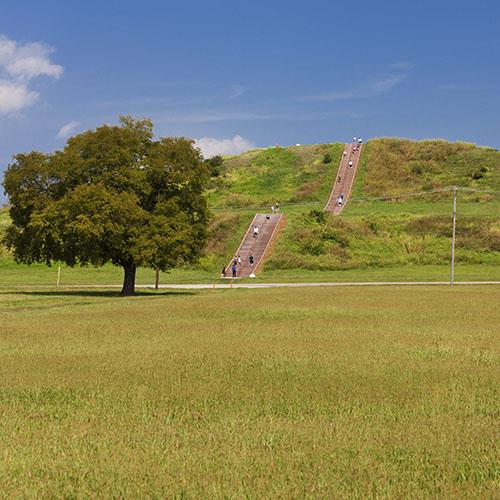
Cahokia Mounds
Cahokia, consisting of 80 mounds, was once the site of one of the epicenters of Mississippian culture, a group of Native Americans who lived and prospered in this area between the eleventh and fourteenth centuries CE. Around the turn of the 12th century, it was estimated to have been the largest city in the world, even exceeding the population of London. Today it is a National Historic Landmark and a UNESCO World Heritage Site, the only UNESCO Site along Route 66 not located in Chicago or Los Angeles.
30 Ramey St., Collinsville, Illinois
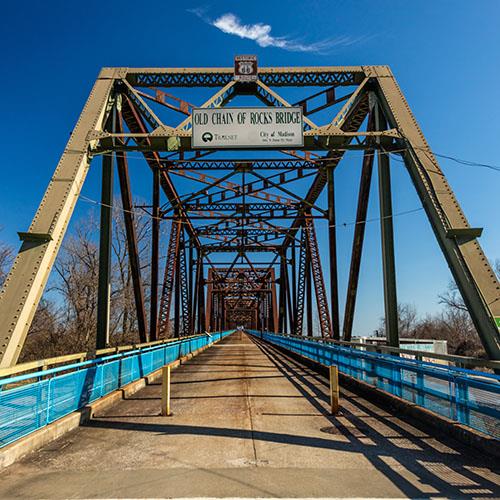
Old Chain of Rocks Bridge
From 1929 to 1966, Route 66 crossed the Mississippi River at the Old Chain of Rocks Bridge. (The last and current Route 66 Mississippi River crossing is the Poplar Street Bridge, which is shared by Interstates 55 and 64.) The Old Chain of Rocks Bridge is notable in that the bridge bends 22 degrees to the left in the middle before bending back to the right on the Missouri side. Since 1998 it has been open to pedestrians and bicycles, so you can experience walking over the Mississippi River yourself!
West Chain of Rocks Rd., Madison, Illinois
MISSOURI WELCOMES YOU
Welcome to Missouri, the Show-Me State! This is the second of the eight states that are connected via Route 66. From St. Louis, where you are now, west to Joplin, Missouri is home to a lot of fun attractions that are ready for you to see today!

St. Louis, Missouri
St. Louis is the third of the six major cities you will visit while on eastern Route 66. It is directly across the Mississippi River from its sister city, East St. Louis, Illinois. It is perhaps best-known for its Gateway Arch, completed in 1965 and situated along the banks of the Mississippi. Other sites you should visit while you`re in the area include Cahokia, a UNESCO World Heritage Site just a few minutes to the east in Illinois; the Anheuser-Busch St. Louis Brewery; the City Museum; the Saint Louis Zoo; and the Missouri Botanical Garden.

The Gateway Arch
St. Louis`s most iconic landmark is not just the world`s tallest arch (630 feet) but also the tallest monument in the Americas. Built as a monument to the American people and the pioneering spirit of their westward expansion, the Gateway Arch is commonly described as the `Gateway to the West`, and is situated on the site of the founding of the city of St. Louis. It was designed by Eero Saarinen and was built between 1963-65; it was opened to the public in 1967. It is possible to visit the observation deck at the very top of the Arch, which involves some walking up stairs after a tram ride takes visitors close to the top.
100 Washington Ave., St. Louis, Missouri
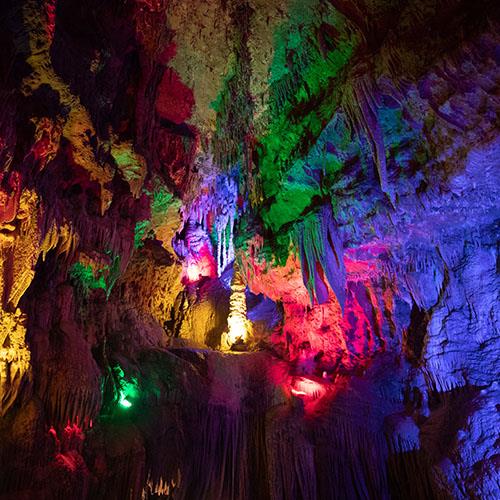
Meramec Caverns
Meramec Caverns, located deep in the Ozarks, is a system of 4.6 miles of caverns that were formed due to millions of years of limescale deposts. First discovered by humans in the era before Christopher Columbus, the full system of caverns was not mapped out until 1933. A popular tourist attraction since the mid-1930s, it was and is widely promoted, on painted barns, billboards, and even bumper stickers, which were invented specifically to promote these caverns. Over 150,000 people visit Meramec Caverns each year.
1135 Highway W, Sullivan, Missouri
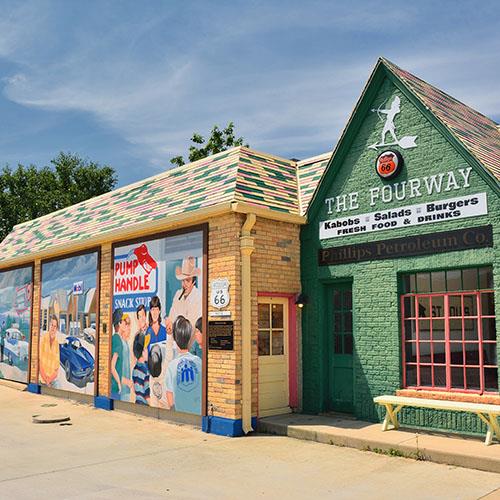
The FourWay
The FourWay restaurant opened its doors in 2015 and has a very long history tied to both Cuba and to Route 66. Paul Carr opened Cuba`s first service station here in 1932, and for many years it employed the town`s youth and young adults, making the Carrs very trusted members of the community. The Carrs sold the service station in 1968, and it continued to operate as a gas station and body shop until 2001. The current owners paid homage to this legendary Route 66 service station by decorating the restaurant interior with memorabilia from Carr`s station, including personal family photographs. Don`t miss the mural on the side of the building, one of many murals Cuba is famous for.
102 W. Washington St., Cuba, Missouri
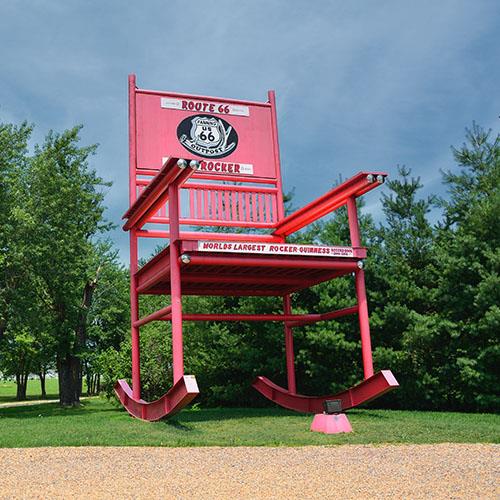
Fanning 66 Outpost
Some Route 66 attractions arrive on the scene later than others. The Fanning 66 Outpost is a later arrival, being built in 2007 as a local feed store but also a souvenir shop for tourists. The next year, owner Danny Sanazaro built the World`s Largest Rocker (42 feet high). While it could not be certified by Guinness as the world`s largest rocking chair, it is at least the largest of its kind on Route 66. The store reopened in 2017 under new ownership with an emphasis on souvenirs for tourists.
5957 State Highway ZZ, Fanning, Missouri
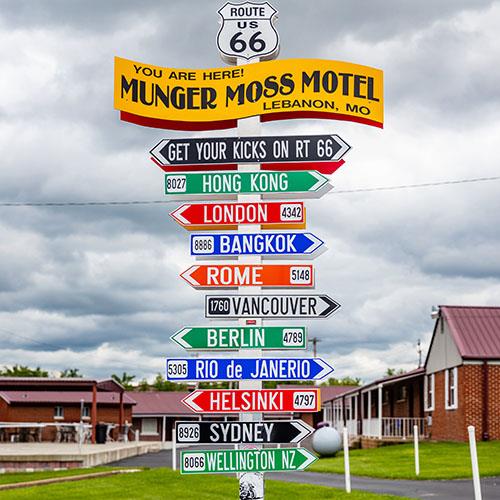
Munger Moss Motel
The Munger Moss Motel represents the second generation of Route 66 motels. Built in 1946 to supplement a restaurant and filling station, today only the motel exists and is a great example of the second-gen architecture that consisted of multiple buildings and rooms united together by central carports, unlike the first generation which consisted of long strings of motel rooms with parking right outside. The National Park Service gave a grant to the owners of the motel in 2010 to restore its 1946-era neon sign, which has since been completed.
1336 E. Seminole Ave., Lebanon, Missouri

Springfield, Missouri
Springfield, Missouri is the third-largest city in the Show-Me State, and is the second of two large cities you will be driving through along eastern Route 66`s portion in Missouri. Springfield claims to be `The Birthplace of Route 66`, a claim Tulsa also shares, due to the fact that Cyrus Avery and John Woodruff, members of the Federal Highway System and the creators of the original Route 66, were from Tulsa and Springfield, respectively, and took active steps to route The Mother Road through their hometowns. There are lots of great Route 66-era attractions in Springfield, such as the Best Western Rail Haven, the 1950s-era Steak & Shake on St. Louis Street, the Route 66 Car Museum, and the Route 66 Springfield Visitor Center.

Best Western Route 66 Rail Haven
Opened in 1938, the Rail Haven Motel was considered one of the finest roadside motels along Route 66 in Missouri. It earned an `excellent` rating by AAA by the 1940s, and in the 1950s the Best Western hotel chain took over operations for the motel. The motel is still a place to stop today not just for accommodations but for a number of authentic and refurbished Route 66 memorabilia, much of it tied to the Rail Haven`s long history.
203 S. Glenstone Ave., Springfield, Missouri
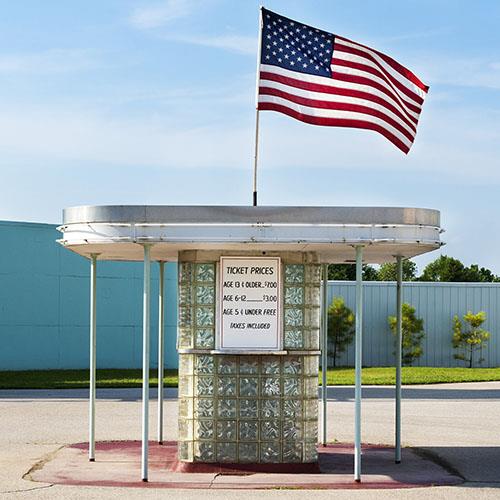
66 Drive-In Theatre
The 66-Drive In Theatre is a symbol of Americana from a time gone by. It opened in 1949, bringing movies to an area that wouldn`t get television service for a few more years. The iconic drive-in was closed in 1985, but was reopened thirteen years later and still shows movies on the weekends. If you can`t see a movie here, you can at least stop by one of Route 66`s most iconic stops in Missouri.
17231 Old 66 Blvd., Carthage, Missouri
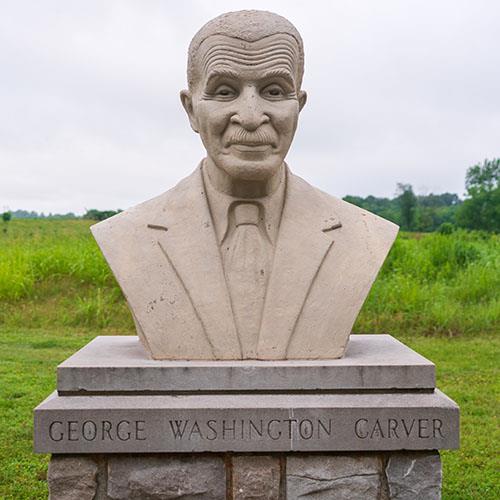
George Washington Carver National Monument
The esteemed scientist and inventor George Washington Carver was born into slavery at the Moses Carver house in the 1860s in Diamond, Missouri. Carver`s boyhood home, as well as the Moses Carver house, a visitor center, the Carver family cemetery, and a park sit on 240 acres about ten minutes south of Route 66. This is a must see because it is an important national monument; it is the first to be dedicated to an African-American and also the first to be dedicated to someone who was never president. President Franklin Roosevelt donated $30,000 of his own money to ensure the preservation of this area, which became a national monument in 1943, the year of George Washington Carver`s death.
5646 Carver Rd., Diamond, Missouri
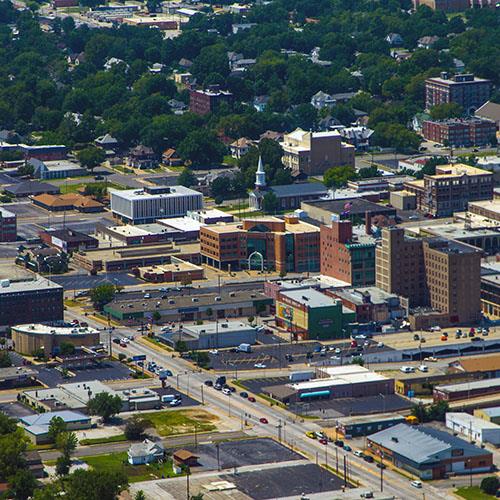
Joplin, Missouri
Joplin, Missouri is the last major city to be situated on Route 66 before crossing the state line into Kansas. It is also where the last fourteen miles of the state`s route is located, labeled as Missouri Route 66 and not U.S. Historic Route 66. Main Street has a number of Route 66-related sights such as town murals painted after the devastating 2011 tornado that almost completely destroyed the downtown. The Joplin Museum off 7th Street has exhibits on Route 66 and Bonnie and Clyde, who lived here for a short time and were involved in a shootout here.
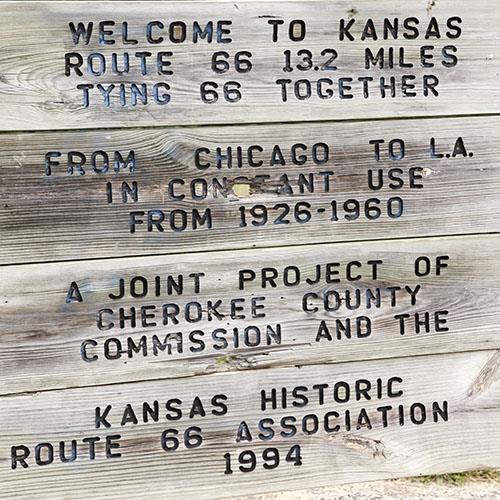
Welcome to Kansas Route 66 Historical Association Marker (KANSAS WELCOMES YOU!)
The Kansas Historic Route 66 Association, situated in Riverton, Kansas, started a preservation campaign of Route 66-related sites in the state in the 1990s. Here is a sign alerting travelers to Kansas`s 13.2-mile stretch of Route 66 upon entering the state from Missouri.
Galena, Kansas
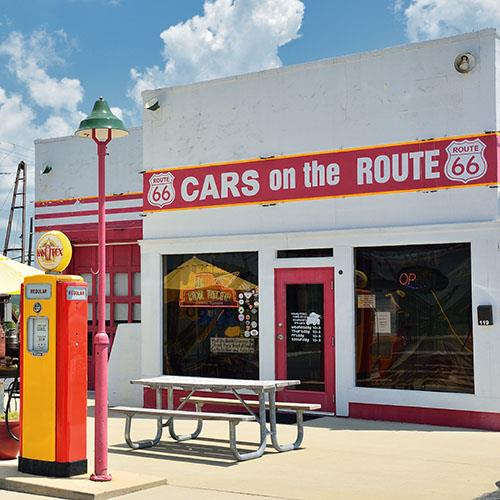
Kan-O-Tex Service Station
The Kan-O-Tex Service Station in Galena, Kansas first opened in 1934 and served travelers along Kansas`s short stretch of Route 66 until 1979. Since 2007 it has been opened as a café, called Cars on the Move. The truck parked out front is the inspiration for the character Tow Mater in the Pixar movie Cars, making the roadside attraction even more popular.
119 N. Main St., Galena, Kansas

Rainbow Bridge
The Rainbow Bridge is the only single-span Marsh arch bridge you will find that is still in use along the Historic Route 66. The style of bridge is so named for its architect, James Barney Marsh, who designed hundreds of similar bridges across the Midwest. It was built in 1923, and while a larger replacement bridge has been built, it is still possible to cross this one, due to a compromise that was made in the 1980s not to demolish this bridge when the new bridge opened.
SE Beasley Rd., Baxter Springs, Kansas

WELCOME TO OKLAHOMA
Welcome to Oklahoma, the Sooner State! It is the fourth state out of the eight that are connected by Route 66, and the final state in the eastern portion of the route when traveling from Chicago. It is home to a number of important attractions, such as the National Route 66 Museum and a commemorative plaza dedicated to Cyrus Avery, one of the men who created Route 66.
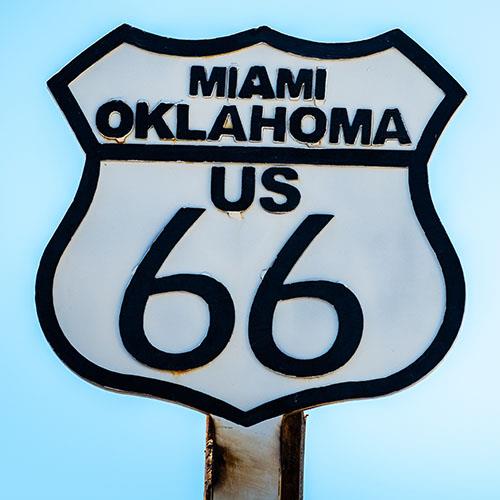
Miami, Oklahoma
Miami, Oklahoma is located 14 miles southwest of the Oklahoma/Kansas state line on Route 66. It is best-known for having the longest historic main street out of all the towns Route 66 runs through from Illinois to California. Much of the charm of Miami lies on Main Street in an eight-block stretch to the north and south of Central Avenue.

Afton, Oklahoma
The sleepy town of Afton, Oklahoma has remnants of its old Route 66 heyday along its main street. By the late 1950s, Interstate 44 bypassed Afton and took most of the road traffic along with it. There is a museum in town, the Afton Station Packard Museum, which houses an exhibit on Route 66 memorabilia.
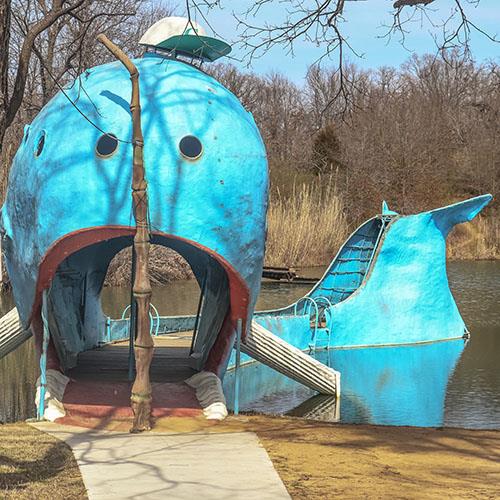
Blue Whale of Catoosa
The Blue Whale is one of Route 66`s most recognizable attractions in Oklahoma, even though it arrived on the scene later. It was built by Hugh Davis in the early 1970s for his wife who liked whales. It was soon opened to the public and became a local attraction. After falling into disrepair, it has since been repainted and restored to its 1970s glory. It`s a great place to stop for a photo!
2600 U.S. Historic Route 66, Catoosa, Oklahoma

Tulsa, Oklahoma
Tulsa is the second-largest city in Oklahoma and the first of the two major cities in Oklahoma you`ll be driving through if you are making your way from Chicago to California. Tulsa claims to be `The Birthplace of Route 66`, a claim Springfield also shares, due to the fact that Cyrus Avery and John Woodruff, members of the Federal Highway System and the creators of the original Route 66, were from Tulsa and Springfield, respectively, and took active steps to route The Mother Road through their hometowns. Cyrus Avery is celebrated at Centennial Plaza near the Red Fork Expressway. Other Route 66-adjacent must-see sights in Tulsa include the Brady Arts District, which includes such places as the Woody Guthrie Center and Guthrie Green.
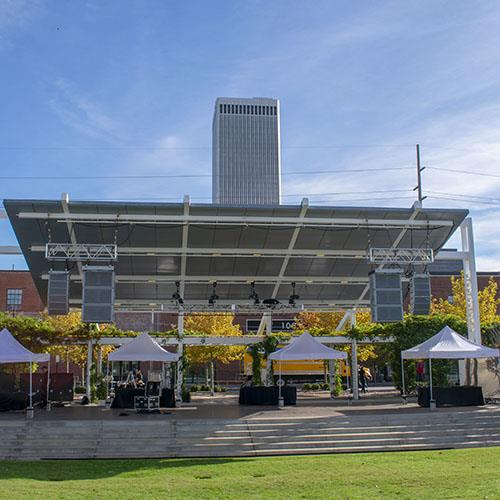
Brady Arts District
The Brady Arts District is filled with live music venues that play the same types of jazz, folk, and early soul that the old Route 66 days were famous for. Woody Guthrie, a folk legend, is the namesake for multiple places in the arts district, such as Guthrie Green and the Woody Guthrie Center, both must-see places. Be sure to check out the Route 66 murals on some of the buildings as well.
South and East of Interstate 244, north of 1st Street and east of ONEOK Field, Downtown Tulsa, Oklahoma

Cyrus Avery Centennial Plaza
Cyrus Avery (1871-1963) is considered the `Father of Route 66` as he was the one who conceptualized the route while a board member of the Federal Highway System. Tulsa was his hometown, and it was his idea to take Route 66 through Tulsa, utilizing the 11th Street Bridge. The old bridge, which was open to traffic until the 1970s, is adjacent to this plaza that honors the man who gave birth to `The Mother Road` and helped bring it through Tulsa.
Riverside Drive and Historic Route 66 near the Red Fork Expressway, Downtown Tulsa, Oklahoma
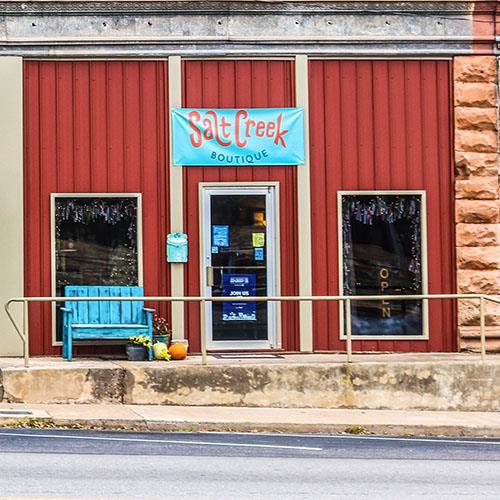
Chandler, Oklahoma
Chandler, Oklahoma is one of the sleepy towns of Route 66 which had its heyday during the early days of `The Mother Road` but have since reverted to their agricultural roots. Chandler has a few points of interest for Route 66 tourists and history buffs, such as the Route 66 Interpretive Center, the Route 66 mural district, and a newly-renovated classic gas station with Philips 66 livery. Chandler is also noteworthy for its painted bar advertising Meramec Caverns in Sullivan, Missouri, also along Route 66. While there were many of these barns in the early days of Route 66, this is one of the few that survive today.

Arcadia Round Barn
The Arcadia Round Barn, built from bur oak, was constructed in 1898 and served as a meeting space for the small town of Arcadia. By 1926, when Route 66 opened right next to the barn, it became one of the most popular sights along the entire route, and at one time it was the most photographed attraction along the whole route as well. It has been open to the public as a roadside attraction following a renovation in the 1990s.
107 Highway 66, Arcadia, Oklahoma
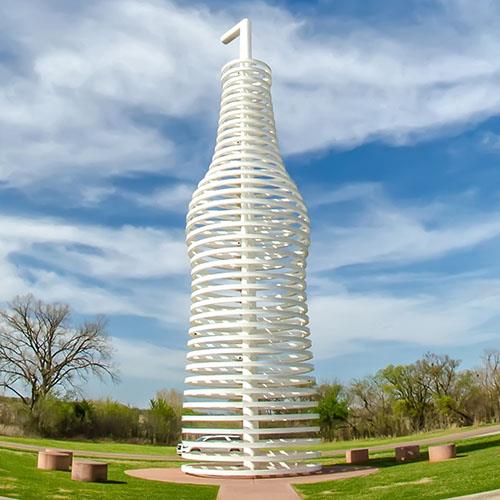
Pops Restaurant
Pops is one of the newest roadside attractions along the eastern portion of Route 66. Opened in 2007, the restaurant and soda-themed café is known for its large cantilever roof and for its 66-foot-high neon sign shaped like a soda bottle with a straw.
660 W. Route 66, Arcadia, Oklahoma

Oklahoma City, Oklahoma
Oklahoma City is the last of the six largest cities along the eastern portion of Route 66, after with Chicago, Springfield (IL), St. Louis, Springfield (MO), and Tulsa. It is the capital and largest city of Oklahoma and located in the geographic middle of the state. The Central and Midtown areas are located to the north of the Oklahoma River, and the Oklahoma State Capitol complex is located a mile to the northeast. The National Cowboy & Western Heritage Museum and the Oklahoma City Zoo are located near the junctures of Interstates 35 and 44.

National Cowboy and Western Heritage Museum
Established in 1955, the National Cowboy and Western Heritage Museum is the largest collection of American rodeo photographs and memorabilia in the world, and also features extensive exhibits about the settlement of the American West, as well as the lives and cultures of the Native Americans who were the original settlers of the West. The museum is spread out over 200,000 square feet of exhibition space and includes a Cowboy Hall of Fame and Rodeo Hall of Fame.
1700 NE 63rd St., Oklahoma City, Oklahoma
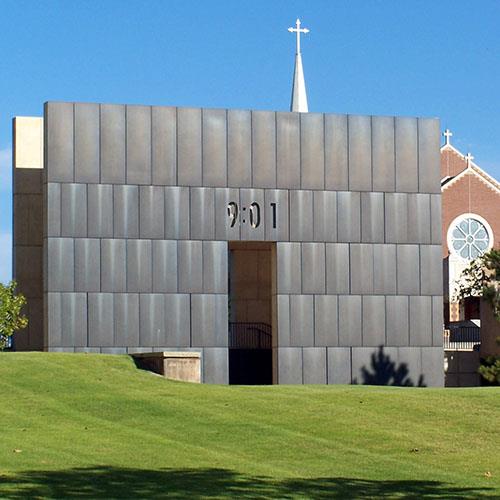
Oklahoma City National Memorial and Museum
The Oklahoma City National Memorial and Museum commemorates the tragic bombing of the Alfred P. Murrah Federal Building on April 19, 1995, when 168 lives were lost in the terrorist attack. Completed in 2001, the memorial sits on the site of the old building complex. The Gates of Time feature inscriptions of three specific minutes in time (9:01, 9:02, 9:03), the before, during, and after of the brutal explosion. The Field of Empty Chairs represent each of the 168 lives lost. There is also a reflecting pool, survivors` wall, and survivors` tree, among other components of the 3.3-acre memorial.
620 N. Harvey Ave., Oklahoma City, Oklahoma

Lake Overholser Dam
Lake Overholser Dam was built in the 1910s and served to create a reservoir from the North Canadian River to be used as the drinking water for Oklahoma City and environs. The lake covers approximately 1,500 acres.
West of Bethany, Oklahoma
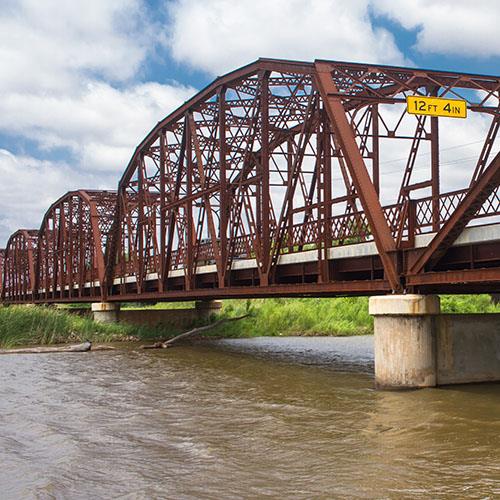
Lake Overholser Bridge
From 1926 to 1958, Route 66 took travelers over the Lake Overholser Bridge in Bethany, a suburb of Oklahoma City. The bridge today is closed to traffic but open to visitors.
Northern edge of Lake Overholser, west of Bethany, Oklahoma
El Reno, Oklahoma
El Reno is one of the historic towns along Oklahoma`s stretch of Route 66. It is west of Oklahoma City and adjacent to Fort Reno, an Army outpost dating from the 1870s, when Oklahoma was still a U.S. territory. The downtown district, which Route 66 runs straight through, has been revitalized over the past few decades. El Reno operates the only streetcar seen in any small town in Oklahoma.
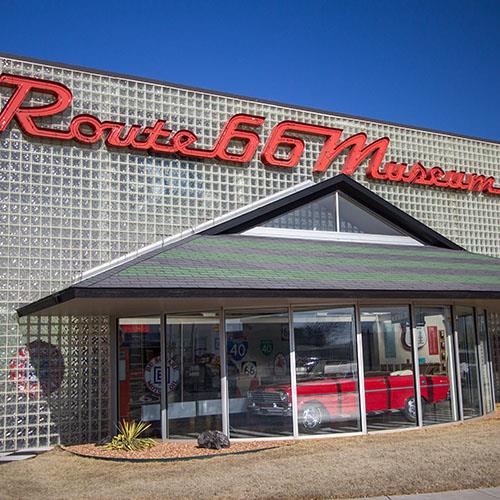
Oklahoma Route 66 Museum
The Oklahoma Route 66 Museum tells the story of travelers experiencing Oklahoma`s stretch of Route 66 from the 1920s through to the 1950s, the `Golden Age of The Mother Road`. There are interesting memorabilia exhibits, many of them telling the story of Oklahomans and travelers along Oklahoma`s Route 66, and some of them are interactive.
2229 W. Gary Blvd., Clinton, Oklahoma
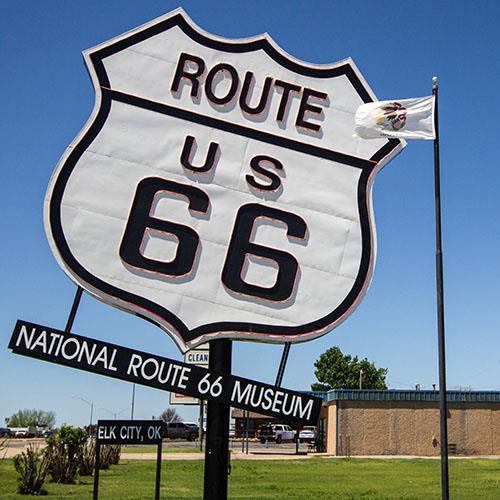
National Route 66 and Transportation Museum
The National Route 66 and Transportation Museum is the largest collection of Route 66 history-related memorabilia in the United States. It is part of the Elk City Museum Complex which includes museums about life in western Oklahoma through the eyes of the Native Americans who originally lived here and the settlers. The museum`s highlights include a two-story kachina doll, a 1955 pink Cadillac, and signs and automobiles from decades of The Mother Road.
320 W. 3rd St., Elk City, Oklahoma
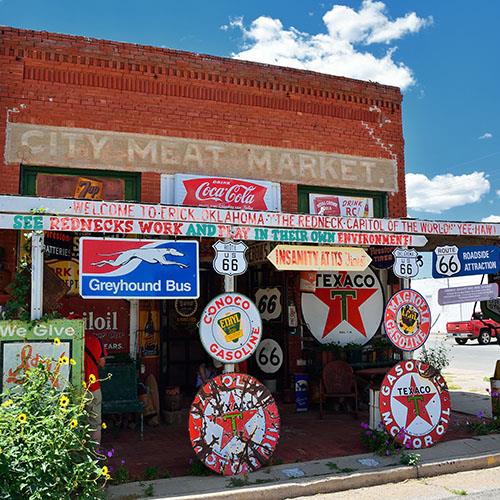
Sandhill Curiosity Shop
One of the quirkiest stops along the eastern portion of Route 66, the Sandhill Curiosity Shop, owned by Harley Russell, is not really a shop at all, but a part-Route 66 memorabilia museum and part-live music performance extravaganza. Russell`s unique style of performance and presentation of curious oddities in addition to Route 66 items make this place a very fun stop on your journey. The building the shop is housed in is the oldest building in town, formerly the City Meat Market.
201 S. Sheb Wooley Ave., Erick, Oklahoma
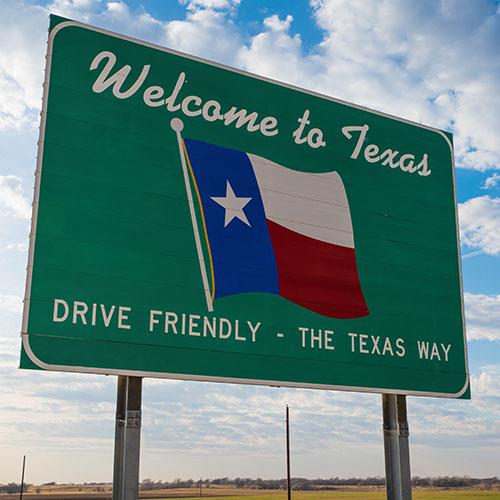
WELCOME TO TEXAS (End of Route 66 - East / Beginning of Route 66 - Central)
Welcome to Texas! You have completed the eastern portion of Route 66, after 1,061 miles! If you would like to continue on to the central portion of the route, it takes you through Texas, New Mexico, and Arizona.
Shamrock, Texas