


Destinations
❮Main Menu
EXPERIENCE DORDOGNE-PERIGORD

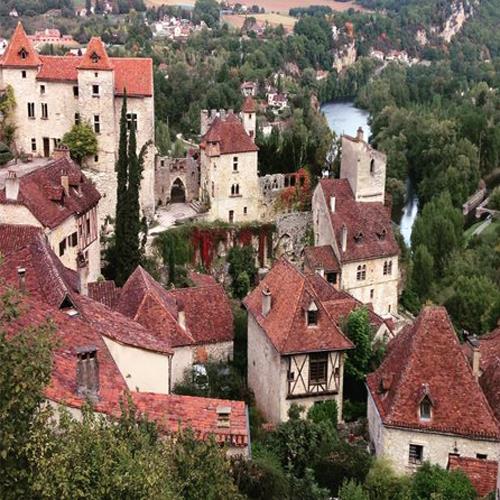
Overview
The Périgord and the Dordogne department are synonymous and designate the same territory. During the French Revolution, the National Assembly decided to create the departments in order to simplify the administrative organization of France. The criteria chosen for the name of the departments being geographical or hydrographic, the Périgord thus receives the name of its main river: the Dordogne.
The department is located in southwest France, in the region of Nouvelle Aquitaine. Set between the Loire Valley and the Pyrenees mountains, the Dordogne is the kind of place where the good life reigns supreme, well known for its stunning natural beauty. It contains world-class cave art, amazing cultural heritage, beautifully situated thousand-year-old fortresses, lively markets in historical villages, and canoe trips under cliff-top gardens. The area owes some if its immense allure to its limestone geology. In the river valley are insurmountable rocky cliffs that helped to defend castles, while the landscape is also sprinkled with caves that sheltered the prehistoric humans who created the world's most celebrated stone-age wall paintings.
While long a favorite with visitors, the region has escaped much of the overdevelopment of some of France's other regions.
Castles
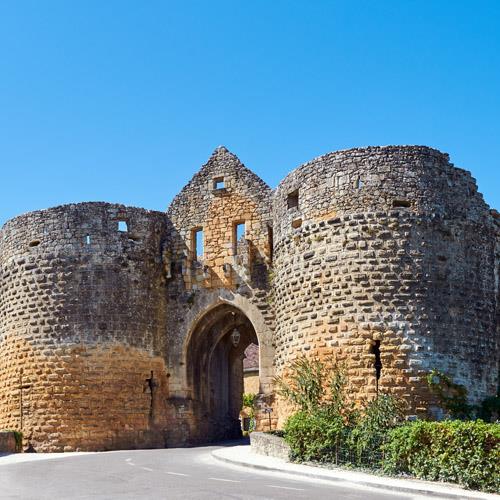
One of the top things to do in Dordogne is to visit some of its medieval castles. From fairytale castles to mighty fortresses, the Dordogne Valley offers a stunning cultural heritage and some of France's prettiest sites.
Dordogne was in the Middle Ages an important area of conflict between France and England the famous Hundred's Year War between the House of Plantagenet, rulers of the Kingdom of England, and the House of Valois over the right to rule the Kingdom of France. Security against the enemy was paramount in the valley, and the wealthy were ready to sacrifice beauty and comfort for protection.
The Castles in Dordogne are functional castles that were built for protection. They are solid, imposing, fortified structures, usually in strategically important positions. The list of most beautiful medieval castles includes Castelnaud, Fenelon, Beynac, Commarque, and Hautefort, but there are many more.
Outdoor Activities
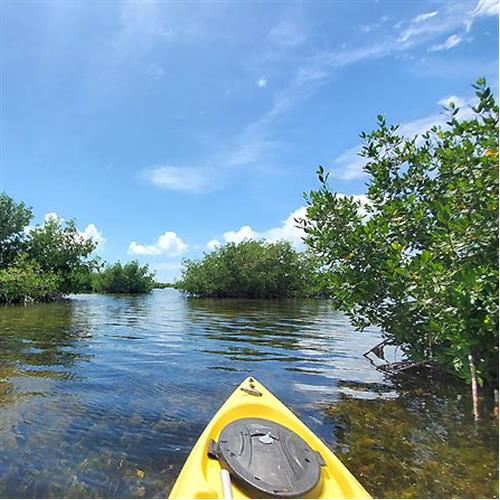
With miles of rugged landscapes and stunning verdant and voluptuous countryside, the area provides limitless opportunities for outdoor sports.
Kayaking/Canoeing on the Dronne River: The Dronne Rivers winds its way through the Dordogne and the historic village of Brantôme. With many hairpin turns, this section of the Dronne River is great for kayaking or canoeing. It is also a beautiful way to see the famous Benedictine abbey and other notable architecture of Brantôme.
The Dordogne Valley is a land where rock climbers scale granite gorges, paragliders jump into canyons, mountain bikers meander twisting hills and hikers enjoy the thousands of great walks both on and off the beaten track. Stumble across un-mapped prehistoric caves, troglodytes, and medieval ruins that are either tucked away in a limestone cliff or nestled into a wooded hillside.
Wherever you end up in the Dordogne Valleys, its varied landscapes make it impossible not to embark on some sort of outdoor adventure.

Sarlat
Sarlat is one of the top places to visit in the Dordogne. The charming walled town of Sarlat is so well-preserved that it was included as a UNESCO Site in 2002. Sarlat is the Perigord Noir area of the Dordogne, known for its foie gras, walnuts, and delicacies such as cèpe mushrooms and truffles.
Sarlat is definitely the place for foodie fun in the Dordogne. The Sarlat market days are packed with regional produce and beautiful handicrafts. For extra fun, visit Sarlat in December for their Christmas illuminations, and one of the best Christmas markets in France where you'll find mulled wine, ice skating and events that fill the main squares.
The annual
truffle festival takes place in January and gives the local producers a chance to showcase their incredibly sought-after product.
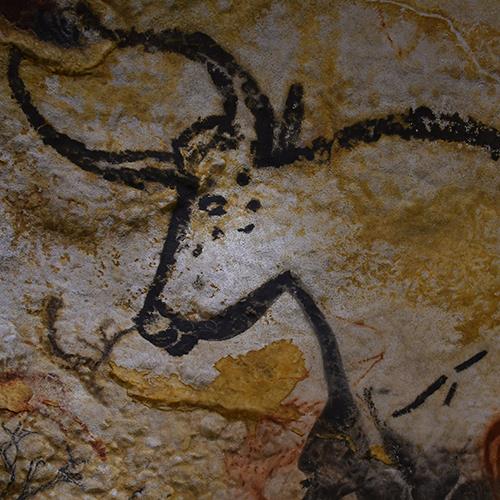
Stone Age Cave Paintings of Lascaux
Visitors from around the world flock to see the prehistoric caves of Lascaux, thought by many scholars to be the world's best. A UNESCO World Heritabe site, the paintings are considered to be masterpieces of stone age art. However, due to the damage resulting from too many people visiting the caves, they have been permanently closed to the public. The French government has built Lascaus II near the site where tourists can see a copy of the original cave.
The "new cave" is part of a modern multimedia experience at the Lascaux Centre International de I'Art Parietal in Montignac. It's a half-hour drive north of Sarlat or you can take a tour from Sarlat to the cave and other prehistoric sites in the region. The cave is open every day of the week, but be sure to check the opening hours as they vary by season.

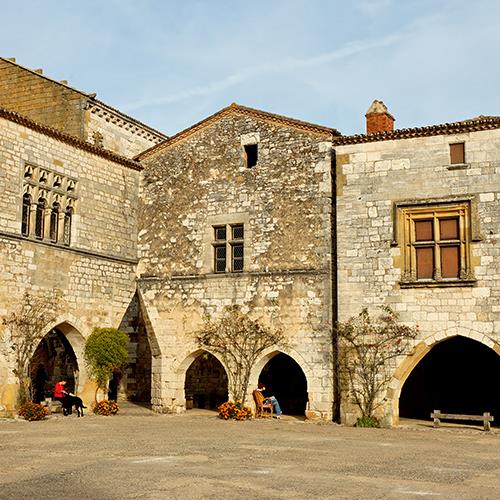
Visit the Medieval Bastide Village of Monpazier
Visiting Monpazier in Dordogne is like taking a step straight back into the 13th century. This charming bastide town is perfectly preserved, complete with an ancient market hall containing measuring and weighing equipment from back in the day. Monpazier is one of the most beautiful villages in Dordogne and is also listed as one of the ” Plus Beaux Villages de France” (Most Beautiful Villages in France).
There were originally six gated entranceways to this bastide village all leading to the main square and two remain to this day. Once inside the main square, you are surrounded by a mix of stone houses with open arcaded bases.
The town’s weekly market has been running for over 700 years and takes place on Thursday. It’s a great day to visit to soak in all the ambiance of the beautiful village and sample some of the delicious regional specialties.
Be sure to visit the church of Monpazier which dates back to the 13th century and take some time to enjoy the many little shops displaying arts and crafts designed by local artisans. If you’re visiting in the summer months, be sure to arrive early as parking is limited!
Other legendary stone villages of Dordogne, include, Rocamadour, Domme and La Roque Gageac - all are unforgettably and picturesque.
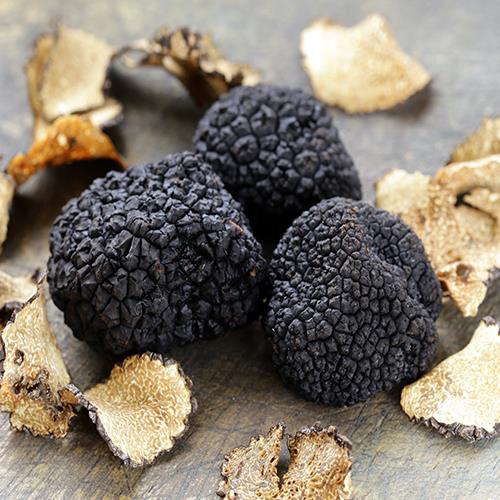
Truffle Market Shopping in Périgord
The black Périgord truffle (Tuber melanosporum) is the second-most commercially valuable truffle species in the world. With this ‘black diamond’ at home, it is easy to understand why the Périgord is one of France’s most important truffle trade centers.
Truffles used to be dug up by pigs, but nowadays, it is more likely to be dogs. This famous mushroom is rare and very appreciated in French cuisine, which justifies its high market prices.
Truffle-hunting in the local markets is another of the top things to do in Dordogne. The best places to purchase the black Périgord truffle are the regional markets between December and March. The towns and cities of Sarlat, Périgueux, Sorges, Sainte Alvère, and Thiviers are good places to purchase these famous mushrooms.

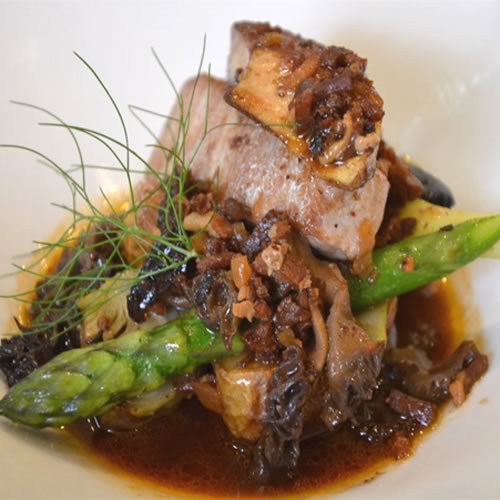
Food Specialties
Home to lively markets and excellent cuisine, the Dordogne Valley is synonymous with some of the most acclaimed foods in France. From vineyards of Bergerac and cheese stalls of Bretenoux to truffle farms of Martel and the saffon festival of Carjac, mealtimes are taken very serious in the Dordogne.
A popular product at any local market or restaurant is Rocamadour cheese. This small creamy piece of heaven made from goat's milk bears the label 'Appellation d'Origine Contrôlée' which guarantees the produce was made in the region with the use of traditional methods and ingredients.
Because cheese is so central to the Dordogne diet, it's no surprise there's an abundance of local wines to go with them. Despite its close proximity to Bordeaux, the Dordogne produces a delicious variety of lesser-known local wines like Coteaux de Glanes that are representative of the warm summers and how the grapes ripen. With a reputation for its love of grapes, many of the wines go hand-in-hand with traditional gourmet produce like magret de canard and foie gras (amazing with a local sweet wine called Vin de Branceilles).
If you're looking for something sweet in the region, be sure to try the candy-sweet strawberries, melon and plums. Or savor the Dordogne's highly sought-after truffles or rather 'Black Diamonds'. Other common seasonal treats and organic delicacies include walnuts which are celebrated for their use in vin de noix (a rich liqueur made from unripe green nuts) and walnut oil.
Another common local delicacy commonly found throughout the region is the Foie gras (liver of a duck or goose), prepared into a mousse, parfait or pâté. It would be next to impossible to enter a grocery store without passing a shelf full of foie gras varieties or a market without strolling past an incredible spread of fresh and tinned products. Restaurants offer various traditional dishes or modern twists on the old classic. and framers fill the local markets with foie gras and other tasty seasonal products that are available at that time.
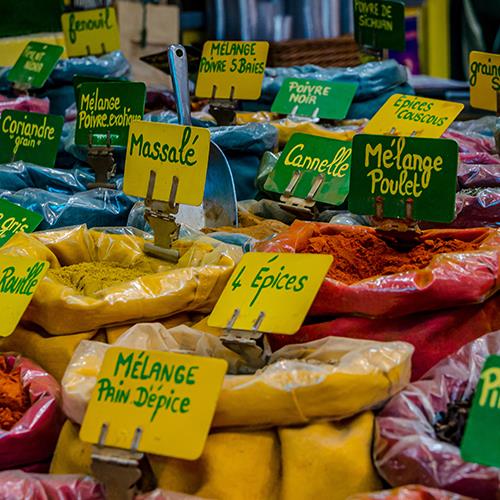
Most of the Dordogne Valley's village squares are transformed into a marketplace at least once a week, welcoming local farmers to set up shop with their fresh produce. Festivals and one-off markets are organized all year round to celebrate a particular local specialty such as 'Fête de la Truffe' in Sarlat and Cuzance or 'Fête de la Fraise' in Beaulieu-sur-Dordogne.