


Destinations
❮Main Menu
EXPERIENCE SARLAT-LA-CANEDA

Overview
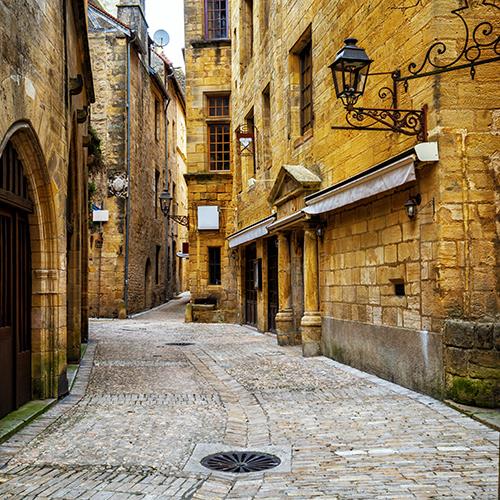
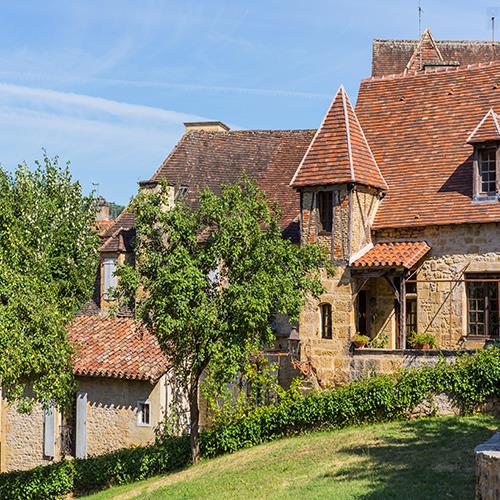
Sarlat-la-Caneda commonly known as Sarlat, is famous for being one of the best-preserved medieval cities in Europe. Within the historic center, you can enjoy the history, the different architectures, and its gastronomy and outdoor activities. There are no major highlighted sights, but the town delivers on charming traffic-free, golden cobblestone lanes with beautiful buildings, lined with foie gras shops, and packed with tourists. It's just the right size - large enough to have a theater with four screens, but small enough so that everything is an easy stroll from the town center.

History
Sarlet's origins are uncertain. Although there are traces of human occupation dating back to the Paleolithic in the south of the city, tradition says that the city began to form from the ninth century around a Benedictine abbey that we the same distance Périgueux and Cahors.
It suffered the Hundred Years' War between 1337 and 1453. During this period, the city of Sarlat became a reserve of men, weapons, and food.
It remained faithful to the King of France and stressed its importance compared to other Perigord cities and lordships, which often switched sides.
The golden age of Sarlat was between the 15th and 16th centuries. Then, as a result of the Hundred Years' War (and having been on the winning side), some new families entered the nobility and brought a few years of some prosperity. At this time, large mansions and monumental buildings were built.
In 1533, Nicolo Gaddi was appointed Bishop; this Florentine introduced the Renaissance's artistic style and humanist ideals.
Between the seventeenth and eighteenth centuries, after the wars of religion, Sarlat began a new golden age, as evidenced by the construction of the Vienne mansion. This was an era where new convents and churches were built.
During the nineteenth century, the city underwent a profound transformation with the development of the Republic's street. A large artery destined for the sanitation of the city.
In the twentieth century, Sarlat became one of the first conservation areas in France. In 1962 a new law was launched to reconcile architectural heritage’s protection and value with an urban center’s economic and social revitalization.
In 1969 there were 34 restoration jobs at once in the old town. Since that time, it has not stopped beautifying and preserving the city of Sarlat.

Markets
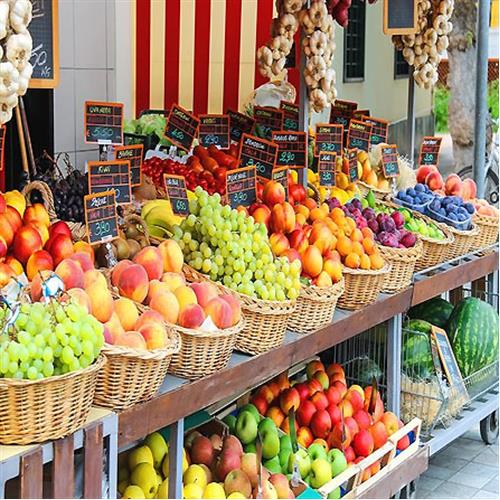
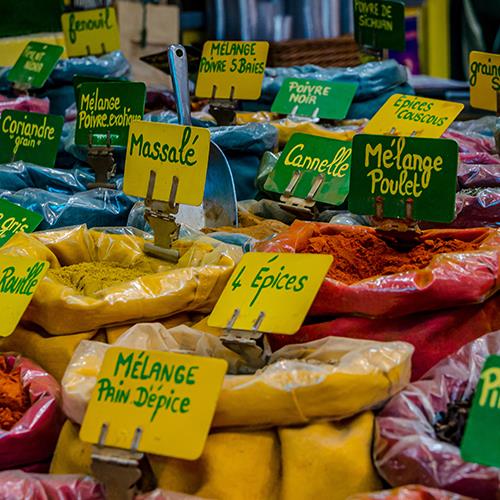
In Sarlat, there are 5 markets, of which 3 are all year round. This is the best time to enjoy the local gastronomy and come home with a few French delights. Sarlat Markets inlcude:
Outdoor Market (All Year)
Saturday in the city center; all products from 8:30 am to 6 pm
Saturday morning in Place de la Liberte; Food market from 8:30 am to 1 pm
Wednesday morning; all food market; Place de la Liberte from 8:30 am to 1 pm
Covered Market (All year)
Old Sainte Marie Church - Place de la Liberte
Mid-November to mid-April: every day except Thursday from 8:3 am to 1 pm
Seasonal: daily from 8:30 am to 2pm, and Friday from 9:30 am to 8 pm
Bio Night Market (All year)
Every Thursday from 4pm to 8pm, an ecological night market is located in Place du 14 Juillet (Post Office).
Truffle Market (December, January and February)
Saturday from 9 am to 12 pm, Fenelon Street (next to the Town Hall).
Sarlat Christmas Market
Sarlat's Christmas market (marche de Noel) is the second most important market in Aquitaine. Every year they pay homage to a different country and choose it as a market theme.
About 70 stalls are gathered with handicrafts, jewelry, clothing, deocration, etc. Of course, among these stalls, you will also find places to enjoy Perigord's gastronomy, wine from the region, local beer, and hot wine.
And to satisfy the biggest foodies, head to Place Bistronomique, where a dozen stalls invite you to try the Perigord Gastronomy.
Things to See and Do
There is plenty to see and do around Sarlat. Discover the many Castles in the Perigord; legend has it that there were 1001 castles! Here are just a few that are located in the Sarlat vicinity:
Chateau de Puymartin, Chateau de Beyssac, Chateau de Commarque, Chateau le Paluel, Chateau de Montfort, Castelnaud-la-Chapelle, Chateau de Beynac, Chateau des Milandes, Chateau de Hautefort, Maison Forte de Reignac, and so much more!
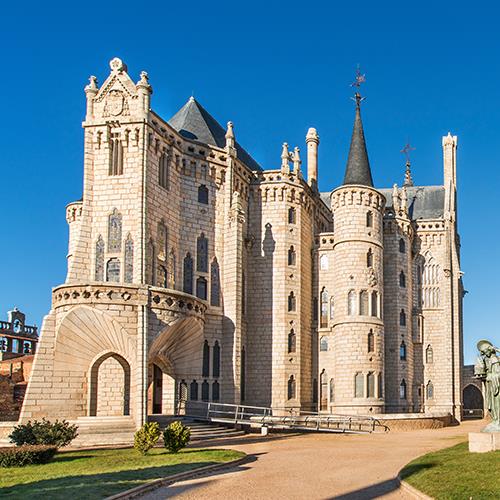
In addition to the castles, there are plenty of historical heritage sites to discover around town, such as the Episcopal Palace (or former Bishop's Palace. In the fourteenth century, the bishop's palace replaced the abbot's old house. Its architecture is of a different style. The facade of the palace is adorned with sculptures of men's heads, monsters, and Atlantes, and sows the influence of the Italian Renaissance in Sarlat. Today it serves as a visitors center for tourists.
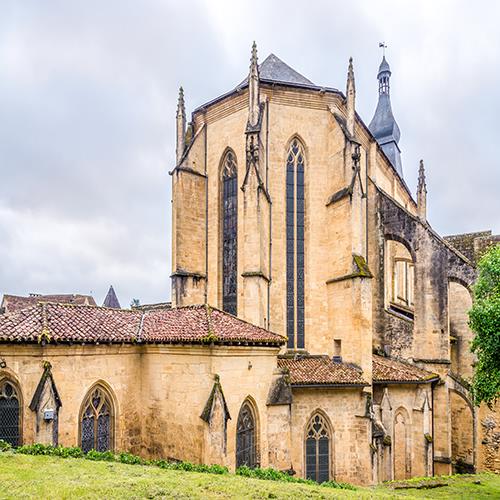
Explore the Saint-Sacerdos Cathedral. The Pope of Avignon, John XXI, in 1317, chose Sarlat Abbey as the seat of a bishopric, so the abbey church became a Cathedral. The ruined church of the abbey was destroyed (only the bell tower remains) and began construction a Gothic Cathedral, which for lack of funds, took several centuries to complete.
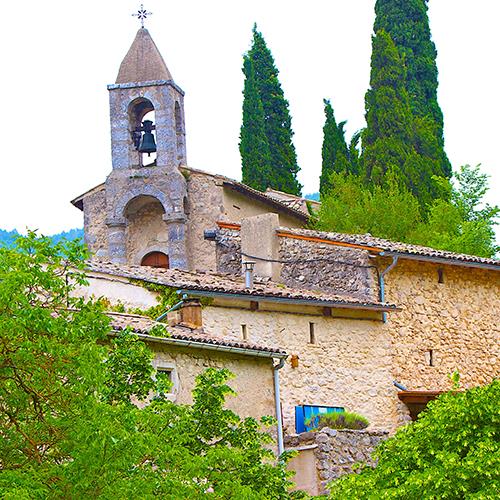
In the heart of the old abbey, there is a small Romanesque chapel of the XII century, Saint Benoit Chapel. It was restored by the "Penitents Bleus" in the seventeenth century, a brotherhood under the patronage of Saint Jerome.
Inside the cathedral is the Garden of Enfeus. The Enfeus are flat-bottomed niches intended to accommodate a tomb.
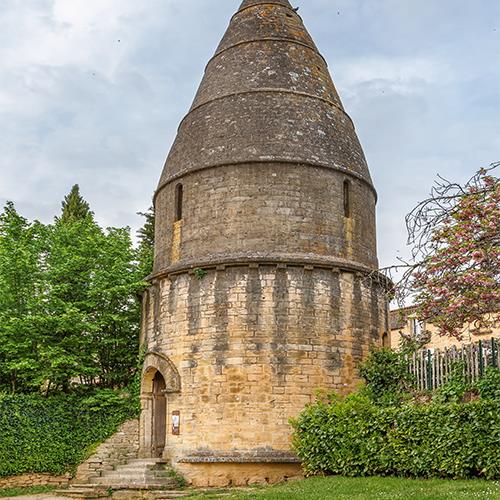
One of the most photographed place in Sarlat is the lanterne des Morts (lantern of the dead). It is a cylindrical tower ending with a pointed dome. Its construction dates is estimated to be around 1170. It has been called the "lantern of the dead' since the 17th century. Its Romanesque architecture is related to that of the sepulchral chapel, a place of prayer for the dead. The monks were to come to the lantern of the dead in procession to fulfill the Easter liturgy.
Le Presidial (prison) was built in 1552, an instrument of royal justice. It was in operation until the French Revolution. The presidial allowed the social rise of many families. In the basement are the cells of the prisoners waiting to be transferred to their detention. center. It is one of the few buildings of justice preserved in France of the old regime.
The Grezel Mansion is one of the first buildings to be adorned with a nobility tower in the fifteenth century. As a result of the Hundred Years' War, many families had access to nobility, and their way of demonstrating it was with the construction of authentic urban palaces.
The Town hall was installed in the seventeenth century, where the consular house used to be located. This building is the work of architect Bouyssou. During the French Revolution, municipal services were transferred to the former episcopal palace. The town hall building is now a bazaar on the ground floor and a club on the first floor. In 1899 it was restored, and since 1900, it was again the city's town hall.
Sarlat Panoramic Elevator, located in the Saint-Marie Church, offers 360-degree viewpoints of the city of Sarlat.
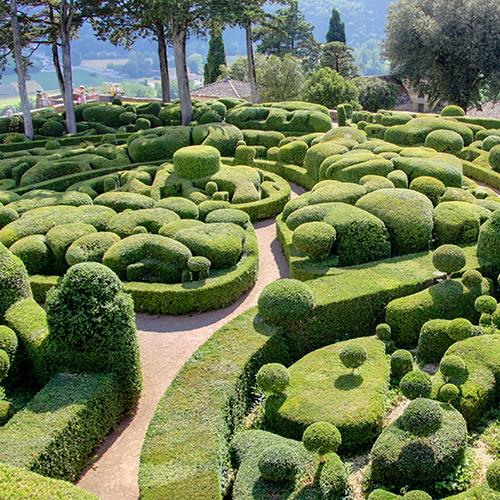
Visit the beautiful Gardens: The Water Gardens, Marquyssac Gardens, and The Gardens of l'imaginaire


Local Cuisine
According to the famous gastronomer and culinary critic Curnonsky (1872-1956), ‘Perigord is one of the regions of our country where we eat the best, and for centuries.’ Here, regional products are recognized as one of the main factors that attract tourists, and therefore they are highly valued, especially walnuts, chestnuts, black truffles, porcini mushrooms, foie gras, and strawberries.
In the Périgord, the cuisine is a family tradition, and the recipes and know-how are passed on from generation to generation. The must-try dishes in the Périgord are the Périgourdine Salad (with meat), Omelette with Porcini Mushrooms, Confit de Canard (and many other ways to prepare duck), Lotte (fish) with Chorizo, Potatoes Sautéed in Duck Fat, and more.
Cabécou of Périgord is THE cheese to try in this area, a small, soft goats’ milk cheese, and the Walnut Cake is one of the most typical desserts in the Périgord.
Prehistoric Grottoes of Lascaux
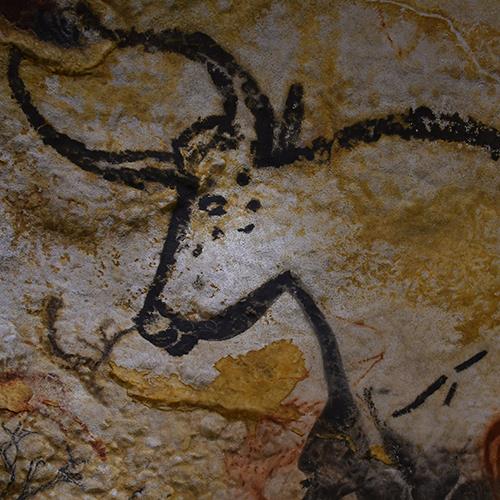
The Prehistoric Grottoes of Lascaux are a great choice when you’re wondering what to do in Sarlat. Located about half an hour away from Sarlat by car, Lascaux is home to a collection of Paleolithic cave paintings, some of them estimated to be up to 20,000 years old. There are several similarly decorated caves in the Vézère Valley, but the quality, age, and size of the Lascaux collection put them in a class of their own.
The cave paintings mostly depict large animals that were native to the region and consist of a complex of caves with several different areas. The caves are on the UNESCO World Heritage Sites list and are a stunning and awe-inspiring look into France’s very long past.
Today the original Lascaux is closed to the public but visitors can admire an exact replica, Lascaux IV, located nearby. The best way to see and understand the caves is with a guided tour.