


Destinations
❮Main Menu
CANTABRIA - TOWNS AND VILLAGES
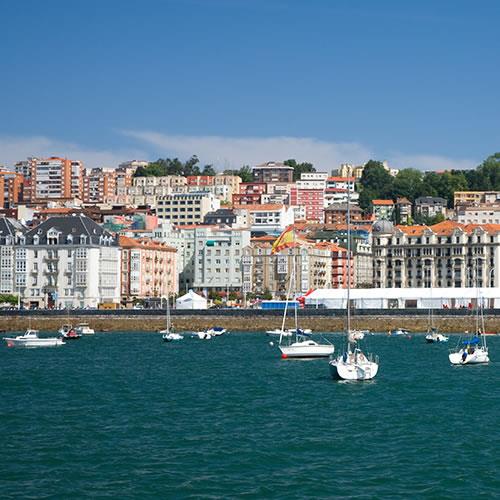
Santander
Santander is the capital of the Spanish autonomous region of Cantabria. It is also its largest city, with approximately 170,000 people living in the city and environs. Located on the Bay of Santander, the city has been a key trading port since antiquity, and documentation has shown Santander has functioned as a port city since the 1000s CE. Santander is well-known for its Medieval-era old town, with many Romanesque and Gothic buildings. Many key structures, including Santander Cathedral, were either heavily damaged or destroyed during a city-wide fire in 1941. They were eventually rebuilt to original specifications in a process that took almost 25 years. Only a fraction of the old town's buildings have not necessitated a complete reconstruction or renovation.
People who are interested in staying in Santander would be in the mix of the action if they stayed near the old town, where there are a lot of food and drink options, or around the popular Playa de El Sardinero. Other sights include the Cabo Mayor Lighthouse which overlooks the expansive Bay of Santander; the Palace of La Magdalena, the Spanish king's residence when he comes to Santander; the Palacio del Embarcadero; and the wide sandy beaches of Playa del Camello. The postmodern cultural center, the Centro Botin, was designed by Renzo Piano who also designed such buildings as the Centre Pompidou in Paris and The Shard in London.
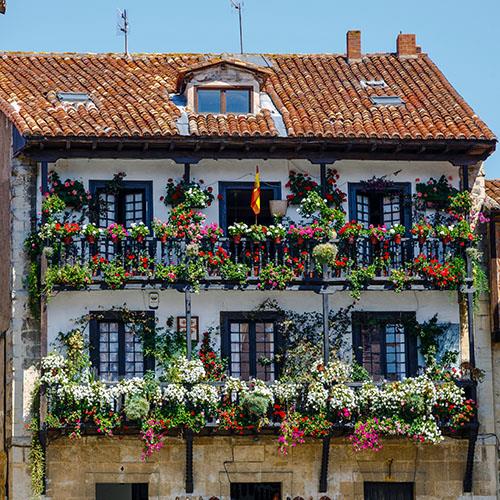
Santillana del Mar
Santillana del Mar is playfully nicknamed "The Town of Three Lies", as the name's meaning is misleading. There is no saint the town is named for, it is not flat ("llano"/"llana" is "flat" in Spanish), and it is not by the sea. This small town (pop. 1,100) is well-known for its carefully-curated historic center with multiple Romanesque and Gothic buildings such as the Church of the Colegiata. Santillana is called an "artistic-historic complex" by the Spanish government, which means history is on display in this town in many tangible ways. Local shop owners sell food and handicrafts from Cantabria, ranging from Santoña anchovies to Tresviso cheese to handicrafts of figures from Cantabrian mythology.
Outside the town, one of the most popular archaeological sites in Spain, the Cave of Altamira, has been called "the Sistine Chapel of rock art" due to the sheer majesty painted inside these caves tens of thousands of years ago. Discovered by archaeologists in the 19th century, the Cave of Altamira has been protected by the Spanish government since the 1920s and was named a UNESCO World Heritage Site in 1985.
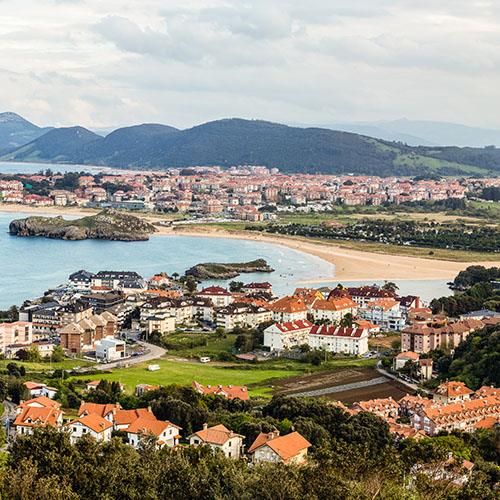
Noja
Noja and the nearby town of Isla are popular summer beach towns, with popular beaches such as Playa de Ris and Playa de Tregandin bringing thousands of sunbathers to its shores annually. While the town dates from the 17th century, many cultural monuments and buildings date from much later, such as the 19th-century Victoria Mill, which brought power from the marshes that surround the town to the grist mills nearby, and the Palace of the Marquis of Albaicin, built in the Baroque style but dating only from 1916.
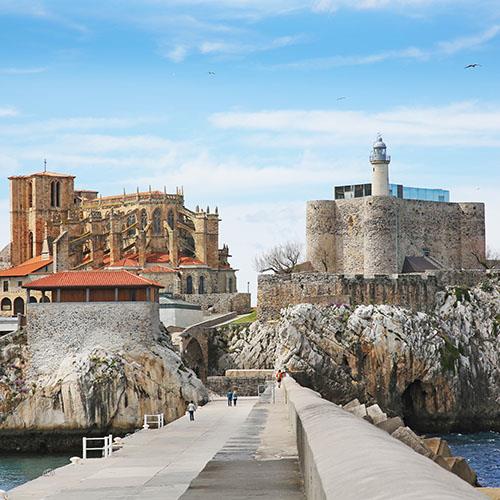
Castro Urdiales (day trip)
Modern high-rise buildings surround a quaint historical quarter in Castro Urdiales, a city of about 30,000. The landmarks in the historical quarter date from the Middle Ages, namely the Castillo de Santa Ana and the Iglesia de Santa Maria de la Asuncion. Other sites in the historic quarter include the Roman ruins of Flaviobriga and the 16th-century City Hall. Outside the city, there are a number of caves which feature drawings and paintings from the Paleolithic era. Brazomar Beach is situated on a wide bay and is close to other points of interest; it is a popular tourism draw in the summer when the population of the town surpasses 100,000. Note that we currently do not sell accommodations in this city so any visit would be something you would need to coordinate on your own.
Bay of Santoña (Laredo, Santoña, and Limpias)
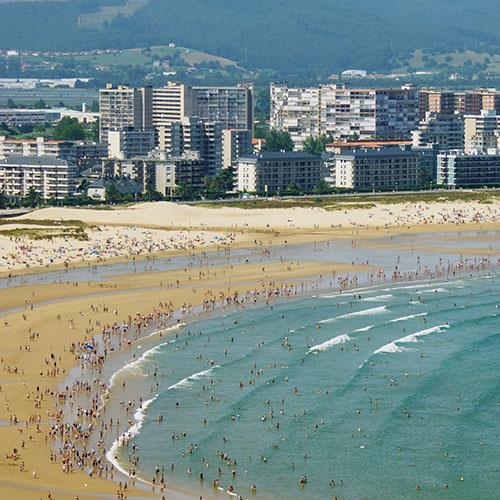
The Bay of Santoña is well-known for its tourism and for its original industry, fishing. Anchovies and sardines packed in oil are considered Cantabrian delicacies, and there will be many chances for you not only to try these foods but also to bring some home with you if you wish. Laredo and Santoña have about 12,000 people each, while the town of Limpias, farther inland, is small with about 1,400 residents and is connected to the bay cities by the N-629 motorway which connects to the A-8 (the Laredo exit on the A-8 is #169).
The old town of Laredo sits to the eastern side of La Salvé, a beach that stretches for over three miles, making it one of the longest beaches in northern Spain. Adjacent to the western side of La Salvé you will find another beach, Playa de Regaton. Across the bay, in the town of Santoña, sunbathers can walk to the beautiful eponymous beach from the Medieval core of town just 1,000 feet away. The beach is separated from a wide green space and multi-use park by the riverfront walk, called the Paseo de Pereda. This area is teeming with revelers in February during the popular Carnaval de Santoña.
Western Cantabria Coast (Comillas and San Vicente de la Barquera)
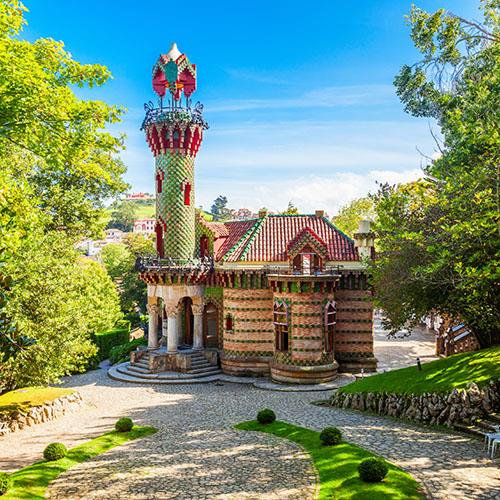
The charming town of Comillas is considered a playground for the rich, famous, and important, which started back in the 19th century when Spanish nobility began to vacation and own homes here. The Spanish kings and queens started taking their summer vacations here around 1850, and as a result the beautifully-manicured and curated town received some firsts in Spain. For example, Comillas was the first small town in Spain to be wired for electricity, and was the first to replace gas lamps with electric light bulbs from Thomas Edison. Due to the royal presence in Comillas, many buildings and green spaces were designed by noted lumaries such as Luis Domenech i Montaner and Antoni Gaudí. This town is still a well-kept secret, even though more and more (non-royal) tourists have been visiting with each passing year.
San Vicente de la Barquera, a few miles away, is mostly situated in a protection zone of Oyambre Natural Park, meaning the protection of historic buildings is married to the town's protection of its ecology. The Castle of the King and the Iglesia de Santa Maria de los Angeles date from the Middle Ages and overlook the beautiful countryside and the Rio Escudo.
Suances
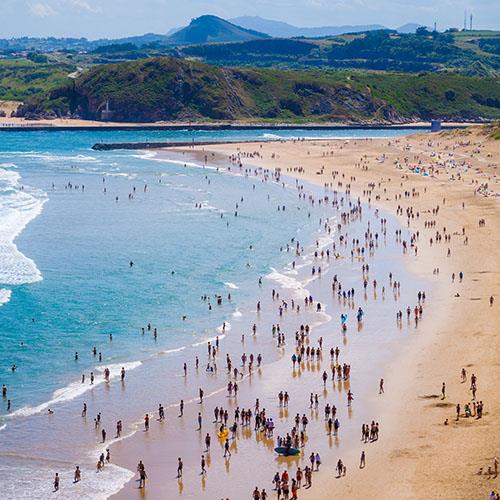
Suances is arguably the most popular beach town in Cantabria, boasting five beaches. Los Locos Beach is the most popular beach internationally, particularly with surfers and other water sport enthusiasts. The closest beaches to the town are Los Locos (to the west) and Playa de la Concha (to the north and east). For a more secluded beach day, head west of town to Playa de la Tablia, enclosed in a small cove. To the east of town, past where the Saja and Besaya rivers flow into the Bay of Biscay, sits Playa de Marzan, which is close to the action but feels much quieter than the urban beaches.
Liébana (Potes, Cabezón de Liébana, Camaleño, Cillorigo de Liébana, Pesaguero, Tresviso, Vega de Liébana, Fuente Dé)
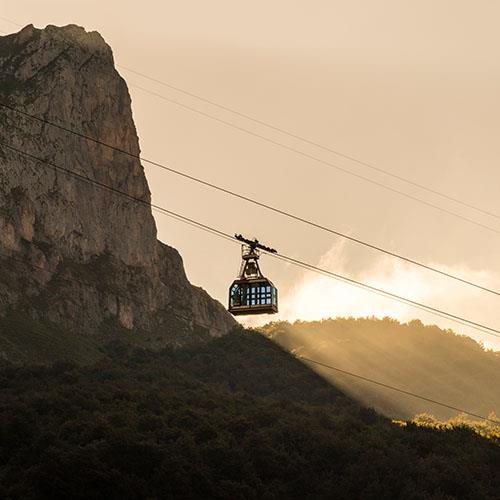
The subregion of Liébana borders Picos de Europa National Park, and the geography alternates between snow-capped peaks and beautiful verdant valleys. Due to the topography, the area has a distinct micro-climate which is different even from other parts of Cantabria. Eight towns comprise the populated areas of Liébana (5,300 residents in total), with Potes being the largest and most touristed. People who want to get away and be one with nature will love Liébana, with three rivers flowing through the green valleys and crags of sandstone overlooking them. This valley is home to one of the largest numbers of beech and oak tree families in the country. Sights of interest include the Santo Toribio monastery in Camaleño and the aerial tramway linking Camaleño and Fuente Dé and the Medieval quarter of Potes, featuring the iconic four-story Torre del Infantado. While in Tresviso, try their delectable cheese, which is a variety of blue cheese.