Destinations
❮Main Menu
November - April - The Wet Season
November is the start of the spring season when daily temperatures are very hot, dry, and dusty until the welcomed rains come to soak it all up. Once the rains do begin they bring back the verdant greenery to the landscapes which are filled with newborn wildlife and migratory birds. This month is shoulder season when the region moves from dry winter conditions to the green, wet summers. Due to the warm weather this time of year there are afternoon showers to contend with. Birdwatching is very popular at this time of year with species from Asia and Europe arriving.
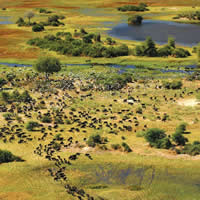
The month of December is the beginning of the summer season until March which is known as the green season bringing in high temperatures and heavy showers. Thunderstorms return to the country with bursts of rain to nourish the grass, allowing the newborn wildlife to gain weight quickly and stand a fighting chance against predators. The three famous Kalahari parks are at their best during the early summer. January and February are the wettest months of the year, and these months are some of the cheapest times to visit. Some lodges and camps do shut down completely with fewer travelers. The abundance of vegetation and water means that the animals can forage far and wide, and they are harder to spot. The Kalahari river bursts to life and the rains transform the arid salt pans into nutritious grasslands, and bring zebra in abundance to Nxai Pan National Park. Birdwatchers should flock to the country from December to March for stunning summer migrants.
The month of January is hot with many afternoon thunderstorms and heavy downpours, it is not the most popular month to visit the country. Prices during this month will be a lot lower than in peak season. This is an excellent month for birding when migratory birds breed and the young of the grazers grow quickly on the lush, verdant grass. The number and diversity of species of birds is vast. It's a great time to take advantage of safari specials. Animal spotting can be low in January, however, newborn herbivores are being stalked by their predators.
February is one of the wettest months of the year in Botswana. The temperatures are still high and some dramatic thunderstorms fill the skies and lands with heavy rains turning the landscapes into a lush, verdant paradise, especially in the Central Kalahari Game Reserve. The Central Kalahari comes to life this time of year and the grasslands entice plains game. It can be a muddy time in Botswana and also very humid, February rings the heaviest rainfall of the year. Average daily temperatures range from 72-79F degrees making perfect conditions for blooming flowers. This month is also breeding season for the local antelope population when newborns can be seen taking their first steps. There are also many sightings of migrating zebras and birds, as well as ripening fruits.
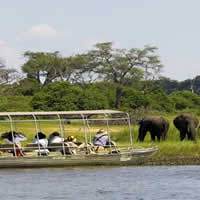
March brings a drop in temperatures with daily averages ranging from 64-86F degrees, the days are still hot and dry but the nights are nice and cool. This month of the year is renowned as the best time to visit Botswana for landscape photography due to the vibrant verdant terrain. The rains finally start to give up as the region moves towards teh dry season. The country’s magnificent national parks are abundantly alive with wildlife, especially in Chobe and Moremi parks where local herbivores and carnivores show up at the scene. Fauna is in full bloom this time of year.
Daily temperatures in April are still warm and sunny with cooler nights, the heavy rainfall has almost come to a complete stop and the landscapes are still verdant. The antelope breeding season is well underway and the males are busy butting heads and strutting around trying to impress the females. This time of year is considered the shoulder season and an ideal time for Botswana. The water levels in the Okavango Delta begin to rise in the middle of the month. The cooler nights are welcomed and provide the perfect weather for sitting outside in the evening and enjoying a sundowner, and possibly reveling in an armchair safari.